Federal courts just handed Elon Musk a major victory in South Texas.
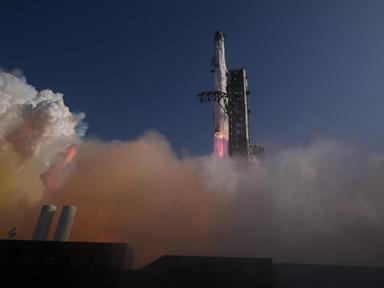
U.S. District Judge Fernando Rodriguez Jr. refused to grant a preliminary injunction requested by conservation groups. This decision clears the immediate path for the Trump administration to transfer over 700 acres of the Lower Rio Grande Valley National Wildlife Refuge to SpaceX. In return, the aerospace company will surrender roughly 683 acres it currently owns in the area.
If you've been following the rapid, chaotic transformation of the Gulf Coast, you know this isn't just about dirt. It's a high-stakes collision between commercial space ambition and federal conservation law.
Inside the Texas Land Swap Details
The arrangement involves a direct parcel exchange approved by the U.S. Fish and Wildlife Service. SpaceX gives up 683 acres of private land it holds in South Texas. In exchange, the federal government hands over more than 700 acres nestled within the massive 103,000-acre wildlife refuge spanning four border counties.
Federal agencies defended the deal in an environmental assessment report released back in June. Officials claimed the swap would yield a net conservation benefit. They argued it creates long-term value and improves landscape-scale habitat connectivity across other refuges in the region.
Judge Rodriguez ultimately sided with the government's timeline for now. He noted that the plaintiffs presented relatively weak evidence showing imminent, irreparable environmental harm during the active pendency of the lawsuit. Halting the transaction, the judge reasoned, would force modifications to SpaceX's development schedule and place unfair hardship on the company's ability to meet critical launch milestones and contractual obligations.
The Counter-Argument from Conservationists
Environmental organizations see things very differently. Groups like the Center for Biological Diversity view the land transfer as a gift of public resources disguised as bureaucratic bookkeeping.
Laiken Jordahl, a spokesperson for the Center for Biological Diversity, didn't mince words after the ruling. He called the decision an open pathway for bulldozers to tear into protected habitats. Critics argue that these public lands carry deep historical, spiritual, and ecological importance that shouldn't be traded away to accommodate private launch infrastructure.
Opposition runs deep in South Texas. Locals have watched the Boca Chica area evolve from a quiet coastal escape into Starbase—a sprawling industrial hub complete with its own corporate-backed local government. Residents frequently complain about restricted beach access, the rumble of heavy rocket testing, and the persistent threat of launch anomalies raining debris over sensitive ecosystems.
What Happens Next in Court
Don't mistake this preliminary ruling for the end of the road.
While Judge Rodriguez denied the immediate block, the underlying lawsuit remains very much alive. Conservation lawyers plan to press forward with their arguments on the merits. They intend to scrutinize whether the Fish and Wildlife Service followed proper statutory guidelines when rubber-stamping the transaction.
Legal battles over federal land exchanges take time. SpaceX wants to move fast to keep its Starship program on schedule, but environmental watchdogs refuse to back down. The tension between interplanetary ambitions and local habitat preservation on the Texas coast is only heating up.