People love a good treasure hunt. Especially when it involves a massive biblical boat resting high up in the mountains of eastern Turkey.
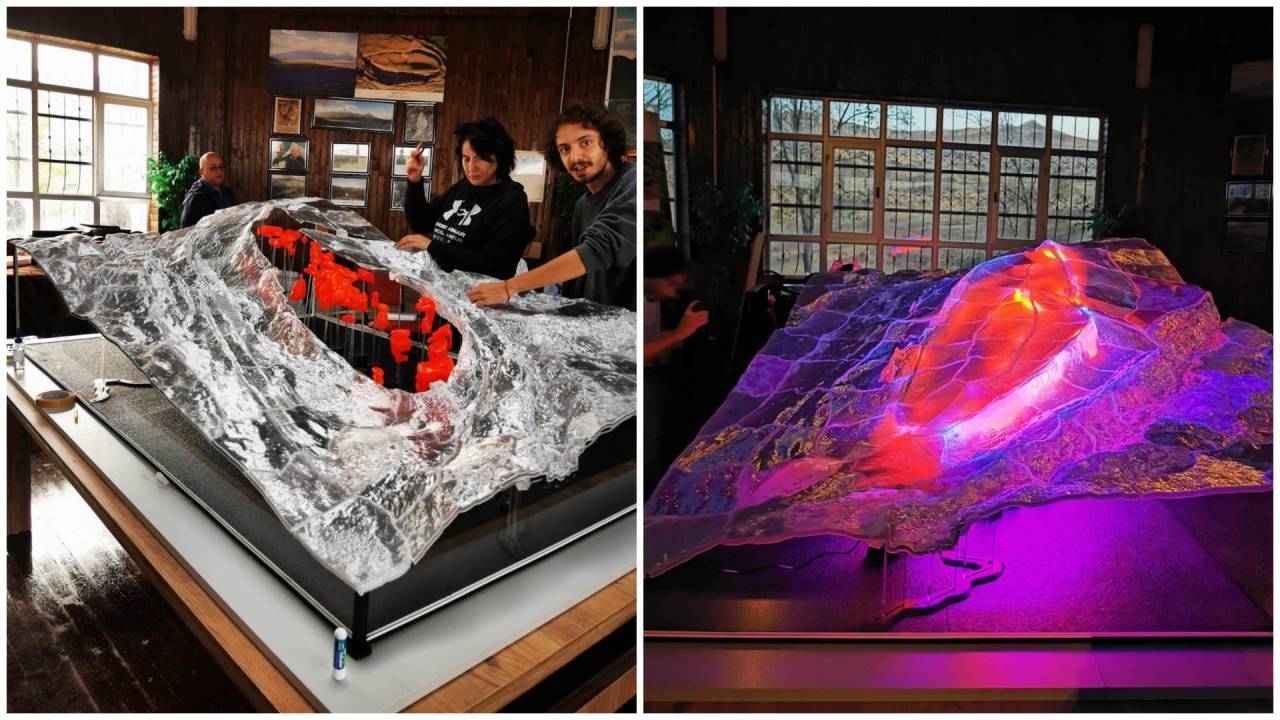
The story flares up every few years. Right now, a group called Noah's Ark Scans is making headlines again. They've taken ground-penetrating radar data from the 157-metre-long Durupınar formation—located about 29 kilometres south of Mount Ararat—and turned it into a 3D-printed miniature model. They even drilled over 60 feet underground during their first phase of field investigations, pulling up core samples to test this winter for any trace of decayed wood or human activity. You might also find this similar story useful: Why India’s Youth Are Finally Breaking Modi’s Aura Of Invincibility.
Marketing directors for the project claim these finds will dismantle modern evolutionary science and rewrite university textbooks. Geologists look at the exact same data and shrug. They see a completely natural rock formation shaped by centuries of erosion, tectonic shifts, and mudflows.
So what is actually happening beneath the surface in Turkey, and why do headlines keep missing the point? As discussed in recent articles by NBC News, the effects are notable.
The Reality Behind the Radar Scans
Let's look at the technical side of what the team actually did. They didn't dig up an ancient hull or uncover a deck of gopher wood. Instead, they hired an architectural mapping firm named FieldTech to process ground-penetrating radar and topographical scans.
On their 3D-printed model, red bubbles highlight subsurface anomalies—pockets of variation or voids detected by geophysical instruments. That sounds high-tech and definitive, but geophysics is notoriously tricky. Radar waves bounce off underground layers, moisture boundaries, fractured rock, and soil changes. An anomaly can mean an ancient man-made wall, or it can simply mean a pocket of wet clay trapped between denser strata.
Andrew Jones, vice-president of the Noah's Ark Research Project, admitted to reporters that the actual lab testing of the extracted core samples is scheduled for the winter. That means the dramatic declarations flying around social media are arriving months ahead of any actual laboratory data. You cannot claim to rewrite science before the test tubes even reach the lab.
Why the Durupınar Formation Captivates the Public
The Durupınar formation has a strange geometry. It's roughly boat-shaped, tapered at one end, and measures about 157 metres long—which enthusiasts quickly point out matches biblical descriptions of Noah's Ark in Genesis 6.
For centuries, believers and explorers have combed the rugged terrain around Mount Ararat. High-altitude searches carry a heavy romantic appeal. The idea that physical proof of a global flood sits waiting under feet of Turkish dirt taps into a deep human desire for tangible validation of ancient texts.
Yet, shape alone means very little in geology. Nature creates symmetrical, striking landforms all the time. Wind erosion, landslides, and glacial movements carve bizarre shapes into the earth daily. Without clear, peer-reviewed evidence of processed timber, metal fasteners, or organized internal bulkheads, a boat-shaped hill is just a hill.
The Danger of Overhyping Scientific Exploration
Science works through slow, grueling verification. You gather data, test samples, publish methodologies, and let independent experts scrutinize the conclusions.
When groups mix scientific fieldwork with aggressive culture-war rhetoric—such as declaring that core drilling will send evolutionary biologists into panic mode—they turn archaeology into a spectacle. This hurts public trust in real scientific inquiry. It creates a false dichotomy where you either believe a sensationalized claim or you are labelled part of a dogmatic cover-up.
Real researchers don't fear core samples; they welcome them. If laboratory tests on the 60-foot-deep samples reveal ancient processed lumber or organic signatures inconsistent with the surrounding geography, the scientific community will pay attention. Until then, pointing at red bubbles on a plastic 3D-printed model proves nothing except that modern printers can visualize radar anomalies.
Keep your eyes on the peer-reviewed labs, not the social media hype feeds. True discoveries don't need a marketing campaign to be real.