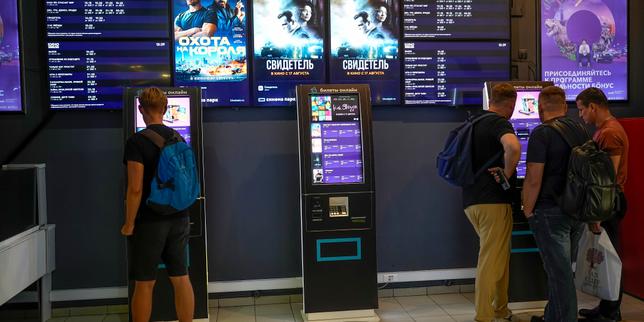
If you walk into a movie theater in Moscow today, you aren't just buying a ticket for entertainment. You are stepping right into the state's ideological machinery. The Russian film industry is experiencing a profound transformation under Kremlin censorship, where independent art is locked away, foreign blockbusters are pirated or banned, and state-funded patriotic films struggle to fill empty seats.
Ever since major Western studios pulled out following the 2022 invasion of Ukraine, the Russian domestic film market has been forced into a strange, distorted reality. Instead of a thriving national renaissance, audiences are greeted by a rigid filter of government mandates. If a film touches upon forbidden topics, criticizes traditional values, or simply fails to glorify the state narrative, it gets shelved indefinitely. Recently making waves in this space: Why Mi5 Warns That Iran Is Targeting Uk Military Bases.
The Anatomy of Modern Russian Film Censorship
Censorship in Russia isn't just a matter of removing a few offensive scenes anymore. It's a total gatekeeping system managed by the Ministry of Culture and championed by figures like Vladimir Medinsky, who openly praise Soviet-style artistic control.
Today, getting a distribution certificate requires navigating a minefield of ideological restrictions. Projects directed by acclaimed auteurs like Andrei Zviaguintsev—whose films like The Minotaur or Leviathan are blocked from domestic screens—have zero chance of seeing the light of day in local multiplexes. Meanwhile, documentaries addressing sensitive social issues or historical nuances are systematically denied permits. More details on this are detailed by USA Today.
The rationale behind these bans relies heavily on protecting what the state calls "traditional values." Under federal legislation passed to root out dissent, anything that questions militarism, diverges from approved gender codes, or complicates historical narratives faces immediate erasure. Even independent festival darlings that deal with everyday human struggles find themselves stripped of their distribution rights before audiences can even buy a ticket.
Why Pro-War Cinema Keeps Flooding the Market
With Hollywood studios effectively locked out, the Kremlin poured millions of rubles into state-backed patriotic productions designed to shape public opinion. Think war dramas, historical epics celebrating past military victories, and overtly political thrillers.
The problem? Audiences aren't buying it.
Box office data shows that state-funded pro-war films frequently flop or underperform drastically, despite receiving prime theater slots and heavy marketing. Regular moviegoers prefer escapism—lighthearted comedies, fantasy fairy tales, or horror flicks that let them forget the grim realities outside. To fill the gap left by Hollywood, many cinemas resort to gray-market screenings, playing pirated copies of American blockbusters or legally imported foreign titles from friendly nations.
When official state media pushes a narrative that the public quietly rejects at the box office, a cultural disconnect forms. Officials like former culture minister Vladimir Medinsky argue that tight oversight keeps shoddy work out of theaters, comparing it to the golden age of Soviet cinema. Yet, independent critics point out that this heavy-handed approach is slowly killing the commercial and artistic vitality of Russian filmmaking.
The Fate of Independent Creators and Art-House Cinema
For local directors, writers, and actors who refuse to toe the line, options are painfully limited. Many have chosen internal exile, self-censorship, or emigration. Those who stay behind face financial strangeness: working entirely outside the state apparatus means zero funding, no official distribution certificates, and the constant threat of administrative harassment.
The independent auteur scene, once celebrated internationally for its grit and psychological depth, has been driven underground. Film festivals that used to showcase daring new voices now operate under strict surveillance, and curators know that programming the wrong title can lead to sudden closures or criminal charges.
Ultimately, the transformation of Russian cinemas reveals the limits of forced cultural conformity. You can mandate patriotic themes and ban foreign competition by executive order, but you cannot force an audience to love propaganda. As long as the box office gap is filled with smuggled Hollywood hits and escapist fairy tales, the Kremlin's grand ideological cinema project remains an expensive, hollow exercise in state control.