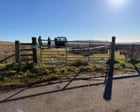
Two lives were cut short on a Friday afternoon. A 16-year-old boy and an 80-year-old man died when a light aircraft came down north-east of Drymen in Stirling, close to Loch Lomond.
Emergency services rushed to the scene at roughly 4:45 PM on Friday, October 16, 2026. The impact site, situated near a gated farm track, was quickly cordoned off by Police Scotland tape. Both individuals were pronounced dead at the scene. Their next of kin have been notified, but authorities are still piecing together the harrowing sequence of events that led to the tragedy. For a more detailed analysis into similar topics, we recommend: this related article.
The Flight Path Before the Tragedy
Flight tracking data reveals a complex timeline for the aircraft involved—a Piper Tomahawk II.
The plane first took off from Cumbernauld airport at 11:46 AM on Friday morning. It flew to Glasgow airport, touching down before embarking on another leg north-east toward Newport-on-Tay, opposite Dundee. After turning around and heading back to Glasgow, the aircraft sat on the ground for just over an hour. For broader information on this development, extensive reporting can also be found on USA.gov.
At 4:17 PM, the Piper Tomahawk II took off from Glasgow airport for what would be its final journey. Online flight-tracking tools show the aircraft circled before heading north toward Drymen. Transponder data abruptly stopped transmitting at 4:37 PM, signaling the end of the flight just minutes before emergency calls flooded local lines.
The Investigation and Airspace Restrictions
Police Scotland confirmed that the Air Accidents Investigation Branch (AAIB) immediately deployed a team to the accident site near Drymen to gather evidence and conduct a safety investigation.
Temporary airspace restrictions were thrown around the village immediately following the crash. These restrictions explicitly banned drones and unauthorized aircraft from entering the zone. Police issued a strict warning to the public: flying in the restricted airspace is a criminal offence that interferes with active investigative work.
Gavin Birch-Williams, managing director of Glasgow airport, addressed the tragedy, stating that the thoughts and heartfelt sympathies from everyone at the airport are with the friends and families affected by the incident.
Understanding Light Aircraft Safety and Oversight
Incidents involving light aircraft like the Piper Tomahawk—a staple training aircraft used across flight schools worldwide—invariably spark renewed scrutiny over general aviation safety. While commercial aviation boasts an extraordinarily low accident rate, general aviation operates under entirely different conditions.
Investigators from the AAIB will examine multiple factors over the coming weeks:
- Mechanical integrity and maintenance logs of the Piper Tomahawk II.
- Weather conditions, visibility, and wind patterns around Stirling during the late afternoon hours.
- Pilot communications, flight planning records, and air traffic control logs from Glasgow airport.
- Human factors, including pilot workload and flight dynamics during the final circling maneuvers.
The investigation will take time. Until the AAIB releases its official safety report, speculation remains just that. For now, a community mourns, and aviation authorities work to determine why a routine Friday afternoon flight ended in disaster.