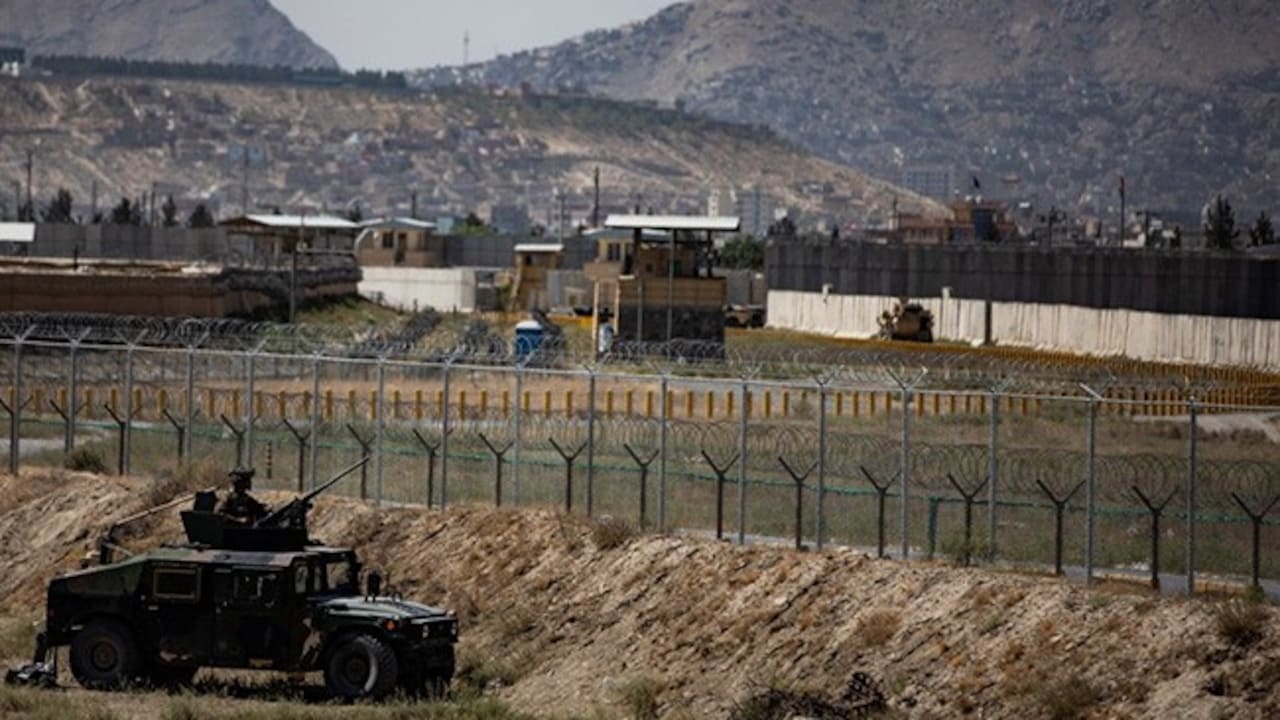
Five years after the chaos at Hamid Karzai International Airport, the legal fallout continues.
Mohammad Sharifullah just got a 20-year prison sentence. A federal jury in Virginia convicted him of providing material support to ISIS-K. That name rings a bell for anyone tracking global security, but the court case itself exposed deep complexities about how international terrorism trials actually work. Prosecutors pushed for the maximum. Defense attorneys argued the government overreached. For an alternative view, read: this related article.
Let's look past the headlines. You need to know what happened, why the jury split on key charges, and what this ruling means for the ongoing hunt for accountability from the August 2021 withdrawal.
The Charges Versus The Verdict
It is easy to blur the lines between helping a terrorist group and pulling the trigger or building a bomb. That distinction mattered heavily in Sharifullah's trial. Further coverage on the subject has been provided by Al Jazeera.
On August 26, 2021, a lone suicide bomber detonated an explosive device at Abbey Gate. Thirteen US service members died. Roughly 160 Afghan civilians lost their lives in the blast. The horrific images defined the final days of the American military exit from Afghanistan.
Federal prosecutors brought 28-year-old Sharifullah to the United States to face justice, arguing he scouted routes to the airport and served as an active ISIS-K operative. They wanted a life sentence. They pointed to his teenage oath of allegiance to the group and statements he made to a journalist about targeting Americans.
Here is where the jury drew a line. Jurors found him guilty of providing material support to a foreign terrorist organization. But they deadlocked on whether his specific actions directly caused the deaths at Abbey Gate. Because of that split, Judge Anthony Trenga handed down the 20-year maximum sentence for the material support charge alone, rather than life behind bars.
Inside The Courtroom Drama
Trials involving international terrorism rarely feature straightforward evidence. Sharifullah did not testify. His defense team argued that his statements to the FBI came under duress, given that he spent time in Pakistani custody beforehand and feared torture. They insisted the government built its case on a narrative it could not fully prove in court.
Prosecutors countered with a massive paper and digital trail, linking him to broader Islamic State operations, including references to plots far beyond Afghanistan.
The most gripping moments happened away from legal technicalities. Grieving parents stood mere feet from the defendant to deliver victim impact statements. Mark Schmitz, whose 20-year-old son Marine Corps Lance Cpl. Jared Schmitz died at Abbey Gate, told Sharifullah to look him in the eye. Paula Knauss-Selph, mother of Army Staff Sgt. Ryan Knauss, spoke about a family permanently altered by the blast.
These statements anchored the hearing in human reality, reminding everyone in the room that court verdicts rarely fix broken hearts.
The Broader Reality Of ISIS-K Prosecution
Bringing foreign terror suspects into US federal courts poses massive logistical and evidentiary hurdles. Investigators have to piece together events from active war zones years after they occur.
Central Command reviews previously established that the actual Abbey Gate bomber was Abdul Rahman al-Logari, an individual released from an Afghan prison by the Taliban during the takeover. Sharifullah's connection, according to court documents, involved knowing operatives and aiding the network's logistics rather than setting off the vest himself.
This creates a frustrating reality for victims' families. Accountability feels incomplete when a court convicts a man of supporting the network behind a massacre, yet cannot legally tie him to the specific fatalities of that day due to evidentiary thresholds.
Justice in international terrorism cases is rarely neat. Sharifullah will spend two decades behind bars, but the wider infrastructure of ISIS-K continues to adapt, recruit, and plot across multiple borders. Keep an eye on how federal prosecutors handle similar extraterritorial terrorism cases moving forward, as the legal system grapples with crimes committed during the collapse of state authority abroad.