You can't escape the crowd this year. If you plan to head out for the Independence Day holiday, you're looking at a massive sea of fellow travelers.
AAA projects that 72.2 million Americans will travel at least 50 miles from home during the nine-day holiday stretch between Saturday, June 27 and Sunday, July 5. That's a new all-time high, barely scraping past last year's record of 71.8 million.
But there's a catch behind the numbers. The growth is finally slowing down. We're seeing a mere 0.5% bump compared to last year. Inflation, pricey plane tickets, and gas prices sitting at four-year highs are forcing people to rethink how they spend, but they aren't staying home. Instead of canceling, people are just shortening their trips or skipping expensive dinners out to make sure they can still touch the beach or see the family.
If you want to survive the absolute gridlock heading your way, you need a smart strategy.
The Road Warrior Reality Check
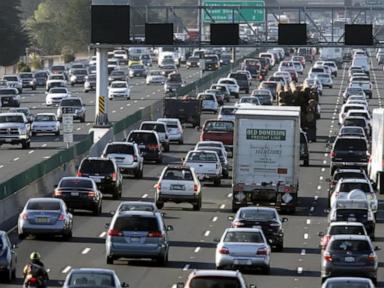
Driving remains the undisputed king of holiday travel. Roughly 85% of everyone traveling over the holiday week will go by car. That's 61.4 million motorists hitting the pavement alongside you.
Gas prices are higher than last year's average of $3.15 a gallon, though thank goodness they haven't touched the painful $4.80 peak from 2022. For families with kids, packing the trunk and buying gas is still way cheaper than buying four or five airline tickets.
Traffic insights from INRIX reveal that the second weekend of the holiday window will be the absolute worst on the highway. Expect the heavy gridlock to start building on Thursday, July 2. However, if you live in massive metro hubs like Los Angeles, Boston, or Philadelphia, your local bottleneck actually peaks early on Saturday, June 27.
Best and Worst Times to Drive
Don't just wing it. If you drive during peak hours, you'll melt hours of your vacation staring at brake lights.
- Monday, June 29: Your worst window is 2:00 PM to 6:00 PM. Hit the road before noon.
- Tuesday, June 30: Avoid 3:00 PM to 6:00 PM. Leave before 2:00 PM.
- Wednesday, July 1: Traffic gets ugly from 12:00 PM all the way to 9:00 PM. Get moving before midday.
- Thursday, July 2: The afternoon rush hits from 2:00 PM to 6:00 PM. Be gone before 12:00 PM.
- Friday, July 3: Everyone leaves early today. Avoid 12:00 PM to 7:00 PM. Start your engine before 11:00 AM.
- Saturday, July 4: The morning rush to barbecues peaks from 10:00 AM to 2:00 PM. Wait until after 3:00 PM.
- Sunday, July 5: The great return home bogs down from 12:00 PM to 6:00 PM. Leave before 11:00 AM.
Sky High Prices and the Cruise Alternative
Flying isn't any less chaotic. Around 5.85 million passengers are taking domestic flights. Air travel demand is flat, growing a microscopic 0.2% over last year.
Why the stagnation? Cost. Domestic roundtrip airfares are averaging roughly $830 per ticket. Flights to popular destinations like Chicago and Denver have climbed 5% higher than what travelers paid last summer.
If you're looking for car rentals, domestic rental rates are up 10% from last year. Hertz expects Thursday, July 2 to be its single busiest day for vehicle pickups, with massive rental demand spikes in Orlando, Denver, Los Angeles, and New York City.
Interestingly, the real explosion in holiday travel isn't on the roads or in the air. It's on the water and the tracks.
AAA forecasts that 4.93 million Americans will travel via buses, trains, and cruises over the holiday week. That's a notable 5.3% jump from last year, blowing past pre-pandemic benchmarks. Cruises are driving this boom. Travelers love the predictability. You pay upfront, you know exactly what your food and lodging cost, and you avoid the constant nickel-and-diming of standard hotel and restaurant vacations.
Where Everyone Is Going
The travel data shows clear trends for where the crowds are heading.
Domestically, Seattle, Anchorage, and Fairbanks dominate the top spots. Why? Because it's peak Alaska cruise season, and travelers are flocking north to catch their ships. Orlando remains a powerhouse for theme parks, while traditional fireworks capitals like New York City, Boston, and Chicago are pulling in massive crowds.
On the international front, Vancouver takes the top slot because of its major cruise port. Beyond Canada, Americans are heading across the Atlantic in droves, packing out Rome, Dublin, Paris, and London.
Your Survival Plan for Holiday Travel
Knowing the numbers is one thing; surviving the trip is another. Use these practical steps to protect your sanity and your wallet.
Get your car checked immediately. AAA crews respond to hundreds of thousands of roadside calls during this specific week. The main culprits are dead batteries, blown tires, and lockouts. Spend thirty minutes checking your tire pressure and getting your battery tested before you leave your driveway.
Download offline maps. When 72 million people hit the outer edges of cellular networks near state parks, beaches, and rural highways, cell towers jam. Download your route on Google Maps or Apple Maps ahead of time so you don't lose navigation when the network drops.
Track your flight like a pro. Don't rely on the airline app to tell you your plane is delayed. Use the FlightAware app to track the incoming physical aircraft for your flight. If that plane is stuck two cities away, you'll know you're delayed hours before the airline sends you an alert, giving you a head start to rebook.
Pack snacks and patience. Food lines at rest stops and airport terminals will be long. Bring your own food, stay hydrated, and accept right now that things will take twice as long as usual.