Malaysia's fragile political truce is fracturing right before our eyes, and the upcoming Johor polls are the ultimate stress test. If you think Prime Minister Anwar Ibrahim’s federal administration is safe in Putrajaya, you're missing the real story unfolding in the south. The sudden dissolution of the 56-seat Johor State Legislative Assembly has exposed deep structural cracks in the ruling alliance. It has brought Malaysia's raw ethnic rifts straight back to the surface.
What happens in Johor won't stay there. It threatens to completely upend the federal power-sharing model that has kept Anwar in office since late 2022. Meanwhile, you can explore related developments here: Why Denmarks Left Wing Wants To Silence The Islamic Call To Prayer.
For months, politicians in Kuala Lumpur pretended their "unity government" was a long-term solution to the country's chronic instability. Johor shattered that illusion in a single weekend. Caretaker Chief Minister Onn Hafiz Ghazi of Barisan Nasional (BN) didn't just announce a solo run for his coalition; he drew a hard line in the sand. He publicly declared he would rather lose his job than sit at the same table with the Democratic Action Party (DAP), a core member of Anwar’s Pakatan Harapan (PH) alliance.
When a key partner in your federal government says your other partner is toxic, you don't have a functioning coalition. You have a ticking time bomb. To see the full picture, we recommend the recent report by USA Today.
The Illusion of Unity Shatters in the South
The political math in Johor is brutal, and it completely contradicts the cozy narrative pushed by Putrajaya. At the federal level, BN and PH hold hands to keep the opposition Perikatan Nasional (PN) at bay. In Johor, they are openly hostile rivals. UMNO, the dominant force within BN, has decided to contest all 56 state seats entirely on its own.
UMNO secretary-general Asyraf Wajdi Dusuki claims this isn't a betrayal. He calls it a "mature and constitutional democratic act". He argues that the Johor state government was formed before the federal unity pact, meaning the state isn't bound by any federal marriage of convenience. That's a highly technical excuse for a deeply ideological problem.
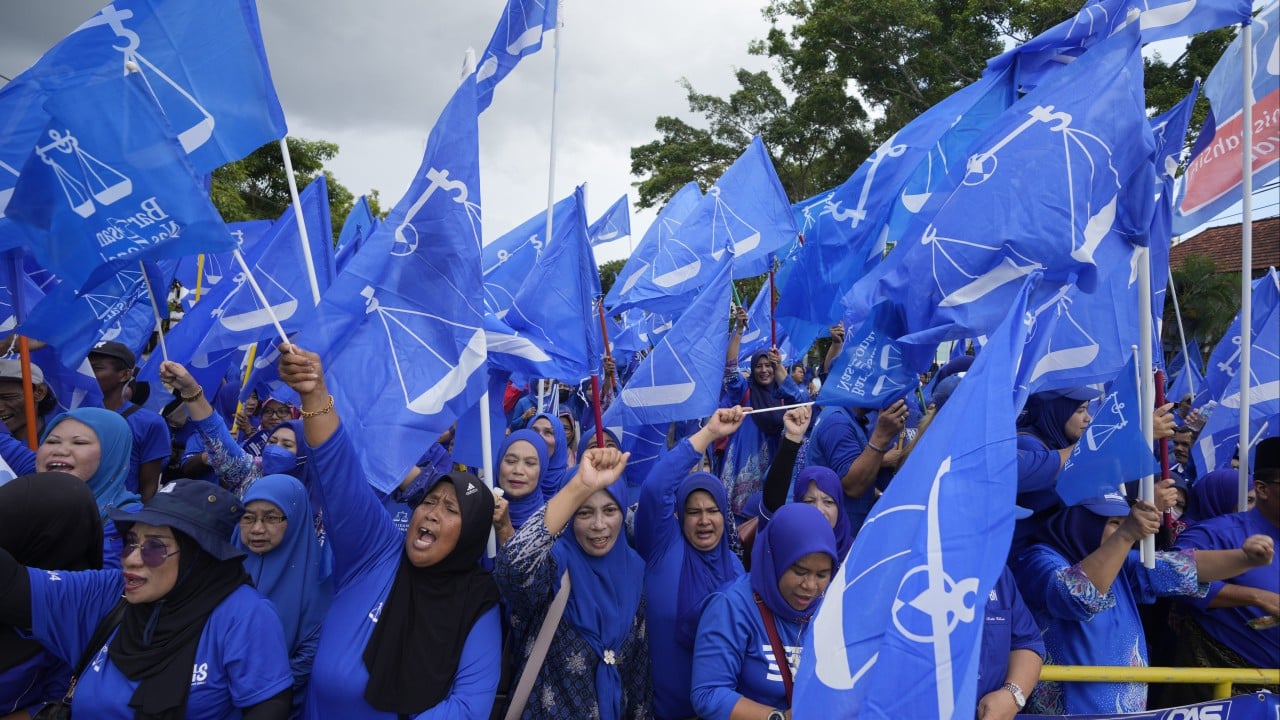
The reality is that UMNO’s grassroots members refuse to campaign alongside the Chinese-dominant DAP. They see the secular, center-left party as an existential threat to Malay political supremacy. By going solo, Johor BN is banking on a "blue wave" revival to reclaim its historic status as the natural party of government. This strategy isolates PH and forces local voters to choose between competing visions of Malay leadership and minority representation.
This creates an incredibly messy multi-cornered fight. In the 2022 Johor state elections, PH managed to win only 12 seats, with the DAP pulling the heavy lifting by capturing 10 of those, while Amanah and PKR took just one seat each. If BN completely freezes out PH in this round, Anwar’s own coalition partners will find themselves fighting each other for survival in mixed-demographic seats, all while trying to project an image of national harmony.
Local Grievances and the Royal Factor
The drama goes far deeper than party politics. The campaign has dragged in Malaysia's highly revered royal institution, turning a local election into a constitutional debate.
Just days before the assembly dissolved, Johor Regent Tunku Ismail Sultan Ibrahim stirred the pot during a youth podcast in Muar. He raised critical questions about federal-state relations, specifically demanding that the federal government return 25% of the tax revenue collected from Johor back to the state. This demand plays directly into a growing sense of southern regional nationalism. It portrays Putrajaya as an extractive entity that neglects the state's economic contributions.
Anwar Ibrahim had to personally fly down to Tangkak to manage the damage. In a highly unusual move, the Prime Minister used massive LED screens at a campaign event in Bukit Gambir to break down the federal budget line by line. He revealed that between 2023 and 2025, Johor contributed an average of RM14 billion annually to federal revenue but received roughly RM16 billion per year in federal expenditure.
Anwar's defense was clear. He pointed out that Johor is the third-highest recipient of development funds in the entire country, lagging only behind the East Malaysian states of Sabah and Sarawak. He also highlighted 13 mega-development projects valued between RM240 million and RM10 billion currently planned or underway in the state.
Despite the hard numbers, the damage was already done. When a prime minister has to publicly argue with a state's royal family over cash allocations during an election campaign, you know the underlying social fabric is under immense strain. Anwar openly cautioned his rivals against using the royal institution as a political weapon. He stated flatly that everything has its limits in a democracy. But in a highly charged atmosphere, those limits are ignored.
High-Level Defections and Internal Chaos
While Anwar battles the Johor palace and UMNO’s defiance, his own house is burning down from the inside. In a massive blow to the Prime Minister’s credibility, two former cabinet ministers announced their resignation from Anwar's People's Justice Party (PKR) right as the election machinery was spinning up.
Rafizi Ramli and Nik Nazmi Nik Ahmad, both heavyweights who served in Anwar's cabinet, didn't just leave the party; they vacated their parliamentary seats to join a new vehicle called Parti Bersama Malaysia. Rafizi was long considered the intellectual engine of PKR’s economic policy, while Nik Nazmi represented the younger, progressive wing of the party.
Their sudden exit sends a clear signal to voters. If the very people tasked with running Anwar's economic reforms don't believe in the direction of the government, why should ordinary citizens? This internal collapse severely weakens PKR’s leverage in the Johor polls. It leaves the DAP to bear the brunt of the campaign against a hostile UMNO and a predatory Perikatan Nasional opposition.
Why the Race-Card Strategy Still Works
Look closely at the campaign rhetoric, and you'll see why the Johor polls are turning so ugly. Anwar is begging voters to reject what he calls the "politics of hatred, prejudice, and racial or religious division". He claims Malaysians want concrete solutions like jobs, affordable housing, and quality schools.
He's wrong about what drives votes in a polarized environment.
Identity politics remains the most effective tool in the Malaysian electoral playbook. The opposition bloc, PN, has spent years building a formidable "Green Wave" by telling Malay-Muslim voters that their identity and privileges are being eroded under Anwar’s multi-ethnic alliance. UMNO is terrified of losing more ground to this narrative. That's exactly why Onn Hafiz Ghazi is using such aggressive, anti-DAP rhetoric. He needs to prove to conservative Malay voters that UMNO is still the ultimate defender of the majority faith and race, without needing to play second fiddle to a Chinese-backed party.
This leaves non-Malay minorities, particularly the Chinese and Indian communities who make up a huge chunk of Johor’s urban electorate, in an incredibly vulnerable position. They are being used as a political bogeyman to rally the majority. While Anwar talks about a unified nation of shared aspirations, his own cabinet partners are validates the exact same divisions on the ground to save their own political skins.
The Economic Stakes of Political Instability
This political instability is happening at the worst possible time for Johor’s economy. The state is currently trying to position itself as a major economic powerhouse through projects like the Johor-Singapore Special Economic Zone (JS-SEZ). This initiative relies completely on foreign direct investment and smooth cross-border cooperation with Singapore.
Investors hate unpredictability. If the Johor polls result in a highly fragmented state assembly or a government that is openly hostile to the federal administration, those grand economic plans will stall. Anwar’s Madani government has spent three and a half years trying to stabilize the national economy, but a chaotic election outcome could undo that progress in weeks.
If UMNO wins big by running a purely Malay-centric, anti-DAP campaign, they will take that exact same playbook to the next general election. They will demand more concessions from Anwar at the federal level, or worse, look for new partners to form a government that completely excludes progressive, multi-ethnic parties.
What to Watch Next
Don't buy into the spin coming out of Putrajaya about a stable government. The Johor polls are a direct threat to the country's political survival. Keep your eyes on these specific indicators as the campaign unfolds.
First, look at the voter turnout in mixed seats. If minority voters stay home out of sheer frustration with the political theater, UMNO and PN will sweep those districts, shifting the balance of power entirely.
Second, watch the seat negotiations in Negeri Sembilan, which dissolved its assembly almost simultaneously. If the animosity from Johor spills northward, the entire federal coalition will effectively collapse at the state level across the peninsula.
The era of stable, predictable Malaysian politics is dead. Johor isn't just electing a local government; it's deciding whether Anwar Ibrahim's vision of a multi-ethnic Malaysia can survive, or if the country will slide back into a permanent cycle of racial and religious polarization.