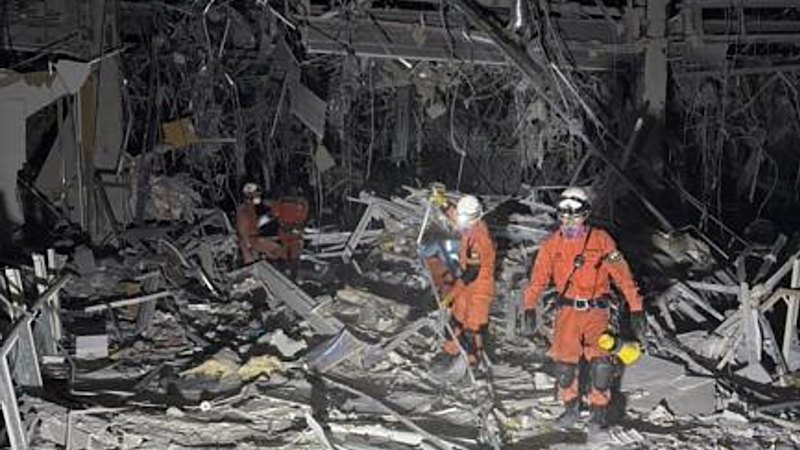
Rescuers in southwestern Japan are fighting heavy rubble and sweltering summer heat to find survivors following a powerful magnitude 7.1 earthquake that struck the Kumamoto region on the island of Kyushu. The disaster has left at least 18 people dead, dozens injured, and emergency crews working around the clock in dangerous conditions. Prime Minister Sanae Takaichi noted that crews are racing against time because people remain trapped.
The quake hit hard, registering a maximum intensity of 7 on Japan's strict seismic scale. That is the highest level possible, matching the destructive force seen during the Noto Peninsula earthquake.
Where the Worst Damage Happened
The destructive power of the tremor targeted key commercial and industrial sites across Kumamoto prefecture. At a Nippon Paper Industries facility in Yatsushiro city, a chimney collapse killed five workers. Rescue teams pulled several others from the debris, but structural instability continues to hamper efforts to clear the site completely.
Meanwhile, chaos unfolded at the Aeon Mall shopping center in Kashima city. Thousands of shoppers and staff managed an initial evacuation within minutes of the main tremor. However, a violent gas explosion ripped through a back section of the complex shortly afterward, causing the second floor to cave in. The secondary blast matched the violence of the original earthquake, killing multiple people and leaving rescue squads facing heavy concrete and twisted metal.
Foreign Workers Among the Casualties
The human cost extends beyond local residents. The Vietnamese government confirmed that a young technical intern working at a local factory died when a heavy crane collapsed on him. He had arrived in the country earlier in the year. Another Vietnamese resident sustained injuries when her home's exterior wall buckled.
Foreign technical interns and migrant workers form a vital backbone for Japan's manufacturing and agricultural sectors. When disasters strike, language barriers, unfamiliar housing, and isolation can place these workers at higher risk if emergency alerts and shelters aren't easily accessible.
The Crushing Logistics of Post-Quake Recovery
Beyond the immediate search for survivors, local infrastructure faces a staggering breakdown. Tens of thousands of households remain without electricity or running water. Bullet train services across major affected corridors stay suspended, halting regional transit.
More than 8,000 residents have crowded into hundreds of designated evacuation centers. Emergency management teams are rushing portable power sources to these shelters to run air conditioning units because punishing summer heat waves threaten vulnerable evacuees, especially older adults.
Prime Minister Takaichi deployed thousands of Self-Defense Forces personnel alongside specialized firefighters, including international assistance teams from Taiwan, to scale up operations.
Check your local emergency notifications if you have family or travel plans in Kyushu, keep emergency kits updated, and monitor official updates from the Japan Meteorological Agency for ongoing aftershock risks.


