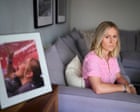
When a family sends their child across the Atlantic, they expect them to come back. Jane Coates didn't get that ending. Her 23-year-old daughter, Lucy Harrison, was shot dead in Texas with her father's gun in January 2025. Now, eighteen months later, Coates is putting direct pressure on UK Prime Minister Andy Burnham's government. She wants diplomatic muscle used to reopen an investigation that Texas authorities effectively closed without a charge.
If you're following this story, you're probably asking why a local grand jury in Collin County, Texas, chose not to indict Kris Harrison, the victim's father, after he shot her in the chest. The answer lies in a combination of loose state firearm laws, flawed local police work, and a legal system that couldn't prove criminal intent—even when evidence of gross negligence stared investigators in the face. For a more detailed analysis into similar topics, we suggest: this related article.
Let's look at what actually happened, what the official investigations missed, and why this cross-border tragedy is now a major political test.
A Fatal Christmas Trip to Texas
Lucy Harrison felt like 2024 was her breakthrough year. She had just graduated with first class honours from Manchester Metropolitan University, secured her dream job, and bought a house with her boyfriend, Sam Littler. Life was moving forward. For further information on the matter, comprehensive analysis can also be found at Al Jazeera.
That Christmas, she and Littler traveled to Texas to visit her father, Kris Harrison. Kris was a telecoms executive who had moved to Saudi Arabia and later settled in Prosper, a wealthy suburb north of Dallas, where he lived with his second wife and two younger daughters. Lucy's relationship with her father was complex. Kris was a recovering alcoholic, and Lucy had previously attended counseling to navigate their dynamic. She was also deeply anti-gun, a stance that frequently caused friction in a household where a Glock 9mm semi-automatic pistol was kept close at hand.
Texas law doesn't require training or a licence for gun owners over 21. That lack of regulation meant a lethal weapon sat in a home where domestic tensions were already simmering.
The Argument and the Gunshot
On the morning of January 10, 2025, just hours before Lucy and Sam were scheduled to catch a flight back to the UK, a heated political debate broke out. The household was discussing sexual assault allegations against Donald Trump.
According to Sam Littler's account, Lucy asked her father how he would feel if she faced something similar and the perpetrator walked free. Kris Harrison replied that it wouldn't bother him much because his two younger daughters lived with him. Lucy broke down in tears, ran upstairs, and texted her father news articles about the allegations.
Shortly after, a loud bang echoed through the house.
Family members rushed into the room to find Lucy dying on the floor. Kris Harrison stammered that he didn't know what happened, claiming the gun "just went off" while he was showing it to her. Bodycam footage later captured an officer smelling alcohol on Kris's breath. Yet, local police never administered a breathalyser test. CCTV footage later showed Kris buying two 500ml cartons of wine that morning and drinking.
The Legal Dead End in Texas
The local police investigation yielded startling double standards that infuriated the grieving family. While Lucy's body was thoroughly tested for alcohol and substances—all returning negative results—her father was spared a breathalyser exam entirely.
When a Texas ranger interviewed Kris Harrison, the officer explicitly noted that a gun only fires when the trigger is pulled. Kris simply answered, "OK." Despite this, prosecutors claimed they couldn't arrest or charge him because they couldn't prove intent. A prosecutor told Coates that the most they could establish was that the weapon's muzzle aligned with Lucy's chest and a trigger was pulled.
In June 2025, the case went to a grand jury in Collin County. They decided not to prosecute Kris Harrison. The exact reasoning and evidence presented remain hidden behind closed doors.
The UK Inquest Changes the Narrative
While Texas authorities dropped the ball, British officials took a radically different view. In February 2026, the senior coroner for Cheshire, Jacqueline Devonish, held an inquest into the death.
The coroner ruled that firing a pistol at Lucy from across the room constituted gross negligence. She explicitly stated that Lucy's death could not be classified as an accident. That legal ruling gave Jane Coates the leverage she needed to push for accountability across international borders.
Coates and Sam Littler have filed formal complaints against the Prosper police department. More importantly, they are now urging Andy Burnham's administration to step in. They want the UK government to use its diplomatic influence to compel US authorities to take a second look at the evidence.
When foreign legal systems fail to deliver justice for British citizens abroad, families shouldn't be left shouting into an empty room. Jane Coates is demanding that Westminster answer her call and force accountability where local Texas officials refused to look.