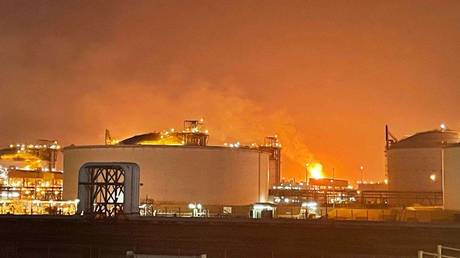
Paper agreements don't stop rockets. The ink was barely dry on the latest diplomatic effort before plumes of dark smoke again cut through the sky over southern Lebanon.
If you've been watching the Middle East, this isn't a surprise. It's a pattern. The United States and Iran tried to stitch together a fragile regional understanding, promising a pause in the brutal border war between Israel and Hezbollah. Instead, the reality on the ground immediately tore the script to shreds.
Hours after regional officials claimed a renewed truce was in place, the bombs started falling again. At least seven people died in an Israeli strike on the village of Barish, including two children. In response, Hezbollah launched dozens of projectiles at Israeli forces pushing through Lebanese border towns.
The conflict isn't just about localized border skirmishes anymore. This cycle of violence is actively choking a massive diplomatic effort in Europe and threatening to shut down global energy shipping lanes.
The Core Defect of the Truce
Diplomats love signing documents, but they frequently ignore the hard math of military positioning. The biggest reason this ceasefire collapsed instantly is that neither Israel nor Hezbollah actually signed the core diplomatic document.
The initial agreement was a broader memorandum of understanding drafted digitally between Washington and Tehran. The idea was simple on paper: Iran would press Hezbollah to halt operations, the US would restrain Israel, and both global powers would move toward a permanent deal in Switzerland.
It failed because it completely ignored what both fighting forces require to feel secure.
- Israel's forward defense zone: Prime Minister Benjamin Netanyahu made it clear that Israeli forces will not withdraw from the southern territory they captured. The military created a unilateral "Forward Defence" zone encompassing roughly 6% to 10% of Lebanon's territory, ordering hundreds of thousands of residents never to return.
- Hezbollah's line in the sand: Hezbollah refused to stop pulling triggers while Israeli soldiers occupied Lebanese soil. Their commanders view holding strategic hilltops, like Ali al-Taher overlooking Nabatiyeh, as a matter of survival.
When Israel tried to advance its tactical positions on those hilltops, Hezbollah fired. When Hezbollah fired, Israel launched a massive wave of 150 retaliatory airstrikes. Each side calls the other's actions a flagrant violation, but the truth is simpler: the deal asked both sides to freeze in positions they find militarily unacceptable.
Global Fallout in the Strait of Hormuz
The failure of this border truce triggered an immediate domino effect thousands of miles away. Enraged by the ongoing Israeli strikes in Nabatiyeh and the Bekaa Valley, Iran's Revolutionary Guard Corps declared the Strait of Hormuz closed.
Tehran claims the US failed its primary obligation to hold back Israel. By shutting down the strait, Iran directly targeted the global economy, attempting to cut off massive supplies of international oil and gas flowing through the narrow waterway.
The US military immediately pushed back against the claim. US Central Command reported that dozens of commercial vessels successfully completed the transit despite the Iranian threats. But the damage to diplomacy was already done.
The planned high-level talks in Switzerland between US Vice President JD Vance and Iranian officials collapsed before they could even begin. Iranian negotiators refused to board flights to Switzerland, stating that no talks can happen while southern Lebanon is being hammered by airstrikes.
The fighting has completely upended the timeline for regional stabilization, freezing talks on Iran's nuclear program and pushing the global energy market back into a state of severe friction.
What Happens Next
The conflict has evolved past a simple border dispute. It is now a direct lever used by regional powers to control international trade and nuclear diplomacy. Expect these three developments to play out immediately:
- Entrenched Occupation: Israel will continue using mass evacuation orders to keep southern Lebanese civilians from returning, turning the border region into a permanent, hardened military buffer zone.
- Asymmetric Retaliation: Lacking the firepower to match Israeli jets, Hezbollah will rely heavily on low-altitude drone strikes and short-range mortar barrages to inflict casualties on dug-in Israeli positions.
- Escalation in the Waterways: Even if the land war hits a temporary lull, Iran will keep using the threat of a Hormuz closure to pressure western nations into forcing an absolute Israeli withdrawal.
The lesson here is obvious. You cannot build a stable peace treaty by proxy. Until a framework directly addresses Israeli troop presence in southern Lebanon and Hezbollah's disarmament, any announced ceasefire is just a temporary pause to reload.