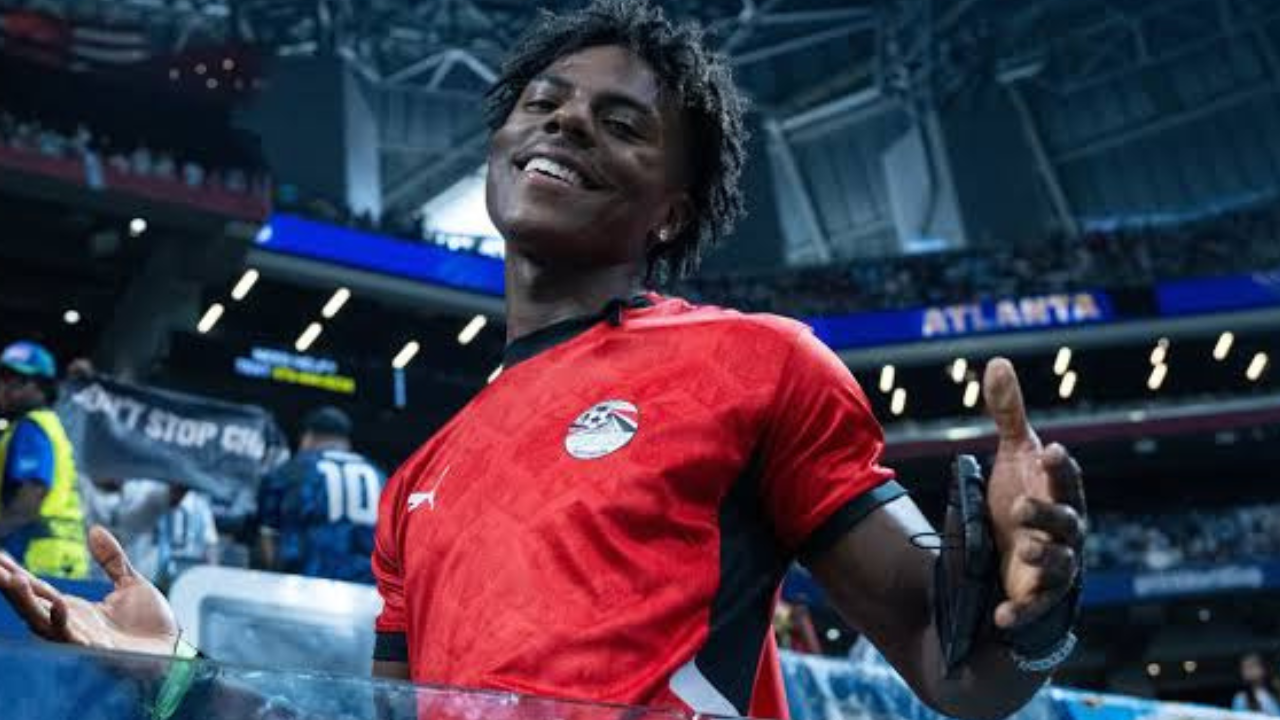
During a live broadcast of the Spain vs Belgium quarterfinal match at the 2026 FIFA World Cup, American streaming sensation Darren Watkins Jr., better known as IShowSpeed, paused his usual chaotic commentary to drop a bizarre bombshell. Looking straight into his camera while chatting with fellow content creator KSI, Speed declared that he is ready to suit up for the Indian national football team.
"India do need some help. I'll play for India. I'll help y'all make it to the next World Cup," Speed announced to his millions of viewers. When KSI pressed him on what position he would actually play, Speed initially scrambled before narrowing it down. He wants to be an attacking midfielder, operating right under the striker. For a different look, see: this related article.
It is a hilarious mental image: an energetic 21-year-old American internet star screaming down the pitch in the blue jersey of the Blue Tigers. But beneath the viral clip and the jokes lies a harsher reality about global football infrastructure, rigid eligibility rules, and India's multi-decade struggle to join the world elite.
The Reality Check on FIFA Eligibility Rules
Let's get the obvious out of the way. IShowSpeed cannot play for India. Even if the All India Football Federation (AIFF) wanted to sign him for the marketing value alone, international football does not work like a club transfer window. You cannot just buy a passport and step onto the pitch. Related analysis on the subject has been published by CBS Sports.
FIFA has incredibly strict rules regarding player eligibility, laid out in Article 5 through 9 of their Regulations Governing the Application of the Statutes. To represent a country in an official match, a player must fulfill at least one of the following criteria:
- The player was born on the territory of the relevant association.
- The player's biological mother or biological father was born on the territory of the relevant association.
- The player's grandmother or grandfather was born on the territory of the relevant association.
- The player has lived continuously on the territory of the relevant association for at least five years after reaching the age of 18.
Speed is an American citizen born in Ohio with no known Indian heritage. He hasn't lived in India for five weeks, let alone five years. From a legal standpoint, the dream ends before it even begins.
India Strict Policy on Dual Citizenship
Even if FIFA magically altered its rulebook, India poses an even bigger legal hurdle. Unlike many nations that allow athletes to hold dual nationality, India strictly prohibits dual citizenship under the Citizenship Act of 1955.
If a foreign-born athlete wants to represent India, they must completely renounce their original citizenship and obtain an Indian passport. This policy has historically crippled Indian football's ability to recruit talented players from the Indian diaspora overseas.
Talented footballers playing in the English Premier League or top European academies who happen to have Indian parents cannot play for the national team unless they give up their European or British passports. If actual professional players with direct Indian blood cannot bypass these laws, an American content creator has zero chance.
Why India is Still Waiting for Its World Cup Debut
Speed’s comments might have been a joke, but his underlying question resonates with football fans worldwide. Why isn't India at the World Cup?
The country is an absolute economic powerhouse and boasts a massive sports market, yet the national team has not qualified for a FIFA World Cup since 1950. Even back then, India didn't actually play a match; they withdrew from the tournament before it started due to travel costs and disagreements over team selection.
The issue isn't a lack of interest. Millions of fans across regions like West Bengal, Kerala, Goa, and the Northeast are deeply passionate about the sport. The real problem stems from decades of underfunded grassroots infrastructure, systemic mismanagement within domestic leagues, and a historic sporting monoculture that prioritizes cricket over every other discipline.
The national team relies heavily on domestic talent from the Indian Super League (ISL). While the ISL has grown significantly, the overall level of play still lags far behind the elite standard required to navigate the grueling Asian Football Confederation (AFC) qualification rounds.
The Real Power of the Speed Effect
While Speed won't be solving India's midfield creative deficit on the pitch, his obsession with the country is not meaningless. He visited India in 2023, drawing massive crowds on the streets of Mumbai and Delhi. His recent track, "World Cup (Champions)," even made it onto the official FIFA World Cup 2026 album.
When someone with over 57 million YouTube subscribers repeatedly asks why India isn't competing on the world stage, it forces a spotlight onto the sport's development in the country. It generates digital engagement that the AIFF could never replicate with a standard marketing budget.
India's journey to the 2030 World Cup won't be fueled by internet celebrities wearing the kit. It will require heavy investment in youth academies, a complete overhaul of scouting networks, and potential policy shifts regarding Overseas Citizens of India (OCI) athletes. Until those systemic changes happen, Indian football fans will have to stick to watching Speed scream at the television from the sidelines.
If you want to see India actually make it to the 2030 tournament, the best next step is supporting local grassroots football initiatives and tuning into domestic I-League and ISL matches to help build the financial ecosystem the sport desperately needs to survive.