Air superiority has always been treated as an American birthright. For decades, US warplanes operated from regional hubs with an assumption of near-total immunity. That illusion just shattered over Jordan. An Iranian missile strike on Muwaffaq Salti Air Base managed to pierce heavily defended airspace, damaging multiple American aircraft and leaving military planners scrambling to adapt.
The attack targeted the facility near Azraq, roughly 100 kilometers northeast of Amman. This isn't just some remote desert strip. It is a critical logistics and operational nerve center for US air operations across the Middle East. When incoming ordnance bypassed defensive batteries to hit parked hardware, it exposed deep vulnerabilities in regional air defense networks.
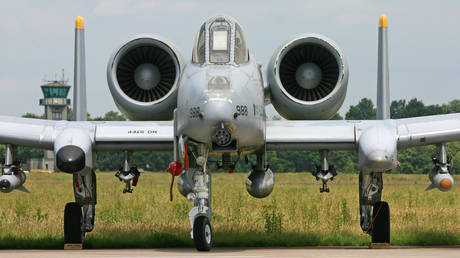
Let's look at the actual toll. One A-10 Thunderbolt II—the beloved and rugged Warthog—suffered severe wing damage. Alongside that iconic attack jet, roughly eight F-15 fighters sustained lighter damage but managed to return to operational status. While no US personnel were killed during the barrage, the financial and strategic cost is staggering.
Defending the base wasn't cheap either. US forces reportedly expended more than 30 Patriot interceptors trying to clear the skies. Meanwhile, Jordanian authorities confirmed they intercepted 18 incoming Iranian missiles, with two stray munitions crashing into unpopulated areas without causing casualties.
The Anatomy of the Escalation
This isn't happening in a vacuum. The strike in Jordan is part of a widening tit-for-tat confrontation centered on the Strait of Hormuz. Washington has clamped down hard on maritime traffic moving to and from Iranian ports. Tehran has responded by asserting its own controls over the vital waterway, which historically handles roughly a fifth of global oil supplies.
The economic fallout is immediate. Brent crude climbed past $100 a barrel as energy markets panicked over potential supply blockades. Combine these maritime bottlenecks with ongoing Houthi drone and missile strikes targeting critical energy infrastructure in Saudi Arabia, and you have a recipe for global economic shockwaves.
US Central Command has pushed back hard against parts of the narrative. Military officials rejected Iranian claims that two US Navy destroyers took direct hits in recent salvos. Instead, Washington emphasized its offensive response, noting that American forces destroyed ten Iranian crude carriers since early September, including five vessels targeted after Tehran launched ballistic missiles at a US warship.
Political Crossfire and Strategic Realities
President Donald Trump didn't mince words following the escalation. He publicly vowed to strike significantly more Iranian vessels if Tehran continues targeting American military assets. He also claimed that Iranian leadership is intentionally dragging out the conflict to influence US midterm political dynamics, banking on gains by domestic opponents who reject military intervention.
On the other side, Tehran isn't backing down. Foreign Ministry spokesman Esmail Baghaei laid the blame squarely on Washington, arguing that genuine peace requires an immediate halt to what he called malign and destabilizing American interventions in the region.
Iran has made its stance on neighboring host nations crystal clear. Tehran has repeatedly warned regional governments against letting the US use their territory or airspace for operations against Iranian targets. Last week, Foreign Minister Abbas Araghchi defended the retaliatory strikes directly, stating that Iran cannot be expected to hold back when Arab territory and airspace facilitate attacks against its homeland.
Since February, Iranian forces have methodically tested defensive perimeters across Bahrain, the UAE, Kuwait, and Jordan. These aren't random potshots. They are calculated moves designed to raise the political and military price of hosting American air power in the Middle East.
What Comes Next for Regional Security
The myth of untouchable forward-deployed airbases is dead. When multi-million-dollar fighter jets take shrapnel and structural damage while parked inside allied sovereign territory, the strategic calculus shifts overnight. Air defense commanders now face a brutal mathematical reality: defensive interceptors are expensive, finite, and prone to saturation during coordinated ballistic and drone volleys.
Expect a rapid shift in how the Pentagon postures its tactical aircraft. Dispersion, hardened aircraft shelters, and rapid mobility will replace reliance on centralized hubs. If you thought regional tensions were peaking, the burned tarmac in Jordan suggests the conflict has just entered a much more dangerous phase. Keep a close eye on maritime insurance rates, regional airspace restrictions, and further deployments of missile defense batteries in the coming weeks.


