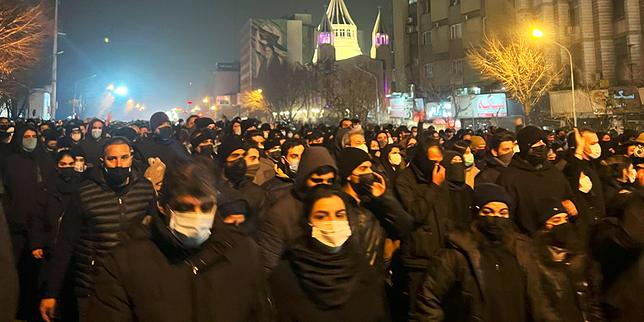
When external bombs stop falling on Iranian soil, the real terror begins behind closed doors. Most international analysts spend their time tracking missile trajectories and nuclear enrichment centrifuges, completely missing the domestic bloodbath happening in real time. Whenever foreign conflict flares up or diplomatic tensions reach a boiling point, Tehran doesn't unite its population. Instead, the ruling clerical establishment uses the fog of war as absolute cover to crush internal dissent with extreme prejudice.
If you want to understand why political oppression in Iran intensifies precisely when external threats grow, you have to look past standard geopolitical headlines and examine how the Islamic Republic preserves its survival at all costs.
The Siege Mentality Inside Tehran
Authoritarian regimes thrive on manufactured existential threats. When hostile rhetoric spikes internationally, the apparatus in Tehran pivots instantly. Dissent is no longer treated as civil disobedience or legitimate protest against crushing economic hardship; it's branded straight-up as treason and foreign collaboration.
The math of the regime is simple. If citizens are distracted by the immediate specter of war, or if civil society is completely atomized by fear, nobody is left on the streets demanding accountability.
Over recent years, major uprisings—from the "Woman, Life, Freedom" movement sparked by Mahsa Amini's death to massive labor strikes and economic protests—have met with unprecedented lethal force. Official figures and human rights groups document casualty numbers climbing into the thousands during intense crackdowns. Entire cities experience severe internet blackouts while security forces deploy live ammunition directly against crowds.
Why War Becomes a Convenient Shield for Domestic Atrocities
External conflicts give the Islamic Revolutionary Guard Corps (IRGC) an open mandate to implement total domestic lockdowns. Rights organizations like Amnesty International and Human Rights Watch have repeatedly highlighted how post-conflict periods trigger waves of arbitrary mass arrests.
Journalists, human rights defenders, lawyers, and family members of past victims are rounded up under broad national security pretexts. Minority groups—including Baluch, Kurdish, Baha'i, and Christian communities—bear an even heavier brunt of this state-sponsored paranoia.
- Surveillance spikes: Digital tracking and street-level monitoring triple overnight.
- Show trials: Judiciary branches rush through hasty, closed-door proceedings that routinely end in capital punishment.
- Information blackouts: Independent reporting inside the country becomes nearly impossible as state censors clamp down.
The strategy relies entirely on isolation. By cutting off digital communication channels and intimidating families into silence, the state ensures that internal atrocities rarely make it past local borders.
The Myth of National Unity Under Fire
External observers often wonder why ordinary citizens don't leverage national crises to demand democratic transitions. The reality on the ground makes that nearly impossible. When a population is caught between external military threats and internal security apparatuses executing citizens at checkpoints, survival takes precedence over revolution.
The regime has mastered the art of weaponizing dual pressures. If you protest the government's economic failure or mandatory social laws during a regional crisis, state media paints you as an agent working for foreign adversaries. This rhetorical trap allows the state to justify executions and long-term imprisonment without facing mainstream domestic pushback.
What the International Community Misses
Diplomatic efforts focusing solely on nuclear deals or regional ceasefires routinely fail to address human rights abuses on the ground. When peace protocols are negotiated without clauses for accountability, victims of domestic crackods are left completely abandoned.
Impunity breeds repetition. Until foreign policy frameworks tie diplomatic engagement directly to the cessation of internal executions and arbitrary detentions, the cycle will repeat. Every single time the shadow of external war recedes, the internal iron fist comes down harder, keeping millions of citizens trapped in an endless loop of domestic terror.