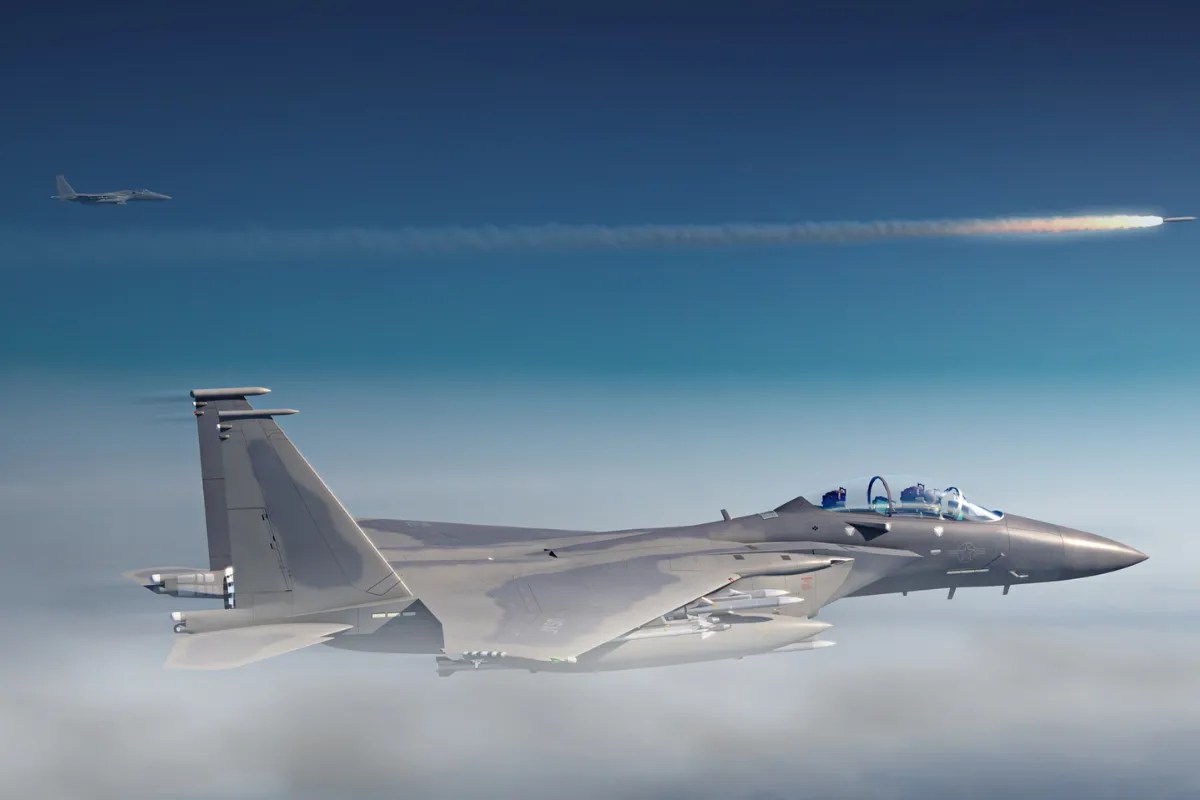
An American F-15 pilot shot down over Iran just revealed something that has the Pentagon sweating. Before ejecting from his burning jet in April, he looked out his canopy and saw a bizarre, nightmare-inducing sight. It wasn't a standard formation of quadcopters or missiles. He described a massive, interconnected cluster of Iranian drone technology moving in unison, looking exactly like a giant mechanical jellyfish floating through the sky.
The pilot told intelligence officials it looked like real alien stuff. Larger drones held the top position while smaller ones hung underneath like legs, acting as a single, coordinated entity.
This isn't just a weird pilot story. It marks a terrifying shift in modern aerial warfare. If the account is accurate, it means Iran has cracked a military capability that western intelligence didn't think they possessed.
The Mystery Behind the Downed Strike Eagle
The downing of the F-15E Strike Eagle, call sign Dude 44, was already a massive blow. It was the first American fighter jet shot down over Iran during this conflict. The pilot was pulled out by special forces within seven hours, but his weapons systems officer had to hike through the freezing peaks of the Zagros Mountains for over a day to evade capture.
While the military is still officially investigating what brought the jet down, initial intelligence assessments point directly to this jellyfish formation. It wasn't just passive observation. The drone swarm likely played a direct role in blinding or overwhelming the fighter's defensive systems.
US intelligence officials are currently locked in a fierce internal debate over whether to trust the report. The pilot suffered a severe concussion during the violent ejection. To make things more complicated, this was his second time being shot down in the conflict, following an earlier friendly-fire incident. Officials openly questioned him during debriefings, asking if he was absolutely certain about what he saw. Concussed brains play tricks, but the details he provided are too specific to ignore.
Understanding One To Many Meshed Networking
What the pilot witnessed is known in military circles as one-to-many meshed networking. This isn't your hobbyist drone show where a central computer tells each drone where to fly. In a true mesh network, the drones talk directly to each other. They share data, calculate distances, and adjust their behavior autonomously without needing a constant signal from a base station.
If you shoot down the lead drone, the others instantly adapt. The remaining machines recalculate the mission parameters and keep moving toward the target.
[Central Command] ---> (Lead Mother-Drone)
                             |
         +-------------------+-------------------+
         |                   |                   |
 (Sub-Drone Left)    (Sub-Drone Center)   (Sub-Drone Right)
         ^                   ^                   ^
         |                   |                   |
         +<--- Meshed Inter-Drone Comms -------->+
Until now, only Russia and China were believed to have functional versions of this technology. Iran was thought to be years away from mastering the complex software algorithms required to pull this off.
Tehran has been pumping out thousands of cheap Shahed suicide drones for years, relying on numbers rather than sophistication. This new intelligence suggests a massive tech leap. They didn't build this in isolation. Analysts believe China and Russia shared critical software architectures with Tehran in exchange for ballistic missiles and battlefield data.
Why Current Air Defenses Fall Short
Defending against a single drone is easy. Defending against an interconnected swarm that acts like a single organism is a nightmare.
Our current multi-million dollar air defense systems are designed to track and destroy fast-moving, predictable targets like fighter jets or cruise missiles. When faced with a low, slow, and constantly shifting minefield of small drones, traditional radar gets confused. Firing a three-million-dollar Patriot missile at a ten-thousand-dollar drone is a losing strategy.
American defense firms like Anduril and Epirus are rushing high-power microwave weapons and kinetic interceptors to the field, but the tech isn't scaled yet. The Pentagon is playing catch-up against an adversary that figured out how to weaponize cheap consumer tech on a massive scale.
What Happens Next
The era of American absolute air superiority is hitting a wall. If cheap, interconnected drone swarms can knock out advanced multi-role fighters, the economics of air combat flip upside down.
Watch the upcoming satellite imagery releases and defense briefing transcripts over the next few weeks. The real tell won't be what the Pentagon says publicly, but how quickly they shift funding toward directed-energy weapons and electronic warfare counter-measures. The jellyfish in the sky was a warning shot. Air warfare just changed permanently.