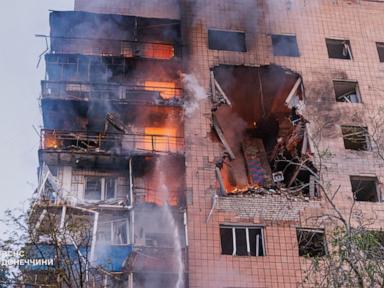
When the residence of a supreme leader gets hit by a precision strike, the world watches. When the regime responsible claims a "security hole" allowed the attack to happen, you know they are scrambling to save face. Iranian Foreign Minister Abbas Araghchi recently pointed to a massive intelligence failure behind the strike on Tehran, and frankly, the implications are much worse than a simple software bug or a forgotten door lock.
We aren't talking about a random act of violence. This was a surgical operation that penetrated the most protected layer of the Iranian state. When Araghchi mentions a "security hole," he is signaling that the internal trust of the Islamic Revolutionary Guard Corps (IRGC) has been fundamentally compromised.
The anatomy of a compromised inner circle
Espionage isn't just about satellites and code. It’s about human beings. You can build the thickest concrete walls, install the most expensive jamming equipment, and hide your leaders in underground bunkers. None of that matters if the person standing next to the target is feeding coordinates to an adversary.
History shows us that high-level security breaches usually stem from one of three things: human intelligence (HUMINT), signal intercepts, or cyber-physical infiltration.
In the case of the Tehran strike, the "security hole" narrative serves a dual purpose. It explains how the strike occurred without admitting the state's military technological inferiority, and it justifies the inevitable internal purge that follows such an embarrassment. If you are a high-ranking official in Tehran today, your loyalty is being questioned. The environment of paranoia is now officially the new baseline.
Why precision strikes change the math
For decades, the standard playbook for regional powers was proxy warfare. You support a militia group, you launch cheap drones, you lob rockets. It’s deniable. It’s relatively low risk. But the move toward precision strikes on state leadership residences shifts the entire game.
When a state actor—implied to be Israel, likely with backing or intelligence from the US—decides to hit the home of a top official, they are sending a message that "total protection is a myth."
Consider these factors that make modern defense nearly impossible:
- Real-time data fusion: Combining drone footage, cell phone metadata, and satellite imagery allows attackers to verify a target's presence within seconds.
- Micro-drones: These systems can fly under radar detection, making traditional air defense batteries essentially useless.
- Cyber-physical convergence: If an attacker can hack a building’s smart lighting or internal security grid, they can confirm a target is inside before the missile even leaves the silo.
The failure of the defensive perimeter
Araghchi’s admission underscores a massive reality check. The Iranian security apparatus, long considered one of the most capable in the Middle East, failed at the most basic level of counter-intelligence.
You don't just "leave a window open" for a state-level strike. This level of access requires persistent, long-term infiltration. It suggests that the adversary had access to internal schedules, movement patterns, and perhaps even secure communication channels. When a leader is hit at home, it means the people responsible for his safety were either incompetent, compromised, or neutralized.
The political fallout is already starting. Iran’s security agencies are now forced to undergo a total structural overhaul. This means replacing vetted loyalists, disrupting established communication nodes, and—most importantly—creating a culture of silence that will likely cripple their operational efficiency for months or years.
Distinguishing rhetoric from operational reality
Governments love to use the term "security hole" because it sounds technical and manageable. It frames a catastrophic intelligence failure as an IT problem. It is much easier to tell the public, "We had a glitch in our firewall," than to admit, "We have spies in our highest command structure."
Do not fall for the sanitized language. This was not a glitch. It was a successful penetration of the inner sanctum of the Iranian government. By blaming a vague security hole, the ministry is trying to stop the bleeding of public confidence while they hunt for the mole.
What comes next for regional security
Expect to see a massive pivot toward "analog" operations in Tehran. When you know your digital and human networks are compromised, you stop using phones. You stop using email. You go back to paper couriers and face-to-face meetings in controlled environments.
This creates a paradox for the regime. While analog methods are harder to hack, they are also slower and less efficient for coordinating military maneuvers. By forcing Iran to move away from modern, integrated communication systems, their adversaries have already achieved a strategic victory. They have effectively blinded the command structure by forcing it into the shadows.
If you are following this situation, watch for these three indicators of the ongoing fallout:
- High-level dismissals: Look for sudden, unexplained retirements of senior IRGC intelligence officers.
- Communication blackouts: Noticeable drops in electronic chatter from known command centers.
- Border tightening: Increased efforts to track and monitor movement of personnel who have access to sensitive state locations.
Security isn't a static achievement. It is a constant, exhausting process of patching leaks before they become floods. Tehran just learned the hard way that they were already underwater.