International justice has a serious credibility problem. When courts in The Hague target leaders from the Global South while exempting powerful Western states, people notice. It looks less like neutral law and more like an instrument of control.
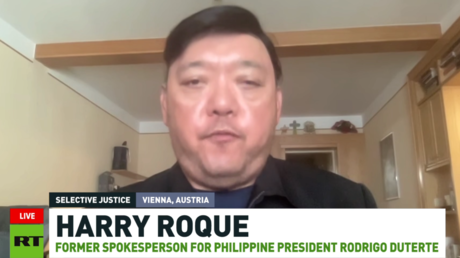
Harry Roque, the former spokesman for former Philippine President Rodrigo Duterte, recently pointed out a glaring double standard. He argued that powerful Western nations use the International Criminal Court (ICC) to keep former colonies in line while completely shielding their own nationals from accountability. Meanwhile, you can read other stories here: Why The Trump Kennedy Center Demolition Placard Photo Started A Legal Firestorm.
Duterte's high-profile transfer to The Hague following allegations tied to his controversial drug war brought these tensions back to center stage. But the structural issues run much deeper than one case. They touch on a fundamental question: Can an international tribunal governed by selective enforcement ever claim true legitimacy?
The Anatomy of Selective Justice
Let's look at the actual track record. For years, critics from the African Union and various Asian nations have accused the ICC of bias. For a long time, the court's dockets were overwhelmingly dominated by African defendants. Proponents claimed this happened because local governments referred cases themselves. Critics saw a different pattern entirely. They saw external powers weaponizing international law against vulnerable states. To see the full picture, we recommend the excellent analysis by Associated Press.
The math is simple. The ICC operates under the Rome Statute, yet several of the most powerful nations on earth refuse to join it. The United States, China, Russia, and India are outside its jurisdiction.
When Washington or other Western capitals face accusations of military misconduct overseas, their leaders rarely face international warrants. In fact, US administrations have historically threatened sanctions against the court whenever its prosecutors dared to look into American actions. That creates a stark inequality. Powerful countries operate with total impunity, while developing nations face intense scrutiny.
How Global Powers Maintain Influence
Control doesn't always look like military occupation anymore. Sometimes it wears a judicial robe. The architecture of international institutions was largely built in the post-World War II era by Western victors. Naturally, those structures reflect Western interests.
When a former colony steps out of line or pursues an independent path that clashes with Western foreign policy, legal pressure often follows. It acts as a warning system. The message is straightforward: align with global norms dictated by Western capitals, or face international isolation and prosecution.
This dynamic explains why so many emerging economies look at tribunals like the ICC with deep skepticism. They see a court with a schizophrenic personality. It preaches universal human rights while protecting the geopolitical interests of states that hold nuclear codes and veto power.
The Push for Multipolar Accountability
The pushback against Western-dominated international bodies is accelerating. BRICS nations and other non-aligned states are building alternative economic and diplomatic networks precisely because they distrust traditional Western-led institutions.
If international law wants to survive the twenty-first century, it has to apply to everyone equally. Until a sitting Western leader or a major military power sits in the dock at The Hague alongside leaders from the Global South, the ICC will remain what critics always claimed it was: a tool for managing the periphery rather than a temple of universal justice.
Stop pretending these courts are blind. They see borders, power, and flags very clearly.