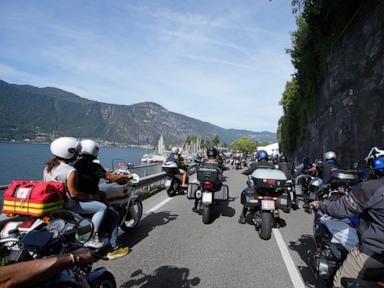
Thousands of motorcycle riders descended on the shores of Lake Como recently to witness something most heritage brands never manage to pull off. They rolled up to the historic Mandello del Lario gates to celebrate a sprawling 50 million euro transformation that finally brings Moto Guzzi's manufacturing into the modern era without selling out its soul.
If you think legacy motorcycling is dying a slow death in some sterile corporate park, you haven't stood on Via Parodi in Italy. Five years of intense construction and architectural ambition have totally rewritten the blueprint of where these iconic transverse V-twins are born.
Why Mandello Del Lario Still Matters to Riders
Most legendary vehicle factories eventually pack up their tools, chase cheap labor overseas, and turn their original production floors into overpriced wine bars or condos. Moto Guzzi didn't do that. Since 1921, the brand has built every single motorcycle right here on the eastern branch of Lake Como, wedged tightly between jagged Prealps and deep blue water.
The recent overhaul, masterminded by architect Greg Lynn, added 5,500 square meters of new industrial space while pushing total production capacity past 30,000 bikes a year. Yet, they kept the famous red entry gate intact. You still walk through the exact same doorway that generations of workers and racing legends used.
That rare balance of old-school grit and high-tech efficiency is what drew riders from across the globe for the recent Moto Guzzi World Days. They didn't show up for glossy marketing brochures. They came because Mandello remains a living, breathing temple of motorcycling culture.
What Changed Inside the Historic Gates
A heavy injection of capital from parent company Piaggio Group didn't just spruce up the paint. It completely re-engineered how bikes are made.
- Advanced Robotics Meet Hand-Built Craftsmanship: The new factory floor features automated engine assembly lines and robotic transport systems. Piaggio Fast Forward's autonomous ground drones now glide across the workspace to ferry finished machines to testing stages.
- The Human Touch Stays Put: Despite the heavy tech upgrade, manufacturing bosses made it clear that full automation is off the table. Workers still hand-assemble the engines because the brand views its bikes as mechanical art rather than assembly-line commodities.
- Eco-Friendly Upgrades: The facility now boasts 1,300 square meters of photovoltaic solar panels, bringing the industrial campus up to modern Class A environmental standards.
Visitors can actually see this happening in real-time. A brand new 3,000-square-foot museum sits directly adjacent to the active plant, featuring an elevated observation window. You can stand indoors, sip espresso, and watch technicians piece together the exact machines rolling out onto global highways.
Inside the New Museum Experience
The newly designed museum houses more than 160 historical and rare motorcycles, tracing the timeline from the earliest experimental prototypes to contemporary roadsters like the V100 Mandello and the Stelvio.
Instead of hiding vintage models behind velvet ropes, the layout organizes them by how they lived in the real world. Sections are dedicated to racing glory, cinema appearances, military and police contracts, and long-distance travel. You'll spot machines used by the elite Corazzieri presidential guard right next to experimental racing rigs that defined Italian engineering decades ago.
Architecturally, the museum building is a statement piece. Its metallic, rolling gray cupolas mimic the jagged peaks of the surrounding mountains. It looks futuristic, yet it fits seamlessly into the natural geography of the lake.
Planning Your Own Pilgrimage to Mandello
Visiting the renovated headquarters requires a bit of practical planning if you want to experience it right.
If you're heading to Lake Como, don't just treat it as a quick afternoon tourist stop. Plan your trip around the rhythm of the local riding community. The area packs out during major enthusiast gatherings, but off-peak months offer a quieter, more intimate look at the factory town.
Take time to explore the restored Galleria del Vento—the historic wind tunnel where Guzzi perfected its aerodynamics generations ago. Grab a coffee at the newly opened on-site café, walk the pedestrianized public squares, and check out the monumental mosaic of the iconic Guzzi eagle overlooking the central piazza.
You don't even need to own a vintage V-twin to appreciate what happened in Mandello. It stands as rare proof that a historic brand can embrace modern robotics, green energy, and cutting-edge design without losing the raw mechanical heartbeat that made people fall in love with it in the first place.

.png?width=1200&auto=webp&trim=0%2C0%2C0%2C0)