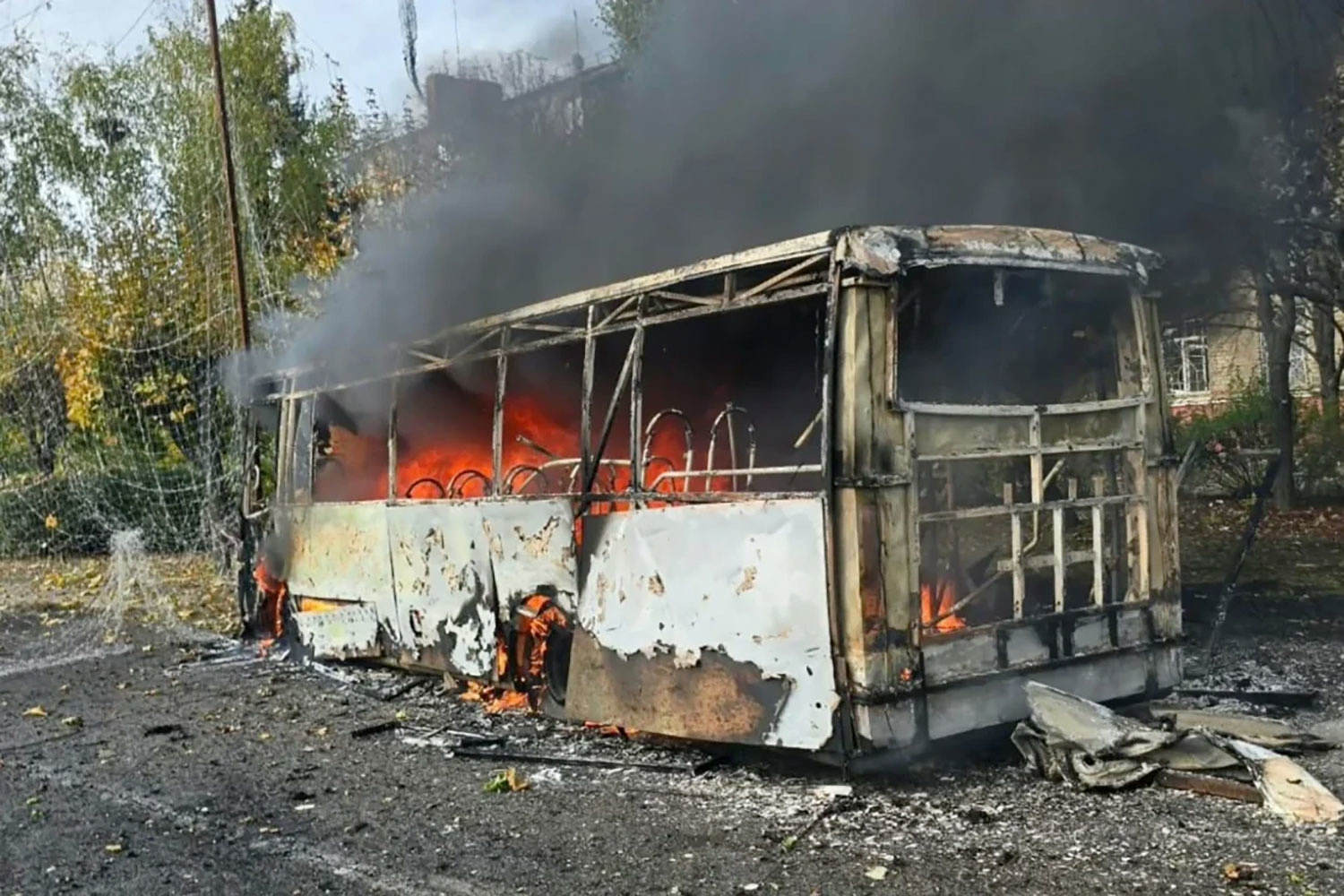
War doesn't always roar with artillery. Sometimes it arrives silently from the clouds, tearing through a civilian vehicle in a matter of seconds. When a Russian glide bomb slammed into civilian buses near Kramatorsk in eastern Ukraine, thirty lives vanished instantly, leaving at least eighteen others wounded and an entire nation grappling with a brutal new normal.
Let's talk about why this specific attack matters. Frontline communities aren't abstract geopolitical zones. They are filled with ordinary citizens trying to commute, work, and survive amidst constant conflict. Glide bombs have transformed modern warfare. They are heavy, devastating, and notoriously difficult to intercept when deployed close to contested urban sectors.
The Grim Reality of Frontline Transit
Traveling near active combat sectors in eastern Ukraine is a high-stakes gamble. Public transportation routes function as lifelines for evacuees and essential workers. When these corridors become targets, the line between military infrastructure and civilian life blurs completely. Local authorities confirmed that the impact tore through two transit vehicles, causing catastrophic casualties that overwhelmed nearby emergency services within minutes.
You hear numbers like thirty dead on the news and your brain tries to detach. Don't let it. Each number represents someone standing at a stop, someone carrying groceries, someone heading toward safety.
Why Glide Bombs Change the Equation
Military analysts have watched the tactical shift toward glide munitions with growing dread. They allow aircraft to launch payloads from miles away outside the immediate range of many short-range air defense systems. When directed at crowded civilian transit points in cities like Kramatorsk, the destructive radius guarantees mass casualties.
If you're following humanitarian updates from the region, watch closely how emergency logistics adapt. Evacuation protocols are shifting rapidly as transit routes face higher frequencies of targeted aerial strikes. Local volunteers and municipal workers continue risking their lives to clear wreckage and transport survivors to overburdened regional hospitals.
Stay informed through verified local field reports rather than sanitized summaries. Understand the heavy human toll behind every tactical headline.