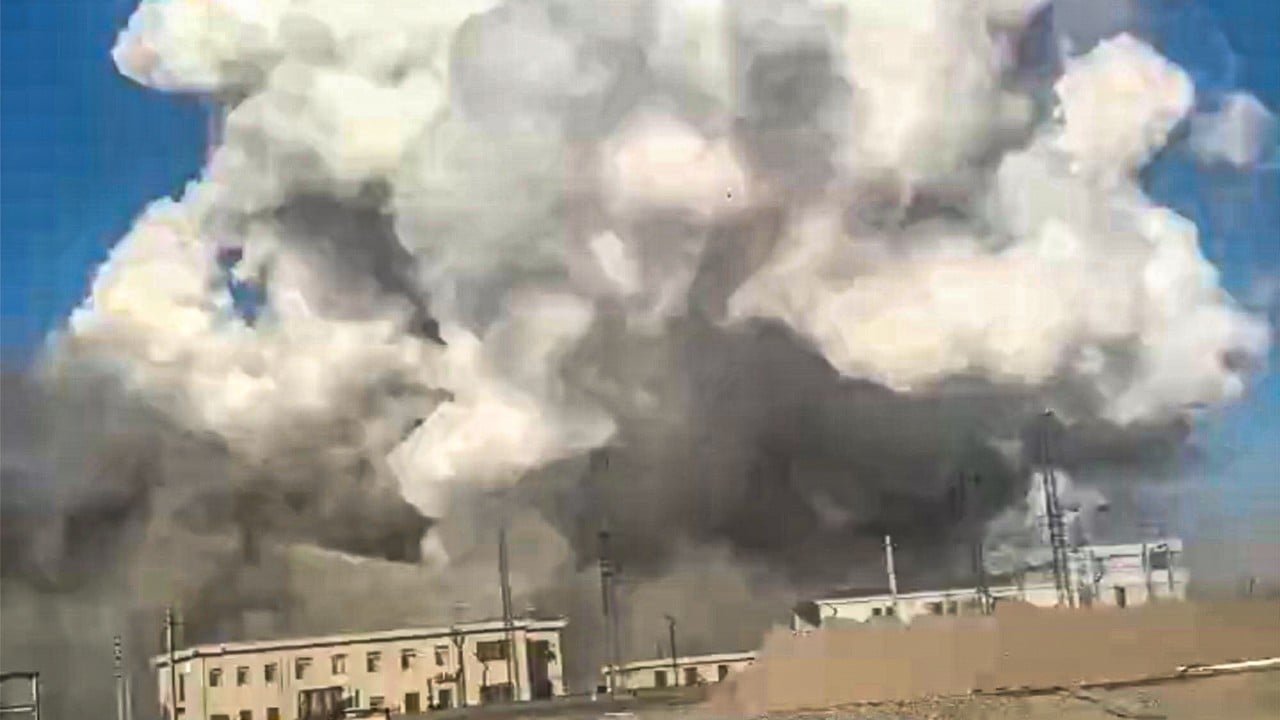
Ten people died and eighty-four others were injured because basic maintenance was ignored. When a massive pressure vessel ruptured at a steel plant in Baotou, Inner Mongolia, it wasn't just a sudden stroke of bad luck. It was the predictable outcome of chronic negligence, poor oversight, and ignored warning signs. Now, seven plant employees face criminal arrest, while authorities have held a staggering sixty-two people accountable across corporate and regulatory lines.
The disaster happened on January 18 at a plate plant operated by Baotou Steel Group. Official investigation findings released by the regional emergency management department point directly to a catastrophic failure of a spherical pressure vessel used for storing saturated water and steam.
The Anatomy of a Avoidable Industrial Disaster
Heavy industrial plants rely heavily on strict monitoring protocols. When those protocols break down, disasters follow. Investigators found that the vessel's inner wall suffered from severe, long-term corrosion coupled with stress damage. Over time, alkaline stress corrosion cracking and corrosion fatigue ate away at the metal.
The structural integrity didn't vanish overnight. The damage accumulated silently until the tank wall finally breached. Saturated water leaked near a lower circumferential weld.
Here is where human failure compounded mechanical failure: workers noticed the leak, but no effective emergency response was deployed. For roughly ninety minutes, pressure built up inside the compromised vessel. Without proper intervention or immediate shutdown procedures, the weakened weld gave way completely. The tank disintegrated, triggering an explosive flash evaporation that sent debris flying across a five-kilometer radius. The blast wave and falling shrapnel even disrupted local rail tracks.
Accountability Spreads Beyond the Factory Floor
A disaster of this magnitude rarely stops at low-level operators. The official inquiry didn't just target the people standing next to the machinery. It exposed systemic rot across multiple layers of management and governance.
Prosecutors in Baotou's Kundulun district approved the arrests of seven plant employees on criminal charges. Another six individuals have been recommended for criminal judicial investigation. Beyond direct criminal proceedings, the fallout touches sixty-two total individuals, drawing in corporate executives from Baogang Group subsidiaries, safety regulators, and local government watchdogs.
Four separate companies tied to the plant and its infrastructure face steep administrative penalties. Meanwhile, local municipal and district authorities were forced to submit formal written self-examinations to higher government levels. This bureaucratic slap on the wrist highlights a recurring problem in heavy manufacturing hubs: local regulators often look the other way until bodies pile up.
What Heavy Industry Keeps Getting Wrong
The Baotou blast underscores a painful truth about industrial safety culture. Companies love to invest in production speed, output quotas, and rare earth manufacturing efficiency—the plant specialized in composite steel products containing rare elements like lanthanum and cerium. Yet, they routinely underfund routine inspections and preventative maintenance.
Corrosion doesn't hide itself. Non-destructive testing, ultrasonic thickness checks, and pressure vessel audits are standard practices designed to catch exactly this kind of structural fatigue. When management treats compliance as an administrative checkbox rather than a literal lifeline, disaster becomes a matter of when, not if.
Workers on the ground are often left to manage aging infrastructure without proper training or clear protocols for handling sudden leaks. When a high-pressure line or tank begins to fail, ninety minutes of hesitation is all it takes to turn a manageable maintenance issue into a regional catastrophe.
Heavy manufacturing centers across the globe must treat aging pressure vessels and steam systems with extreme caution. Safety management systems fail not because people don't know the rules, but because management incentivizes production over safety until tragedy forces accountability.