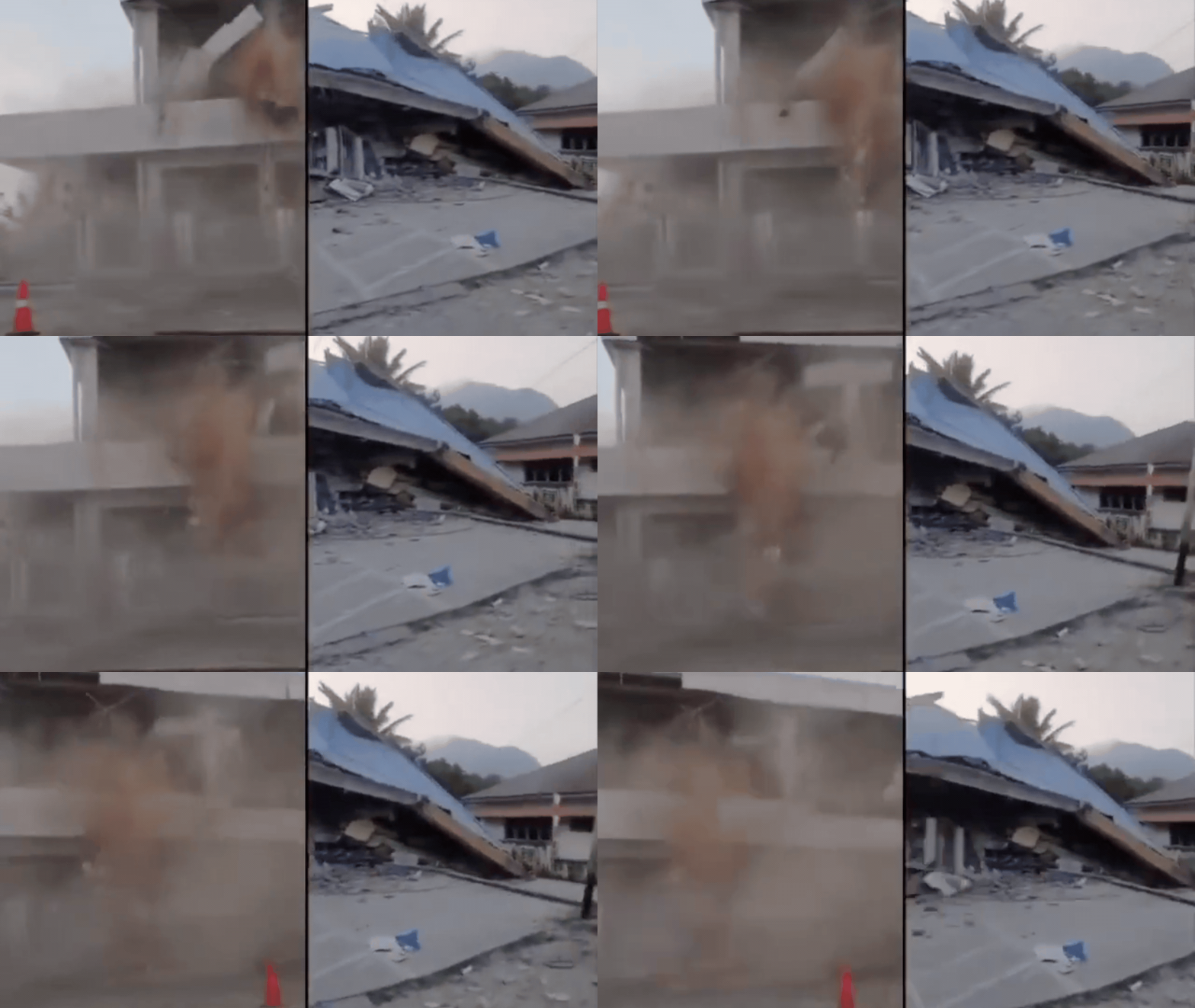
Ground shook violently across eastern Indonesia when a monstrous 7.7-magnitude earthquake struck off the coast of Flores. It wasn't just a single jolt. Within a punishing 24-hour window, the region faced a barrage of seismic violence that left at least 47 people dead, flattened homes, and triggered widespread panic.
If you wonder why this archipelago constantly battles nature's most violent outbursts, the answer lies right beneath the surface. Let's look at what actually happened during this disaster and why Indonesia sits on the planet's most volatile geological frontline. Discover more on a connected subject: this related article.
The Anatomy of a 24-Hour Seismic Crisis
The devastation kicked off at approximately 5:58 AM local time. The epicenter of the main 7.7-magnitude earthquake sat near Ende in the East Nusa Tenggara province. Because the hypocenter was exceptionally shallow—only about 10 kilometers deep—the energy didn't dissipate before slamming into the surface.
Widespread structural damage followed immediately. In areas like Maumere within the Sikka Regency, buildings crumbled into rubble, trapping residents and driving up the death toll. Landslides choked mountain roads, cutting off remote villages and turning standard rescue operations into logistical nightmares. Additional reporting by BBC News delves into similar perspectives on this issue.
Authorities rushed to issue tsunami warnings for eastern Indonesia. While the official warning was lifted hours later after monitoring showed no massive destructive wave surge, local officials confirmed that localized tsunami activity did reach the shoreline, including a 1.6-meter wave in Riung village. Thousands of terrified residents fled to higher ground on foot, abandoning their homes as safety precautions.
The main shock was only the beginning. More than 230 aftershocks hammered the region within a single day. A potent 6.1-magnitude aftershock struck while survivors were still trying to process the initial destruction.
To make matters worse, this wasn't even the only major event. A separate 6.9-magnitude earthquake struck near the island of Sumatra. Fortunately, that second major quake occurred at a much deeper level of 172 kilometers, which significantly blunted its surface impact and prevented further casualties.
Why Indonesia Gets Hit Hardest
You cannot look at Indonesia's geography without recognizing its permanent hazard status. The country sprawls across the Pacific "Ring of Fire". This horseshoe-shaped belt contains over seventy-five percent of the world's active volcanoes and experiences ninety percent of all global earthquakes.
Tectonic plates constantly grind, collide, and subduct beneath each other here. The Indo-Australian plate pushes aggressively beneath the Eurasian plate. When friction locks these plates together, pressure builds silently for years. When the rock finally fractures under extreme stress, the release of energy is catastrophic.
Shallow quakes like the one near Flores cause maximum damage because the shockwaves hit population centers with raw, unfiltered force. Deeper quakes, like the Sumatra event, lose their punch before reaching ground level. Understanding depth is just as important as reading the Richter scale.
The Immediate Aftermath and Challenges on the Ground
Disaster management agencies report that hundreds of houses sustained heavy damage or complete destruction, forcing roughly 2,000 villagers into temporary evacuation shelters. Hospitals in affected areas had to wheel patients outdoors, setting up makeshift triage units under tents to escape incoming aftershocks that threatened to bring weakened hospital roofs down.
Rescue teams face grueling conditions. Downed power lines knocked out local electrical grids, plunging towns into darkness and wiping out communications. Without reliable mobile networks or clear roads, getting heavy excavation equipment to collapsed buildings remains an uphill battle.
Staying Prepared in High-Risk Zones
If you live in or travel through active seismic regions, complacency is dangerous. Governments and local communities emphasize rapid-response protocols, but individual readiness saves lives during the critical first minutes when official help cannot reach you.
- Secure heavy furniture, water heaters, and bookshelves to wall studs to prevent indoor crushing hazards during violent shaking.
- Identify safe structural spots indoors, such as sturdy tables, and stay away from glass windows or unreinforced masonry.
- Keep an emergency go-bag ready with clean water, non-perishable food, a battery-powered radio, flashlights, and vital medications.
- Move immediately to high ground if you feel a prolonged, violent earthquake near a coastline, long before an official siren sounds.
Check your local emergency management channels today, map out your nearest evacuation routes, and ensure your family has a designated communication plan before the ground starts moving again.