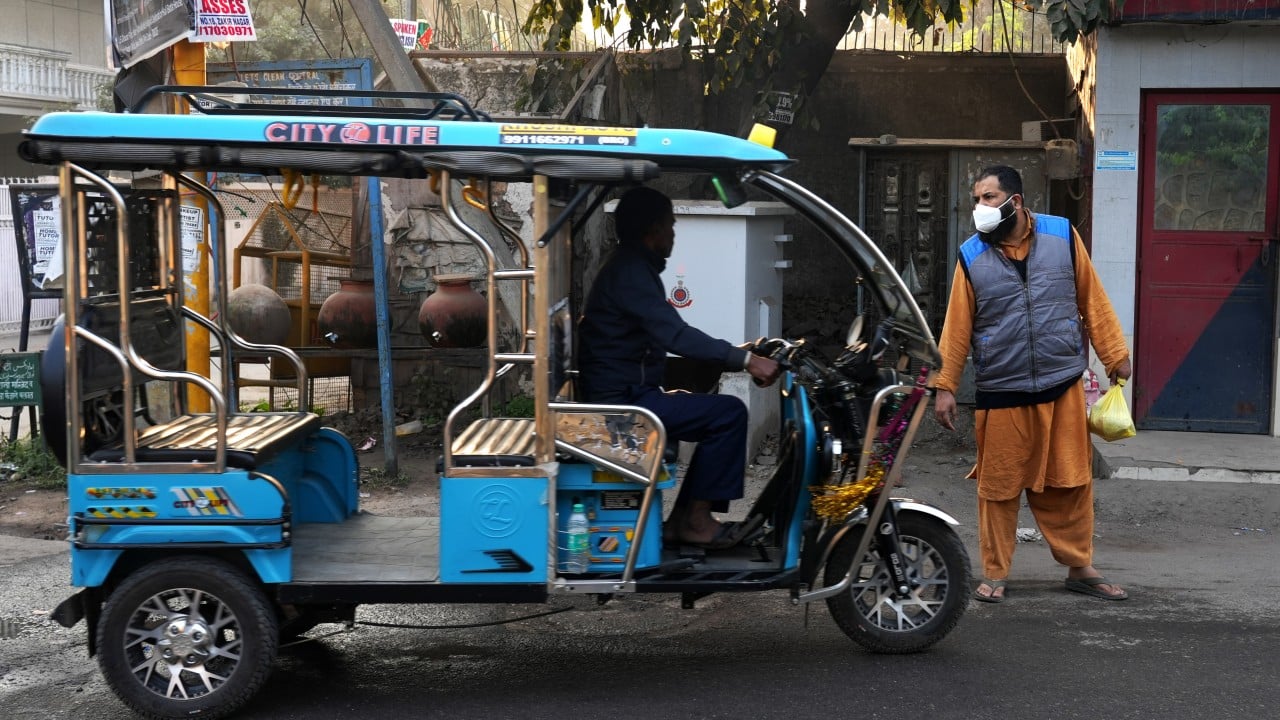
You pull up to a petrol pump in New Delhi, ask the attendant to fill it up, and drive off. A few weeks later, you notice something is off. Your engine feels slightly sluggish when you turn on the air conditioning or try to overtake on the highway. Worse, your monthly fuel bill is creeping up because your mileage has suddenly plummeted.
You aren't imagining things. And you definitely aren't alone.
As of April 2026, the Indian government made E20 petrol—fuel blended with 20% ethanol—the mandatory, default standard across every single fuel station in the country. Pure petrol has essentially vanished unless you want to pay exorbitant premium prices for 100-octane fuels that cost over ₹150 a litre.
While the government celebrates this as a massive win for green energy and a major step toward cutting crude oil imports, millions of vehicle owners are left holding the bag. They're angry, their engines are taking a beating, and the official responses to their very real concerns range from tone-deaf to outright dismissive.
The Math Behind Your Shrinking Mileage
Let’s get one thing straight. Ethanol has about one-third less energy density than pure gasoline. When you mix 20% of it into your petrol, you are objectively getting less energy per litre of fuel.
The government’s official stance, backed by state-run studies, claims that the drop in fuel efficiency is "marginal"—somewhere between 3% and 6%.
But real-world drivers don't drive in a sterilized laboratory.
A recent nationwide survey by LocalCircles revealed a stark disconnect:
- 66% of pre-2023 petrol vehicle owners reported a mileage drop of more than 10% since the rollout of E20.
- Many motorists report real-world drops of 10% to 15%.
- For a driver who used to get 18 km/l, that means dropping to 15 or 16 km/l.
Essentially, you are paying the same price (if not more) for a fuel that takes you less distance. It’s a hidden tax on every single commuter in India, packaged as an environmental triumph.
Why Older Engines Are Literally Rotting From The Inside
If a slight drop in mileage was the only issue, people might just grumble and move on. But the mechanical reality of ethanol is far more destructive for older vehicles.
Before April 2023, almost no car or two-wheeler manufactured in India was designed to handle E20 fuel. Most were built for E5 or E10 at best. Fully E20-compliant models didn't even start dominating the market until 2025.
Here is what ethanol does to an incompatible engine over time:
Moisture Magnet
Ethanol is highly hygroscopic, meaning it greedily draws moisture right out of the air. When water mixes with ethanol, it settles at the bottom of your fuel tank. This causes rust in steel fuel tanks, corrupts fuel lines, and clogs fuel injectors.
Chemical Corrosion
Ethanol is a powerful solvent. It actively eats through rubber hoses, plastic seals, and gaskets that weren't specifically treated to resist it. Over time, these parts swell, crack, and leak. If you're driving a model from 2018 or 2020, your fuel system is slowly degrading every time you fill up.
The Warranty Trap
If your pre-2023 car experiences engine damage because of E20 fuel, don't expect the manufacturer to pay for it. Most official manuals explicitly state that using fuel with more than 10% ethanol voids the engine warranty. You're stuck paying thousands of rupees for repairs caused by a fuel you were forced to buy.
The Jolt Versus The Slow Glide: The Brazil Comparison
Whenever critics point out these massive flaws, the government loves to point to Brazil as the golden standard. "Look at Brazil," they say, "they run on high ethanol blends and even pure ethanol!"
Yes, they do. But they didn't do it overnight.
Brazil began its ethanol transition in 1931. It took them decades of gradual shifting, heavy industrial coordination, and massive policy consistency to make it work. Crucially, they gave consumers choices.
In Brazil, you can pull up to a pump and choose what you want based on your vehicle and your budget.
India, on the other hand, chose a jolt. The government aggressively advanced its 20% blending target from the original 2030 deadline to 2025. By April 2026, the transition was absolute. There was no phased transition, no "protection fuel" left for older cars, and absolutely zero choice at the pump.
The 2021 NITI Aayog roadmap originally recommended keeping E10 widely available as a protection fuel for legacy vehicles. The government ignored its own advisory panel's warnings, yanked E10 from the market, and left older vehicle owners stranded.
A Policy Experiment With No Transparency
The political row over this policy exploded recently when the government's own Attorney General referred to the E20 rollout as an "experiment" during a Supreme Court hearing.
While the administration quickly backtracked and claimed the comments were misunderstood, the cat was out of the bag. It confirmed what millions of drivers already suspected: the public is being used as guinea pigs in a massive, rushed policy experiment.
The worst part is the lack of transparency. The government and major auto manufacturers point to a 2021 study by the Automotive Research Association of India (ARAI) to assure everyone that E20 is perfectly safe. But that study has never been made publicly available for independent review.
If the science is so settled, why keep the data locked up?
What You Should Do Right Now To Protect Your Vehicle
If you are driving a pre-2023 petrol car or two-wheeler, you cannot change the law, but you can take active steps to protect your engine from premature death.
- Never let your car sit idle with a near-empty tank. Because ethanol attracts water, a half-empty tank leaves room for condensation to form. Keep your tank relatively full to minimize air exposure.
- Use fuel additives. Look for high-quality, aftermarket anti-corrosion and fuel stabilizer additives specifically formulated to combat ethanol damage. They help prevent moisture separation.
- Get regular fuel line inspections. During your routine services, explicitly ask your mechanic to check the fuel lines, rubber seals, and gaskets for any signs of cracking or swelling. Catching a leak early is much cheaper than replacing a ruined engine block.
- Demand policy reform. Support consumer advocacy groups calling on the Ministry of Petroleum and Natural Gas to reintroduce E10 or pure petrol at regular stations.
Forcing a single, aggressive fuel blend on a population where the vast majority of active vehicles cannot handle it is not progress—it's a policy failure disguised as green advancement. If the government wants us to buy into a greener future, they need to stop making ordinary drivers pay the price for their rushed experiments.