Imagine waking up on a Tuesday morning, grabbing your coffee, and being told you have five minutes to leave your home and workplace. That's exactly what happened to dozens of Indian diplomats and their families in Midtown Manhattan.
On July 7, 2026, emergency alarms cut through the morning quiet across 42nd Street. A massive 37-story skyscraper just across the street had begun to buckle. Two major load-bearing steel columns on the 21st floor bent under immense weight, sending shockwaves through city agencies and forcing instant evacuations.
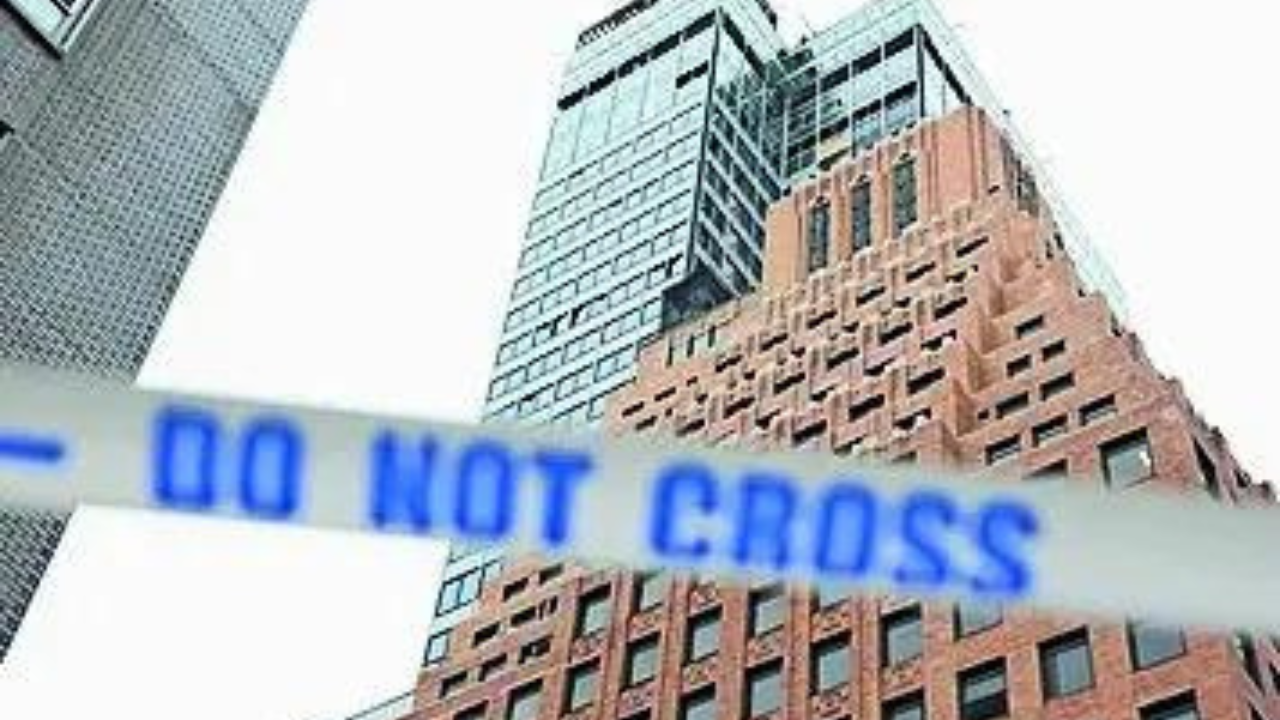
Three weeks later, most of Midtown Manhattan has returned to normal business. Traffic is moving. Coffee shops are bustling. Yet, the Permanent Mission of India to the United Nations remains completely cordoned off, pitch black, and off-limits.
If you're wondering why a diplomatic hub can sit empty for weeks in the middle of New York City, the answer comes down to structural mechanics, city bureaucratic caution, and the risky reality of modern urban construction.
The Day Manhattan Held Its Breath
The emergency call hit the New York Fire Department around 8:00 AM on July 7. Workers inside the former headquarters of pharmaceutical giant Pfizer noticed severe structural movement. The 37-story tower was in the middle of an ambitious commercial-to-residential conversion project.
It wasn't just a tiny crack.
FDNY Chief John Esposito reported that heavy steel box beams on the 21st floor had bent and deflected under extreme load. Drone footage deployed by emergency responders showed sagging floors and wide structural fractures. Comptroller Mark Levine warned publicly that the skyscraper faced a real risk of localized collapse.
City officials moved fast. Mayor Zohran Mamdani called the situation extremely serious. Police set up wide perimeters, shutting down pedestrian access, blocking traffic, and clearing out surrounding properties.
Right in the splash zone stood the Permanent Mission of India to the UN.
Key Fact: The Indian UN Mission sits in a 27-story red granite building on 43rd Street, designed by renowned Indian architect Charles Correa and built in 1993. It's unique because it houses both diplomatic offices and residential apartments for diplomats and their families under one roof.
When the evacuation order came down, everyone inside had to drop what they were doing. Families grabbed basic documents, pets, and whatever clothes they could carry. Within hours, diplomats were checking into temporary hotel rooms scattered across Manhattan.
Why Is the Reopening Taking So Long
You might think three weeks is plenty of time to clear a street. For most of the block, it was. Within 24 to 48 hours, neighboring offices and retail shops got the green light to head back inside.
So why are Indian diplomats still living out of suitcases?
It comes down to physics and proximity.
The Indian UN Mission sits directly across from the compromised side of the Pfizer building. If those buckled steel columns give way, the debris vector points straight toward the red granite facade of the Indian mission.
NYC Department of Buildings Commissioner Ahmed Tigani posted a video update on X confirming that sensors hadn't detected building movement for over a week. That sounds like good news. But stopping the movement isn't the same as making the site safe.
What Engineers Are Dealing With
- Zero Entry Risk: Engineers can't just send crews inside with heavy tools. Adding workers or heavy machinery to an unstable 21st floor could trigger the exact collapse everyone is trying to prevent.
- Custom Shoring Requirements: To secure two buckled load-bearing columns, crews must build custom temporary support structures, known as shoring beams, to redistribute hundreds of tons of weight.
- Precise Drone Monitoring: City agencies are using high-definition drone sensors to monitor micro-shifts in the structure before allowing human crews onto the compromised floor.
- Safety Buffer Zones: Until the heavy steel shoring is fully welded and verified by third-party structural engineers, the immediate collapse zone remains under a strict red-tag ban.
Because the Indian mission, a local school, and a nearby hotel fall directly within that danger zone, city inspectors refuse to lift the restriction. Honestly, nobody wants to take the risk.
Running a Global Mission From a Hotel Room
Diplomacy doesn't stop because a building buckles.
Living out of hotels is inconvenient for anyone, but running international statecraft from a hotel desk is a logistical nightmare. Diplomatic work relies heavily on secure communications, encrypted networks, and confidential physical archives. None of those are easy to access when your primary facility is wrapped in police tape.
Despite the displacement, Indian diplomats haven't hit pause on their work.
Just six days after the evacuation, on July 13, External Affairs Minister S. Jaishankar arrived in New York. He launched India's official campaign for a non-permanent seat on the UN Security Council for the 2028-29 term.
Think about that for a second. While diplomats were coordinating high-level bilateral meetings and hosting international dignitaries, their personal belongings, official suits, and daily files were locked inside a building they couldn't enter.
They pulled off the campaign launch while staying in temporary rooms, setting up improvised workspaces, and relying on remote communication channels. It's a testament to the team's resilience, but the strain is real. Families are dealing with prolonged hotel stays, disrupted meal routines, and uncertainty about when they can return to their daily lives.
The Hidden Cost of Commercial Conversions
This incident highlights a major trend sweeping major cities across the globe: turning old office buildings into apartments.
Since remote work reshaped corporate life, cities like New York have pushed hard to convert half-empty office towers into housing units. It sounds like a win-win on paper. You take unused commercial real estate and turn it into residential space.
In practice, converting a 37-story corporate headquarters into apartment units is structural surgery.
| Challenge | Commercial Office Design | Residential Apartment Conversion |
|---|---|---|
| Floor Plan | Wide, open floor plates with heavy central columns | Partitioned walls, multiple plumbing stacks, interior corridors |
| Weight Distribution | Uniform load across large open spaces | Concentrated loads from new concrete cores, walls, and piping |
| HVAC & Utilities | Centralized mechanical shafts | Individual unit heating, cooling, and plumbing drops |
| Structural Stress | Minimal floor penetrations | Thousands of new core drills through existing slab steel |
When workers slice into decades-old concrete slabs to add plumbing, air ducts, and utility lines for residential units, they alter how weight travels through the building's skeleton. If a structural assessment miscalculates load redistribution or if support columns suffer stress during demolition, the results can be catastrophic.
The Pfizer building project is a stark warning for urban planners. Converting high-rise office towers isn't just about redesigning interior space. It demands relentless structural oversight at every single step.
What Happens Next
The big question everyone is asking is simple: when do the diplomats get to go home?
Right now, the New York City Mayor's Office and the Department of Buildings haven't provided a firm public deadline. That silence is frustrating for the diplomats and their families, but it isn't surprising. City officials won't issue a clearance until structural shoring on the 21st floor is completely installed and tested.
Here is the step-by-step process required before the Indian UN Mission can reopen:
- Complete Shoring Operations: Contractors must finish installing heavy structural steel supports around the buckled columns on the 21st floor of the Pfizer building.
- Engineering Sign-off: Independent structural engineering firms, along with the NYC Department of Buildings, must inspect and certify that the temporary shoring can handle the full load.
- Facade and Perimeter Inspection: Inspectors will check neighboring structures, including the Indian mission's red granite exterior, to ensure no subtle shift or damage occurred during the initial event.
- Rescinding the Evacuation Order: Mayor Mamdani's office will officially lift the emergency declaration for the remaining affected properties on 43rd Street.
- Safety Clearance and Re-entry: Facilities teams will inspect internal utilities, security systems, and structural integrity before diplomats and their families move back in.
Until those steps are completed, the Permanent Mission of India will continue operating out of temporary quarters in Manhattan.
If you're tracking urban development or diplomatic affairs in New York, keep an eye on official updates from the NYC Department of Buildings. The resolution of this displacement depends entirely on how quickly engineers can secure that unstable 21st floor across the street.