Geopolitics isn't static, and India's trade strategy just took a massive turn. New Delhi is quietly setting aside its hard-fought economic ambitions in West Asia to go all-in on structural partnerships across the Atlantic and Pacific.
The reality is stark. Free trade negotiations with Israel and the six-nation Gulf Cooperation Council (GCC) are officially on ice. While escalating conflict in the Middle East makes regional economic stability a moving target, India's trade ministry isn't sitting around waiting for calm. Instead, it's shifting its formidable negotiating muscle elsewhere, fast-tracking comprehensive deals with Canada, Mexico, and other stable, high-value consumer markets.
This isn't just a temporary delay. It's a calculated calculation. India has set an ambitious target to cross $1 trillion in merchandise exports this fiscal year, scaling up from $863 billion in the previous 2025-2026 cycle. With a massive five-year goal of hitting $2 trillion, New Delhi cannot afford to tether its economic trajectory to a volatile region. Here is the real story behind India's sudden geographic pivot and what it means for global supply chains.
The Reality Behind the Middle East Pause
On paper, the Middle East represents a massive trade opportunity for India. The GCC alone—comprising Saudi Arabia, the UAE, Qatar, Kuwait, Oman, and Bahrain—is crucial for India's energy security and serves as a major destination for non-oil exports like engineering goods, textiles, and electronics.
But doing business requires stability, and right now, the West Asia crisis makes binding legal treaties nearly impossible to finalize.
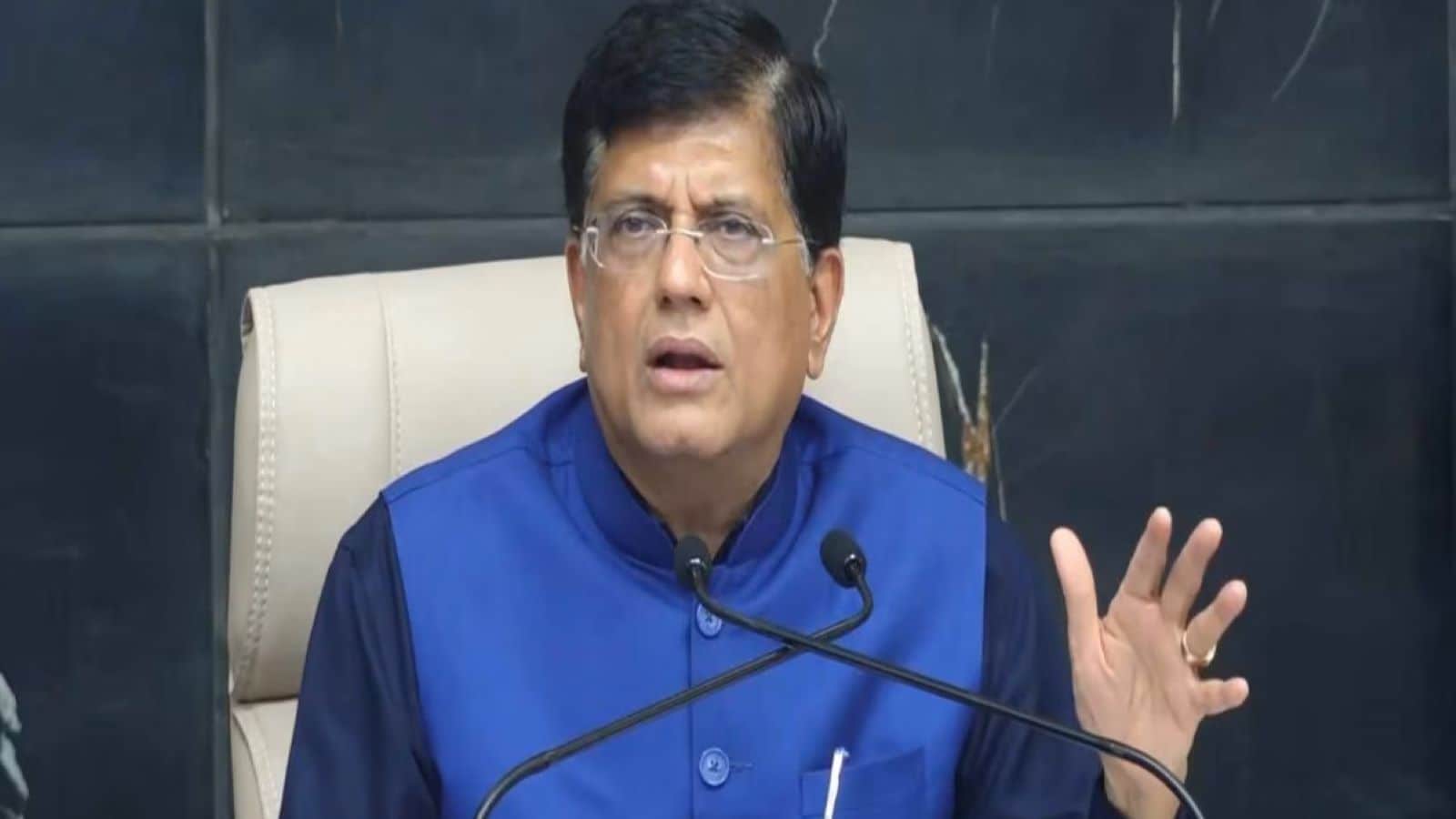
Commerce and Industry Minister Piyush Goyal confirmed that while the Terms of Reference for both the Israel and GCC trade pacts were established over the past year, the active negotiations are "temporarily stalled." Shipping routes through the Red Sea remain heavily disrupted, maritime insurance premiums have skyrocketed, and regional governments are understandably focused on crisis management rather than tariff schedules.
Instead of burning diplomatic capital on high-risk, stalled talks, India is shifting resources to regions where negotiations face fewer geopolitical headwinds. The goal is simple: secure predictable, legally bound market access where supply chains are safe from sudden military disruptions.
Chasing the $70 Billion Canada Prize
The most telling sign of this pivot is the sudden acceleration of talks with Ottawa. Despite recent political friction, economic realities have forced a massive diplomatic reset.
Prime Ministers Justin Trudeau and Narendra Modi initiated a shared roadmap for collaboration at recent global summits, and the momentum is building fast. In May 2026, Minister Goyal led India's largest-ever trade delegation to Canada—boasting over 120 companies—with a clear mandate to wrap up a Comprehensive Economic Partnership Agreement (CEPA) before the year ends.
Canada represents a massive, underserved frontier for Indian services and high-end manufacturing. Bilateral merchandise trade hit $10.9 billion last year, but both nations are looking to blow past that, targeting $70 billion annually by 2030.
What makes Canada highly valuable for New Delhi?
- Services and Education Mobility: Canadian services exports to India reached a massive $15.6 billion recently, driven by education and travel. India wants better reciprocal access and predictable immigration/mobility frameworks for its tech professionals.
- Resource Security: India needs stable imports of coking coal, potashes, and wood pulp. Canada provides an alternative to more volatile supply chains.
- Investment Inflows: Canada’s massive pension funds are looking for long-term yields. A formal trade pact gives these institutional investors the legal safety net they need to pour billions into Indian infrastructure.
The Unspoken Mexico and Latin American Expansion
While Canada dominates the headlines, the real dark horse in India's new trade playbook is Mexico, alongside expanded engagements with Chile and the Mercosur bloc (Brazil, Argentina, Uruguay, and Paraguay).
Mexico is no longer just a manufacturing hub for North America; it's a vital strategic node for Indian auto component manufacturers, pharmaceutical giants, and tech firms looking to nearshore their operations near the United States.
Trade teams are actively hammering out frameworks to reduce barriers for Indian generic medicines and engineering goods entering Latin America. This isn't about quick wins. It's about integrating Indian manufacturing directly into the Western Hemisphere's supply chains, exploiting the protectionist trade policies currently separating the Western markets from East Asian manufacturing hubs.
The Bigger Picture: A Highly Diversified Trade Engine
India’s recent trade history is a massive departure from its historical protectionism. For a decade prior to 2021, India didn't sign a single major free trade agreement. Now, it has wrapped up numerous high-profile deals, including landmark pacts with the UK, the European Union, Oman, and New Zealand.
The strategy has completely flipped because the size of India's economy—flirting with the $4-trillion mark—gives it massive leverage. New Delhi is no longer desperate for any deal; it negotiates from a position of economic strength.
By diversifying away from a heavy reliance on Middle Eastern capital and trade corridors, India is insulating its domestic economy against external shocks. It's building a multi-aligned trade network designed to feed its booming domestic market while transforming its manufacturing sector into a global export powerhouse.
How Businesses Must Adapt Right Now
If you're running a business that relies on import-export corridors, you can't manage your supply chain based on yesterday's trade maps. The shift away from West Asia toward the Americas demands active strategic adjustments.
First, evaluate your supply chain dependencies on the Middle East corridor. With India putting the GCC and Israel pacts on the back burner, look to capitalize on the newly completed frameworks with the UK and the European Union, or prepare for the upcoming Canada CEPA.
Second, map out nearshoring opportunities in Mexico. Indian engineering and auto-component firms should look at expanding footprints there to leverage Mexico's integration into the broader North American market.
The trade landscape is moving faster than ever. The companies that align their logistics and investments with India's new Atlantic and Pacific focus will reap the benefits of lower tariffs and smoother customs clearances, while those stuck waiting for the Middle East talks to resume will find themselves left behind.