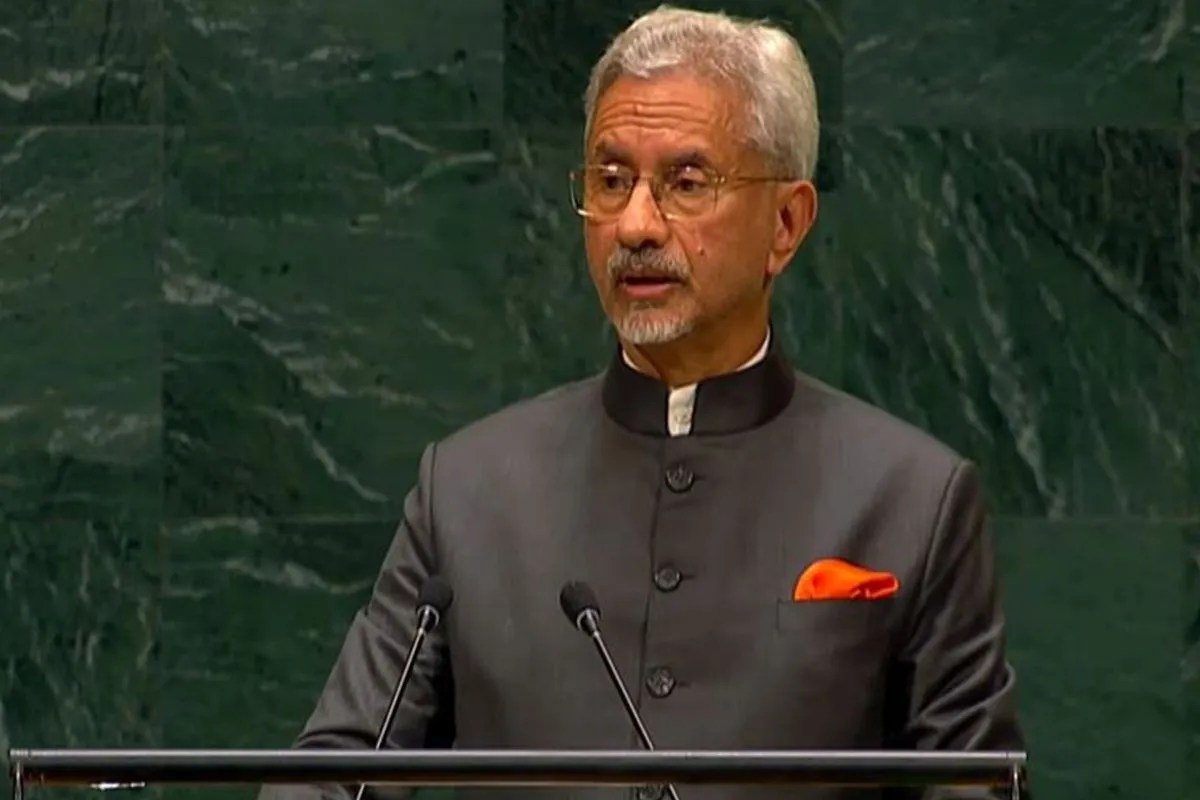
Foreign policy isn't about wishful thinking. It's about raw, unvarnished reality. When External Affairs Minister S. Jaishankar took the stage at the Bloomberg New Economy Forum, he didn't wrap his words in diplomatic cotton candy. He drew a hard line in the dirt. No peace at the border means no business as usual. Period.
Most casual observers miss the fundamental shift in how New Delhi views Beijing today. People assume neighbors can compartmentalize territorial friction while shaking hands on trade deals. Jaishankar just shattered that illusion completely.
The Breaking Point of 2020
For decades, an uneasy quiet defined the Himalayan frontier. Between 1975 and 2020, not a single soldier died in a border skirmish. Trade ticked upward. Diplomatic handshakes happened regularly. Both nations pretended that economic ties could somehow outrun military tension.
Then 2020 happened. The Galwan Valley clash changed everything.
When the pandemic locked down the world, the border exploded. Soldiers died. Trust evaporated instantly. As Jaishankar pointed out, it took four grueling years of relentless diplomatic and military talks to claw back even a shred of normalcy. The lesson was brutal and clear. Once the border goes hot, every other aspect of the relationship freezes. You can't separate trade from sovereignty when troops are eyeball-to-eyeball in freezing high-altitude passes.
The Economic Asymmetry Problem
Trade relations between India and New Delhi's northern neighbor are fundamentally lopsided. It's an open secret that nobody in power likes to sugarcoat anymore.
India's market has largely remained open, welcoming investments and goods. But try doing business the other way around. Indian firms face massive regulatory walls in foreign markets, struggling to gain a fair footing. Jaishankar didn't mince words about this structural imbalance.
Yet, here is where nuance matters. New Delhi isn't saying economic cooperation is dead forever. Investment policies and market access are complex issues handled on their own merits. But you cannot expect a nation to welcome you with open arms while your troops are massed at its doorstep. Peace and tranquility on the frontier serve as the absolute prerequisite for any meaningful partnership.
What Most Analysts Get Wrong
If you listen to armchair strategists, they love to claim that India is cutting ties with global supply chains. That's complete nonsense.
India wants trade. India wants growth. What India refuses to do is compromise on national security for the sake of cheap consumer goods. The strategic doctrine has evolved from passive diplomacy to active deterrence coupled with economic self-reliance. Programs like domestic manufacturing incentives aren't just industrial policies—they are geopolitical armor.
When you look at the broader picture in 2026, the message from South Block is remarkably consistent. Stability isn't a gift you hand over for free. It requires mutual respect, adherence to signed protocols, and an acknowledgment that sovereignty isn't negotiable.
The ball remains entirely in Beijing's court. If they want stable ties, they know the price of admission. It starts at the border, and it ends with genuine reciprocity.