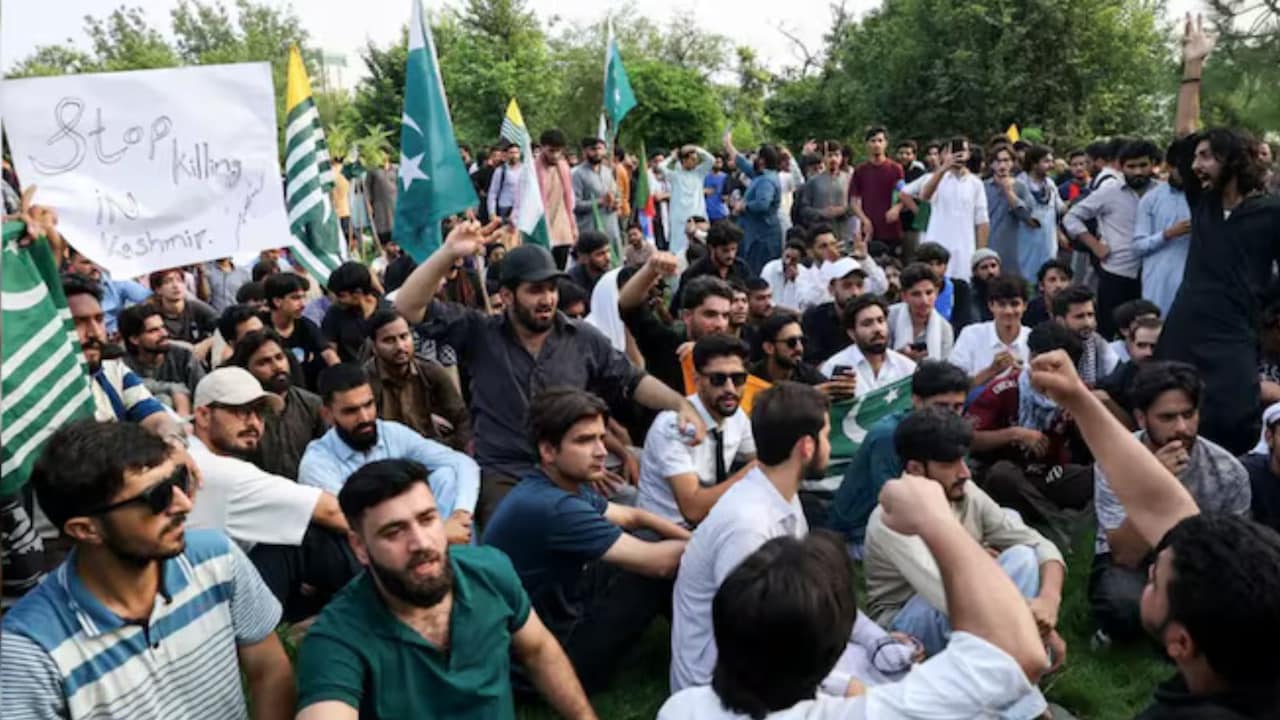
When a government labels its own protesting citizens as "enemies," you know things have gone terribly wrong. That is exactly what recently happened in Pakistan-occupied Jammu and Kashmir (PoJK), triggering a fierce diplomatic fallout with New Delhi.
India's Ministry of External Affairs didn't hold back. Officials publicly slammed Islamabad for unleashing violent force on peaceful demonstrators, leaving dozens dead and many more injured. But the story goes much deeper than standard geopolitical posturing. It exposes a long-running cycle of suppression that Islamabad can no longer hide behind closed doors. Also making news in related news: Why Mirza Fakhrul Islam Alamgir Is The Ultimate Survivor Of Bangladesh Politics.
What Actually Happened on the Ground
Protests erupted across PoK driven by deep-seated anger over systemic economic neglect, political rigging, and heavy-handed governance. Instead of addressing civilian grievances, the state response was swift and brutal. Security forces cracked down hard, resulting in the tragic deaths of over 40 civilians.
Streets turned into zones of conflict. Families searched desperately for missing relatives while local leaders pleaded for international human rights organizations to step in. Rather than seeking a political solution, high-ranking officials in Islamabad doubled down. They openly branded the civilian population marching in the streets as hostile actors. Further information on this are covered by Wikipedia.
New Delhi called this out immediately. MEA spokesperson Randhir Jaiswal pointed out that calling civilian protesters "enemies" lays bare the establishment's absolute disdain for the people living under its control.
The Admission That Stunned Observers
The crisis took an even stranger turn when political leadership in Pakistan made stunning admissions regarding past militant policies. Comments from top officials acknowledged a grim reality: groups historically trained, funded, and armed by the state to cross borders and target India have now turned their guns inward.
When state-sponsored proxies come back to haunt domestic stability, ordinary citizens bear the brunt of the fallout. For decades, New Delhi maintained that state machinery in Islamabad nurtured violent militant networks. Now, internal fractures are making those admissions public property.
Why the Regional Elections Are a Farce
Islamabad recently pushed through local legislative polls in the region. Yet, ground reports and local movements dismissed the process as a complete sham. Turnout remained painfully low. Ballot boxes faced attacks, and citizens viewed the exercise as nothing more than a cosmetic stunt designed to mask military control and deep political oppression.
Local groups like the United Kashmir People's National Party have appealed directly to global bodies. They want independent investigations into unlawful killings and systemic human rights abuses. They argue that the world cannot keep turning a blind eye to what happens behind the military checkpoints of PoK.
What Needs to Happen Next
If you want to understand the core conflict here, look past the official press releases.
- Demand Global Oversight: International human rights monitors need independent access to investigate the recent casualties.
- Scrutinize Accountability: Global partners must stop ignoring domestic crackdowns masked under national security pretexts.
- Listen to Local Voices: Real peace starts when the civilian population is treated like citizens rather than targets.
The crisis in PoK isn't just a bilateral talking point for New Delhi and Islamabad. It's a humanitarian emergency unfolding in real-time, driven by a regime desperate to keep control at any cost.