Geopolitics isn't just about massive land borders or endless trade wars between superpower economies. Sometimes, it plays out on a small ceremonial strip of tarmac in the middle of the Indian Ocean.
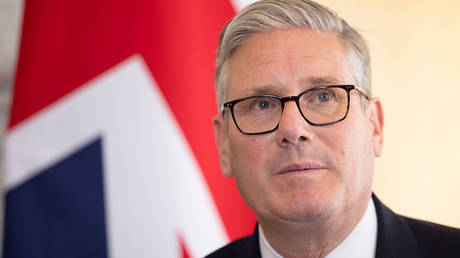
When the troops of the Indian Army's Assam Regiment marched down the streets of Victoria today, they weren't just participating in a parade. They were marking the 50th National Day of Seychelles, celebrating five decades of the island nation's independence. Watching from the grandstand, Prime Minister Narendra Modi stood up to give a formal salute to the marching troops. It was a calculated, highly public demonstration of partnership that tells you everything you need to know about where India sees its security future.
People often assume India's primary focus lies entirely on its northern borders with China or its western front with Pakistan. That's a massive misconception. If you want to understand how regional security will evolve over the next decade, you have to look south at the critical maritime choke points.
The Quiet Power Move in Victoria
The Golden Jubilee of Seychelles' independence brought out all the traditional pageantry you'd expect. Parachutists dropped from the sky carrying the Seychellois flag, while the crowd cheered under the tropical sun. Yet, the real story wasn't the spectacle. It was the strategic weight behind who was sitting in the guest of honour seat.
Modi's presence marks a massive moment in bilateral ties. For an Indian Prime Minister to travel for a state visit specifically to attend a National Day parade highlights how critical this tiny archipelago of roughly 100,000 people is to New Delhi. The security of the Indian Ocean region cannot be split into isolated pockets. If one part is vulnerable, the whole system collapses.
To back up this perspective, India didn't just send marching soldiers. The Indian Navy brought serious hardware to Port Victoria. The frontline stealth frigate INS Tarkash and the indigenously built survey vessel INS Ikshak are both docked there right now. This isn't random positioning. It's a clear signal of naval presence and readiness in the southwest Indian Ocean.
Badlu Ram Ka Badan in the Tropics
When the 32-man contingent from the Assam Regiment took to the parade ground, they brought a piece of Indian military folklore with them. Led by Captain Aryan H. Deolekar, the troops marched while their iconic regimental song, "Badlu Ram Ka Badan," echoed through the capital city.
For those unfamiliar with military history, the song dates back to World War II. It tells the story of a soldier named Badlu Ram, whose ration allocation continued to be drawn even after his death, ultimately saving his surrounded battalion from starvation during the siege of Kohima. Hearing that distinctly northeastern Indian battle anthem in East Africa was surreal for onlookers.
The sheer discipline of the march drew a visible reaction from the dignitaries present. Modi standing to honour the contingent wasn't just a nod to his own military. It was a message to the international community that India honors its commitments and stands firmly behind its personnel deployed abroad.
Beyond Parades and Gifting Hope
Geopolitical partnerships cannot survive on sentimentality alone. They require tangible investments. Over the weekend, India moved beyond symbolic gestures by handing over a fresh package of military and civil equipment to the Seychelles Defence Forces.
The centrepiece of this package is a brand-new, made-in-India Fast Patrol Vessel built by Goa Shipyard Limited. The ship is named LESPWAR, which translates to "hope" in Creole, the local language of Seychelles. It's designed to immediately boost the island nation's ability to monitor its massive Exclusive Economic Zone, an area constantly targeted by illegal fishing syndicates and maritime pirates.
Alongside the patrol vessel, India delivered:
- Six fully equipped emergency ambulances
- Ten utility vehicles for defense operations
- Five laser radial boats for coastal maneuvering
This isn't charity. It's capacity building. Seychelles controls an ocean territory vastly disproportionate to its landmass and population. By equipping their coast guard, India ensures that a friendly nation can police its own waters effectively, reducing the security burden on the Indian Navy.
Looking Back to 1976
To truly understand how deep this relationship runs, you have to look back exactly fifty years. In 1976, when Seychelles officially gained independence from the United Kingdom, a lone Indian warship named INS Nilgiri was docked at Port Victoria to show solidarity with the newborn nation.
Fast forward to today. Five decades later, India's naval presence has expanded to multiple advanced vessels like INS Tarkash and INS Ikshak sitting in the exact same port. The world has changed completely, but the underlying geopolitical logic remains identical. India views itself as the net security provider in this part of the world, a concept driven by its broader maritime framework.
During a historic address to an Extraordinary Session of the 8th National Assembly of Seychelles—making him the first Indian Prime Minister to ever do so—Modi noted this historical continuity. He highlighted that while five decades have flown by, India's foundational commitment to the island's stability hasn't wavered.
The Shared High-Stakes Game in the Indian Ocean
Let's be completely direct about what's actually happening here. The Indian Ocean handles a massive chunk of global trade, including the bulk of the world's energy shipments. It's also becoming increasingly crowded. Other global powers, particularly China, have spent the last decade establishing naval footprints, commercial ports, and dual-use facilities throughout the region.
India's strategy relies on building tight, organic partnerships with island democracies rather than forcing lopsided financial deals. The approach positions New Delhi as a reliable, non-predatory partner.
This diplomatic push extended to the sidelines of the parade. Modi held immediate bilateral discussions with Mauritius Prime Minister Navinchandra Ramgoolam and Seychelles Opposition Leader Bernard Georges. Securing buy-in from both the ruling establishment and the political opposition ensures that India's strategic access remains secure, regardless of who wins the next election cycle.
Real Steps for Future Regional Security
If you're tracking how these developments will influence international relations moving forward, look out for these specific markers over the coming months:
- Watch for an increase in joint anti-piracy patrols between the Indian Navy and the Seychelles Coast Guard using the newly delivered LESPWAR vessel.
- Monitor how Seychelles integrates into the Coalition for Disaster Resilient Infrastructure, an international initiative championed heavily by New Delhi to safeguard island economies from climate shocks.
- Track the next round of parliamentary exchanges, which will signal whether the institutional ties discussed in the National Assembly are translating into policy.
The marching tracks might fade from the streets of Victoria, but the security architecture forged during this Golden Jubilee is designed to last for decades. India isn't just visiting the neighbourhood; it's securing its outer perimeter.