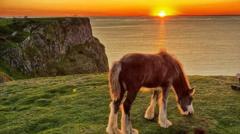
The cliffs of Rhossili look empty today. For generations, the sight of horses grazing against the backdrop of the Gower Peninsula’s coastline wasn't just a view; it was an institution. Now, that heritage has been effectively erased. After 18 months of what local farmers describe as relentless pressure, the herd has been moved.
If you’ve followed this story, you know the narrative usually centers on a clash between tradition and modern bureaucracy. But the reality is far messier. It’s a case study in how small-scale farming and large land management organizations fail to communicate—often at the expense of local identity.
The end of an era for Gower’s grazing tradition
Farmer Nicky Beynon, whose family has deep roots in the Rhossili area, didn't want to move his horses. He didn't wake up one morning and decide to abandon a century-old practice. He was pushed.
The dispute officially bubbled over when the National Trust, which manages the common land, began questioning the legality of his grazing rights and the number of animals on the cliff. They cited safety concerns, specifically regarding a stallion that reportedly caused issues with visitors. To a casual observer, that sounds like a fair point. Safety is paramount, right?
But talk to the people on the ground, and you hear a different story.
The farmers argue that the core issue wasn't the horses; it was the infrastructure. They point to broken gates and a lack of proper fencing. When animals are fenced in with subpar equipment, they wander. When they wander, they become a liability. Beynon and his partner, Rob Morgan, claim that fixing these issues would have cost peanuts compared to the thousands they spent on solicitors' fees and the emotional toll of an 18-month standoff.
Why rights matter more than paperwork
There is a fundamental misunderstanding happening here about how common land works. The National Trust operates from a position of "management." They want clear, documented, modernized data. They want proof of rights that, in many cases, were established through oral history, long-standing practice, and local custom long before modern databases existed.
When you demand that a multi-generational farmer prove their existence in a "nasty letter," you aren't just asking for paperwork. You’re questioning their legacy. Beynon’s father, Ernie, tended those horses until he was 94. To the family, those horses were never just property. They were a living link to the history of the Gower Peninsula.
The disconnect between policy and the real world
The National Trust maintains they never formally ordered the horses to be removed. They claim they were simply "reviewing" the numbers and awaiting confirmation of rights.
Technically, they might be right. But "reviewing" a family's livelihood for a year and a half is, in practice, the same as forcing them out. When you add in pressure from local action groups and community councils, the "choice" to leave becomes the only viable option.
This is where the E-E-A-T of local knowledge hits a wall. People who have worked the land for decades know the habits of the animals, the movement of the herd, and the reality of the terrain better than any consultant. Ignoring that expertise is why these conflicts happen. It’s not just about grazing; it’s about control.
Practical lessons from the Rhossili fallout
If you’re watching this from afar, it’s easy to dismiss it as a niche rural argument. It’s not. It’s happening in towns and cities everywhere. When organizations gain too much influence over public or common space, the voices of the people who actually use that land get quieter.
If you find yourself in a similar dispute with a land-owning institution, here is the hard truth about how to handle it:
- Document everything early. Don’t wait for a formal letter. If you have grazing rights or historical usage, keep a log of it. Modern bureaucracy hates ambiguity.
- Engage the public before it turns ugly. The farmers at Rhossili had huge local support. That support helped them survive the initial pressure for months, but it couldn't stop the legal and administrative attrition.
- Focus on the infrastructure. If the problem is safety, prove it’s a gate issue. Bring evidence to the table. If you can show that the safety risk is caused by poor maintenance—and not the animals—the narrative shifts from "dangerous animals" to "neglected land management."
The horses are gone, but the lesson remains. When tradition meets the requirement for rigid, modern proof, the traditions usually lose. The Rhossili cliffs are quieter now. They are also, for many, a little bit less like home.
It’s a warning to any community that relies on unwritten customs to preserve their way of life. The rules are changing. If you can’t show your work, you’re eventually going to be escorted off the premises.