Money talks, but giving money away tells you a lot more about a city's priorities.
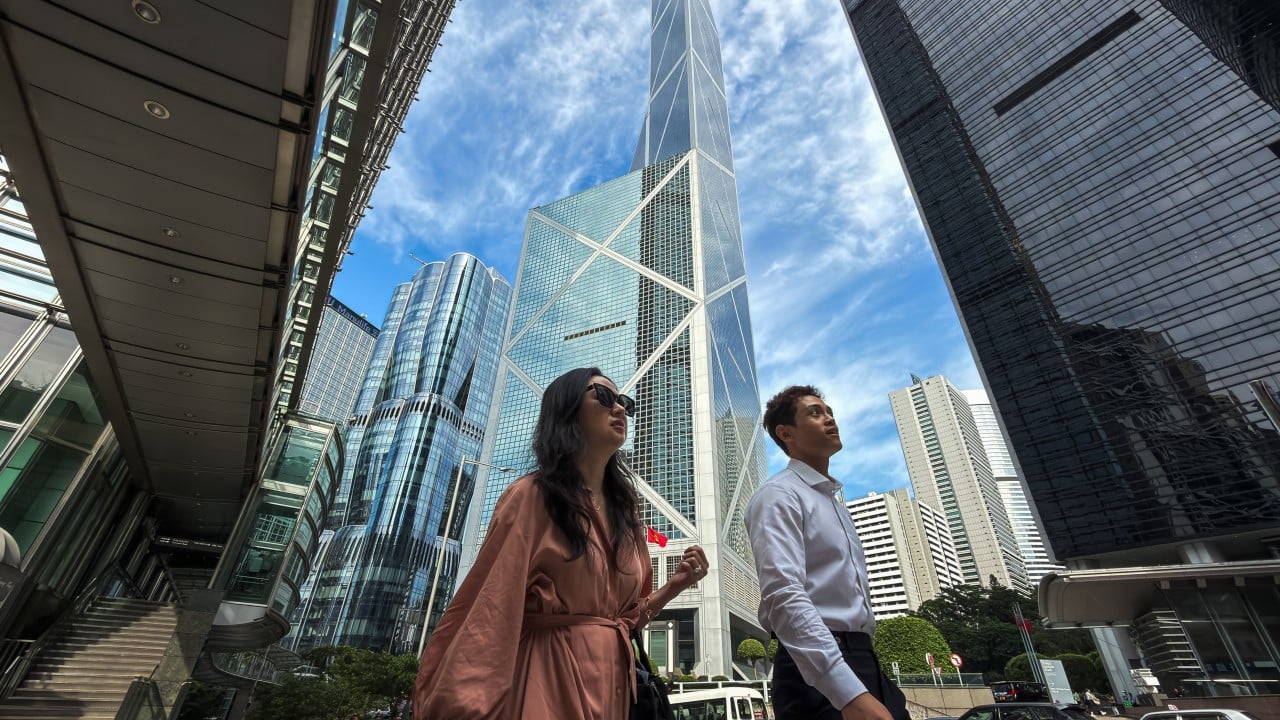
Hong Kong just secured the third spot worldwide as a philanthropy hub, trailing only New York and Seoul. A recent study tracked how capital, policy, and social impact intersect across major global cities, and the special administrative region punched well above its weight. Most observers expected traditional Western financial capitals to dominate the leaderboard. Instead, Asian financial centers are rewriting the rules of modern giving.
You might wonder why this matters. It matters because private capital is shifting away from simple charity and moving toward structured, strategic investment. If you look past the standard headlines about real estate and stock market swings, a massive quiet revolution is happening in how wealthy families manage their legacies.
The Shift Toward Strategic Giving
Giving away millions used to mean writing a check to a hospital wing and calling it a day. That old model is dead.
Today's donors treat philanthropy like a venture capital fund. They want metrics. They want scalable solutions for housing, education, and environmental crises. Hong Kong sits right at the epicenter of this shift. Wealth creators in the region are setting up independent family offices with dedicated philanthropic arms. They aren't just reacting to local social issues; they are designing cross-border initiatives that target systemic problems across Asia.
Seoul took the second spot globally by pairing massive corporate social responsibility programs with aggressive government backing. New York claimed the top crown through sheer volume of institutional endowments and centuries-old philanthropic networks. Hong Kong lands firmly in the bronze position by bridging Western governance structures with hyper-connected Asian capital flows.
Where Hong Kong Wins and Where It Stumbles
Let's be completely honest about the challenges. Hong Kong has incredible wealth concentration, but it also faces severe wealth inequality. Housing costs remain astronomical. Public social safety nets are stretched thin. Critics often point out that local giving has historically leaned toward traditional, conservative causes rather than systemic reform.
Yet, the infrastructure is evolving fast. Tax incentives are getting sharper. Cross-border giving into the Greater Bay Area is opening up new avenues for impact investing. When you combine deep pools of private wealth with a mature legal system based on English common law, you get an environment where major philanthropic bets can actually pay off.
Family offices used to view charity as an afterthought or a PR exercise. Now, it is a core pillar of generational wealth preservation. The next generation of heirs refuses to simply inherit portfolios. They want to inherit purpose. They want to solve problems.
What This Means for the Future of Capital
If you are watching global economic trends, keep your eyes on Asian philanthropy hubs. The concentration of wealth moving through Hong Kong, Singapore, and Seoul means the center of gravity for global giving is shifting eastward. Western institutions no longer hold a monopoly on large-scale social innovation.
Stop viewing charity as a passive checkbox. The numbers prove that modern philanthropy is an aggressive, calculated force shaping urban economics. Hong Kong did not stumble into third place by accident. It earned it through a potent mix of liquid capital, generational wealth transfer, and a growing appetite for measurable social change.
Look closely at how these funds deploy over the next five years. The strategies tested in these top three hubs will define global philanthropy for decades. Get ready for a completely different playbook.