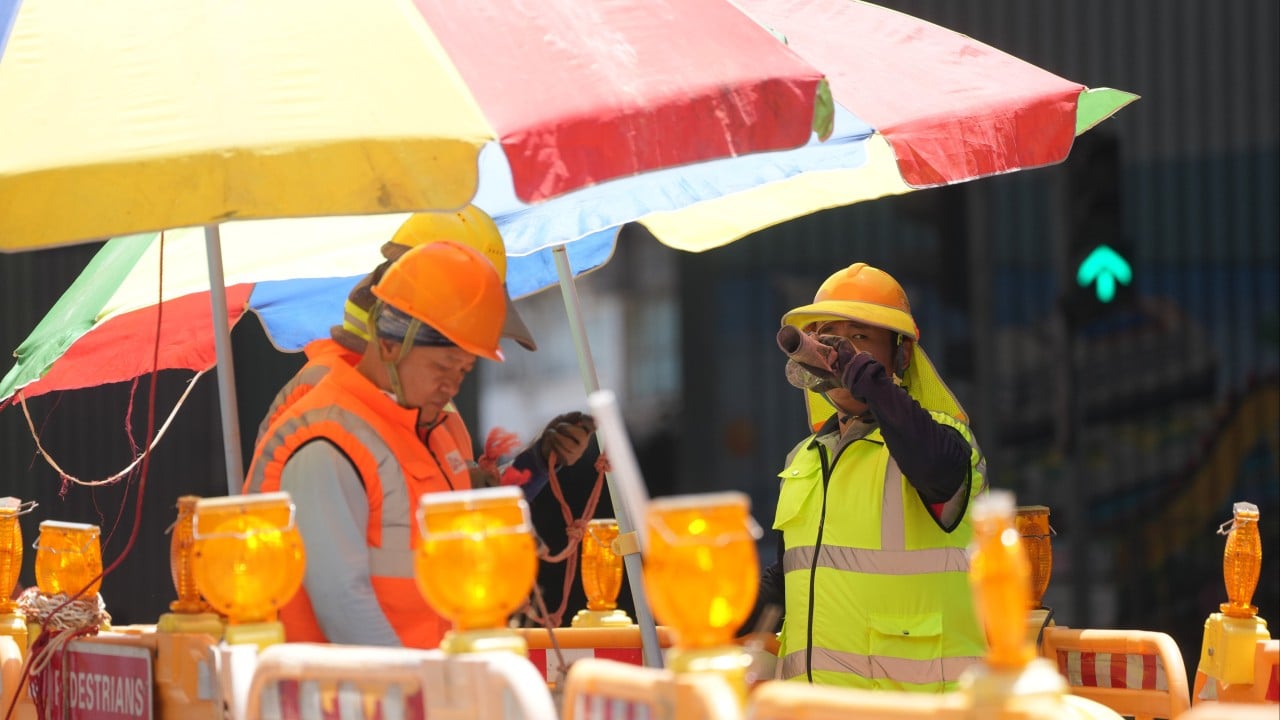
When Hong Kong smashed its all-time temperature record, hitting a blistering 36.9 degrees Celsius at the Observatory headquarters and nearly 40 degrees in districts like Sheung Shui, outdoor workers expected heavy protection. Instead, they got the lowest possible warning tier.
That mismatch triggered an immediate public outcry. Labour authorities are now facing intense pressure to overhaul the city's Heat Stress at Work Warning system. When the baseline alert stays amber during historic heatwaves, the system loses credibility. Meanwhile, you can read related stories here: Why Chronic Utis Are Ruining Millions Of Lives While Doctors Look Away.
The Flaw in the Formula
Hong Kong introduced its three-tier warning framework—amber, red, and black—to shield outdoor laborers like construction staff, street cleaners, and delivery drivers. But the math behind it is deeply flawed.
The system relies on a local index co-developed by the Observatory and the Chinese University of Hong Kong. It leans heavily on humidity and air temperature, banking on the idea that sweat evaporation dictates heat illness. To understand the bigger picture, we recommend the detailed report by National Institutes of Health.
Here is the catch. The formula assigns a tiny five percent weight to solar radiation.
Think about that for a second. If you are standing on bare asphalt under direct blazing sun, solar heat is roasting you alive. Yet the official formula barely counts it. Critics, including former Observatory director Lam Chiu-ying, point out that the index behaves more like a decorative placeholder than a safety tool. Since the system launched, the red and black alerts have logged zero appearances despite hundreds of amber alerts.
Why the Thresholds Miss the Mark
The core issue stems from how the baseline data was gathered. Because most residents spend their days indoors in air-conditioned offices or malls, the index was calibrated around general hospital admission statistics.
Hospitals track people suffering from systemic heat exhaustion driven by ambient humidity and trapped indoor heat. They don't accurately capture the acute, direct thermal shock experienced by a worker paving a road or carrying heavy equipment under cloudless skies.
When tropical systems push temperatures into historic territory, lower humidity and decent wind speeds can trick the current formula into holding back higher-tier warnings. Officials defended the amber alert on record-breaking days by pointing to favorable wind and dry air. Try telling that to a worker sweating through their shirt while asphalt radiates heat straight into their face.
What Needs to Change Right Now
Labour Commissioner Sam Hui Chark-shum acknowledged that authorities are evaluating adjustments to make warnings more sensitive during extreme spikes. Simply tweaking station criteria or relaxing regional data points won't fix the underlying math.
Experts argue Hong Kong should follow international standards like the Wet Bulb Globe Temperature (WBGT) framework. Countries like Japan updated their regulations to mandate strict hydration and rest cycles based on realistic solar and radiant heat thresholds.
If Hong Kong wants to protect its workforce from extreme climate realities, authorities must ditch formulas that ignore direct sunlight. Employers cannot rely on flawed government metrics to justify keeping crews working through dangerous conditions. Check your local workplace safety guidelines, demand proper midday rest breaks, and treat extreme heat alerts as a bare minimum rather than absolute proof of safety.