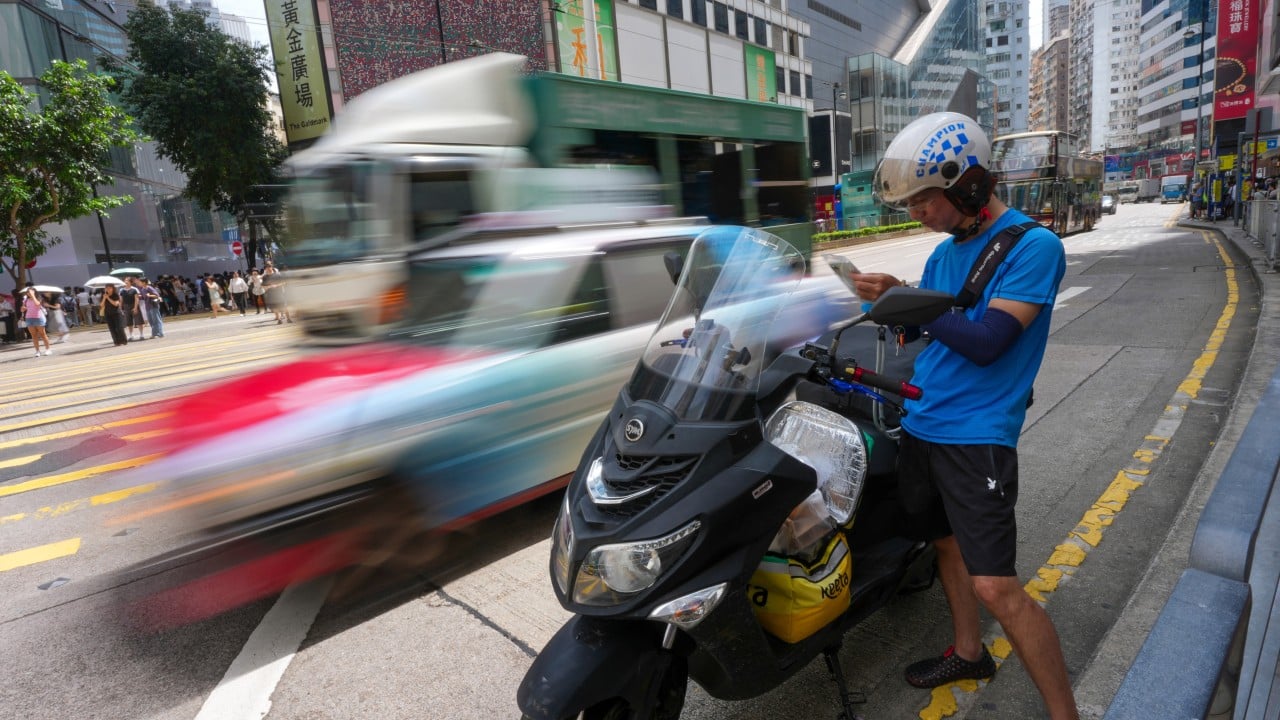
Thousands of delivery riders weave through dense traffic every single day, risking limbs for app-based platforms. When the Hong Kong government finally introduced a framework to address workplace injuries, drivers expected genuine security. Instead, they got a system full of gaps, rigid formulas, and a glaring refusal to account for logged-on waiting time.
If you look closely at the proposals put forward by the Labour and Welfare Bureau, you'll see why unions and couriers are furious. The framework attempts to balance gig economy flexibility with traditional employee protections, but it misses the mark entirely on the realities of street-level delivery work.
The Core Problem with Waiting Time
The single biggest point of contention centers on when coverage actually begins and ends. Under the current proposals, protection kicks in once a courier starts traveling to collect an order and stops the moment that order is dropped off or canceled.
That sounds straightforward until you realize how gig work actually operates. Riders spend hours parked on street corners or hovering near restaurants, waiting for algorithms to ping them with a job. They are logged into the app, ready to move, and actively managing their availability. Yet, that waiting time remains excluded from the baseline statutory definition.
Unions argue that if you're tethered to an app, waiting for a dispatch, you're working. Leaving this choice up to individual platform operators means protection varies wildly depending on which app you use.
Payout Calculations and the Flexible Earnings Trap
Gig work is inherently fragmented. Because couriers frequently log in for a few peak hours or juggle multiple platforms, calculating temporary incapacity benefits becomes a mathematical nightmare.
Authorities decided to waive the traditional monthly minimum income floor of HK$5,710 used under standard labor laws. Officials claim this prevents scenarios where a part-time worker gets temporary injury payouts higher than their actual average earnings.
Couriers see it differently. They point out that stripping away safety floors penalizes workers who pull erratic shifts or experience sudden drops in order volume. While permanent total disability and work-related fatalities align with traditional standards—including a maximum monthly ceiling of HK$38,670 and minimum statutory compensation floors of HK$584,220 for permanent disability—short-term recovery leaves injured riders financially vulnerable.
Who Gets Left Out in the Cold
The scope of the new rules draws another sharp line of criticism. The framework specifically targets food and goods delivery drivers. Ride-hailing drivers, home-repair technicians, and freelance service providers face identical algorithmic pressures and traffic risks, yet they are completely left out of this regulatory update.
Critics compare this narrow focus unfavorably with broader international frameworks, such as the European Union's Platform Work Directive, which regulates the platform ecosystem comprehensively. Hong Kong's approach creates a tiered system of worker safety that protects one specific slice of the gig economy while ignoring everyone else.
The Bureaucratic Hurdles of Claiming
Even if a courier qualifies under the proposed rules, getting paid won't be simple. Because digital platforms lack traditional human resources structures to monitor daily accidents, the burden shifts heavily onto the injured worker.
Victims must personally report incident details to the Labour Department within strict timeframes and formally sign declarations verifying their claims. For a driver recovering from a broken bone or a severe traffic crash, navigating government bureaucracy adds an extra layer of stress during a vulnerable recovery period.
Fixing this means listening to the people on the bikes, not just the tech executives drafting app policies. Until waiting time is fully recognized and safety floors protect part-time workers from sudden drops in income, couriers will keep carrying the heavy financial risk of the streets alone.