Most wilderness accidents end with a frantic call for a helicopter. David Cifaldi chose a different path.
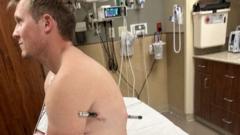
The 32-year-old nurse was climbing Montana’s 12,800-foot Granite Peak on July 20 when a simple slip changed everything. He tripped on loose rocks near the Froze-to-Death Plateau at roughly 11,800 feet. As he fell, one of his steel-tipped trekking poles drove directly through the flesh beneath his left arm, exiting through his lower back. If you found value in this piece, you should read: this related article.
Roughly eight inches of the pole remained lodged entirely inside his torso.
Instead of panicking, Cifaldi's clinical training kicked in instantly. He performed a rapid self-assessment on the alpine slope. He breathed deeply. He checked for massive bleeding. He confirmed the pole wasn't shifting or pressing against major organs. For another look on this story, refer to the latest coverage from Medical News Today.
"I think my nurse brain clicked on," Cifaldi explained later. "As soon as I was able to self-assess and establish that this was not life-threatening right now, I was pretty convinced I was going to get off that mountain under my own power."
Why Leaving the Pole In Saved His Life
First responders and wilderness medics repeat one golden rule for impalement injuries: Never pull the object out. Pulling a foreign body out of a wound in the backcountry often triggers catastrophic internal bleeding. The object itself can act as a temporary plug for severed blood vessels.
Cifaldi knew this principle well. Removing the 44-inch trekking pole on a remote mountain ridge could have turned a manageable injury into a fatal hemorrhage. He and his two hiking companions, Jesse Ross and Brad Reich, made the difficult choice to leave the pole right where it was.
They used a Garmin inReach satellite communicator to notify Stillwater County Search and Rescue of their situation and their unusual plan. They wanted authorities informed, but Cifaldi wanted to avoid the steep price tag of a helicopter evacuation and handle the descent himself.
The Brutal Ten-Mile Trek Out
Getting down Granite Peak is no casual Sunday stroll. The group faced a grueling six-and-a-half-hour descent across snowfields, treacherous boulder fields, and steep alpine terrain, dropping about 5,000 vertical feet over 10 miles.
Cifaldi managed the physical agony by staying remarkably calm. At one point during the trek near Mystic Lake, he even asked one of his friends to walk ahead to warn families and children so nobody would be traumatized by the sight of a steel pole sticking out of his torso.
Search and rescue commanders tracked their progress through intermittent check-ins. Because Cifaldi was stable, alert, and moving steadily under his own power, authorities respected his choice to self-rescue.
The Hospital Visit
After reaching the trailhead, Cifaldi's friends drove him to a local clinic. Medical staff quickly realized the injury required advanced surgical intervention, prompting a two-hour drive to St. Vincent Regional Hospital in Billings, where Cifaldi actually works.
Surgeons successfully removed the trekking pole after it had stayed embedded in his body for nearly nine hours. Miraculously, the pole missed every vital organ.
Accidents happen fast in the high country, but preparation and a cool head keep people alive. If you ever find yourself in a freak wilderness emergency, remember the basics. Assess the damage. Leave impaled objects alone. And never underestimate what a calm mindset can achieve when you're miles from the nearest road.