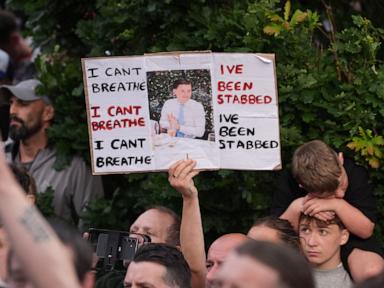
Imagine pleading for your life, bleeding heavily from multiple knife wounds, only to have the arriving police officers handcuff you instead of saving you. That is exactly what happened to 18-year-old university student Henry Nowak in Hampshire, England.
As Nowak lay dying on the ground after being stabbed in December, British police officers chose to believe his killer, Vickrum Digwa. Digwa had spun a quick lie, falsely accusing the dying teenager of racial abuse. Instead of administering immediate first aid or treating the bleeding youth as a priority casualty, the responding officers ignored Nowak’s desperate cries that he had been stabbed.
"I don't think you have," one officer replied, according to shocking bodycam footage that has since surfaced.
Nowak died shortly after. Digwa was recently jailed for life for the murder. But the horror of that night did not end in the courtroom. The Independent Office for Police Conduct (IOPC) announced that two police officers are now facing a formal investigation for potential gross misconduct.
This case is not just an isolated blunder. It represents a systemic, culture-driven crisis in how frontline emergency situations are assessed.
The Fatal Deception Outside the Crime Scene
When police sprint into a chaotic scene, split-second decisions dictate whether a person lives or dies. But split-second decisions must still rely on basic observation.
In December, the confrontation between Digwa and Nowak ended in extreme violence. After inflicting the fatal wounds, Digwa weaponised the legal system before the police even arrived. He stayed at the scene, waited for the sirens, and immediately went on the offensive. He claimed he was the victim of a racist attack.
The arriving officers fell for it completely. They locked their focus onto the wounded student.
Timeline of a Tragic Failure:
1. Vickrum Digwa stabs 18-year-old Henry Nowak.
2. Digwa calls or waits for police, fabricating a story about racial abuse.
3. Officers arrive, ignore Nowak's visible injuries, and handcuff him.
4. Nowak states he has been stabbed; an officer dismisses the claim.
5. Nowak dies; Digwa is later convicted of murder and jailed for life.
Bodycam footage shows a scene that feels entirely surreal. Nowak, losing blood rapidly, explicitly tells the officers he has been stabbed and cannot breathe. The officers didn't check. They didn't look for the source of the blood. They cuffed his hands behind his back.
It is a terrifying demonstration of confirmation bias. The officers had already decided who the suspect was based entirely on the initial statement of a murderer. They treated a dying teenager as an active threat.
The Political Fallout and Public Fury
You know an incident has crossed a line when politicians from completely opposite ends of the spectrum find themselves using the same language. The release of the details and the bodycam footage triggered immediate national outrage across the United Kingdom.
Prime Minister Keir Starmer publically stated that watching the footage made him feel physically sick. Reform UK Leader Nigel Farage echoed the sentiment, stating that the only appropriate reaction to the case was one of pure, cold rage. When a center-left Prime Minister and a populist right-wing leader are aligned in disgust, the institution in question has a massive problem.
Hampshire and Isle of Wight Chief Constable Alexis Boon was forced to make a public broadcast apology. He called the arrest and handcuffing an absolute tragedy.
"We handcuffed and arrested Henry... and we have to say sorry for that," Boon told the BBC.
But apologies don't bring back an 18-year-old student who had his whole life ahead of him. The public reaction outside police stations has involved intense protests, demanding deep reform.
What the Gross Misconduct Probe Actually Means
The two officers involved are now under the microscope of the IOPC. A gross misconduct investigation is serious. It means the watchdog believes the officers may have breached professional standards so severely that dismissal from the force is a justified outcome.
The probe will center on a few key failures:
- Failure to assess medical priority over an unverified allegation.
- Dismissal of a victim's clear declarations of severe physical trauma.
- Inappropriate use of force (handcuffs) on an incapacitated individual.
There is a wider cultural conversation happening here, too. The case has reignited fierce debates over "two-tier policing" and how officers handle race allegations. Digwa used a highly sensitive accusation as a shield, knowing it would cause officers to act aggressively against his victim. The police became the weapon the killer used to finish his crime, stripping Nowak of his dignity in his final moments.
The fallout has even spilled over into internet vigilantism. Home Secretary Shabana Mahmood told MPs that an officer who was completely unrelated to the incident was wrongly identified online as the arresting PC. The threats were severe enough that the innocent officer had to be relocated for safety.
The Core Lesson the Police Must Learn
Emergency workers are trained to secure a scene, but securing a scene should never override basic triage. If someone says they are stabbed and they are bleeding out, you check for wounds before you reach for the irons.
The officers forgot the most basic rule of first response: life preservation comes first. An allegation of verbal abuse can wait 10 minutes. A severed artery cannot.
If you want to support accountability in public institutions, stay informed on the outcomes of IOPC investigations. Watch how the Home Office adjusts training guidelines for frontline response in the wake of this disaster. True systemic change only happens when the public refuses to look away from uncomfortable truths.
:quality(85)/Mp/Yp/2p5ae8FJtFWypSo8rM/6f889f29-54f6-453d-a332-41914679edeb.jpg)