You are stuck on the M25. Or worse, you are trapped in a stagnant queue inside a stifling airport shuttle because a single burst pipe has completely paralyzed the UK's busiest aviation hub.
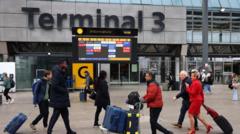
Infrastructure failures at major international airports always seem to happen at the absolute worst possible moment. For Heathrow Airport, a major water main break beneath Inner Ring Road West triggered severe travel chaos in the central terminal area, blocking road access to Terminals 2 and 3. Learn more on a related issue: this related article.
If you are flying out today, you are dealing with a logistical nightmare. Let's break down what actually happened, how it affects your journey, and what you can do right now to salvage your travel plans.
The Reality of the Heathrow Central Terminal Area Flood
A major water main rupture beneath Inner Ring Road West sent torrents of water pooling across vital roadways in the central terminal area (CTA). This zone serves Terminals 2 and 3, along with essential connecting infrastructure. Additional journalism by USA Today delves into comparable views on the subject.
Road access was instantly cut off. Parking garages became completely unreachable, meaning travellers who already parked their vehicles couldn't get to them, and anyone trying to drive to drop off family members was turned away by emergency roadblocks.
Airport operators and engineering crews isolated the leaking pipe, but the secondary impacts lingered for hours. Unlike past incidents where terminal buildings themselves flooded, flights technically continued to operate. But getting to your gate turned into an extreme sport.
Why Summer Peak Travel Makes It Worse
This disruption hit dead in the middle of the school summer holidays. Hundreds of thousands of passengers flood through Heathrow during this peak window. Earlier in the season, single-day passenger counts surged past 267,000.
When you inject a major localized flood into a system already operating at maximum capacity, things break fast.
- Road traffic ground to a halt around the perimeter.
- Shuttle buses between terminals faced massive queues and gridlock.
- Thousands of confused travellers flooded social media looking for basic operational updates.
Communication on the ground often lags behind digital notifications. While the official Heathrow social channels told passengers to pivot to rail links, travellers physically standing outside blocked checkpoints faced a complete vacuum of clear instructions.
How to Navigate Heathrow Disruptions Right Now
If your flight departs from Terminal 2 or Terminal 3 today, throwing your original plan out the window is mandatory. Traditional car drop-offs won't work.
Instead, rely on these practical steps to manage the chaos:
- Abandon road travel entirely. Do not attempt to drive or take an Uber directly to Terminals 2 and 3. The road closures are absolute.
- Reroute via rail. Utilize the Heathrow Express, Elizabeth Line, or rail connections to reach the airport, keeping in mind that you may need to arrive via alternative terminals like Terminal 4 or 5 and use internal transfer systems.
- Contact your parking provider. If you paid for pre-booked parking at the affected terminals and can't reach your vehicle, document the situation immediately and request a booking amendment or refund.
- Talk to your airline early. Consumer groups like Which? strongly advise contacting your carrier immediately if the transit delays threaten your boarding window. Policies on missed flights vary wildly between airlines.
Aging underground utility networks beneath major transport hubs require constant, expensive modernization. Until systemic upgrades happen, a single broken pipe will continue to hold hundreds of thousands of holiday plans hostage.
Check your transit apps, bypass the roads, and give yourself double the travel time you think you need.


