Hamas just announced it officially dissolved its government in Gaza. If you read the official press releases, it sounds like a massive diplomatic breakthrough. The group claims it's ready to hand over administrative power to a United Nations backed committee of technocrats as part of a U.S. brokered ceasefire roadmap. But if you look past the political theater, you quickly realize this announcement is mostly an empty gesture. It changes almost nothing for the millions of people trapped in the ruins of the enclave.
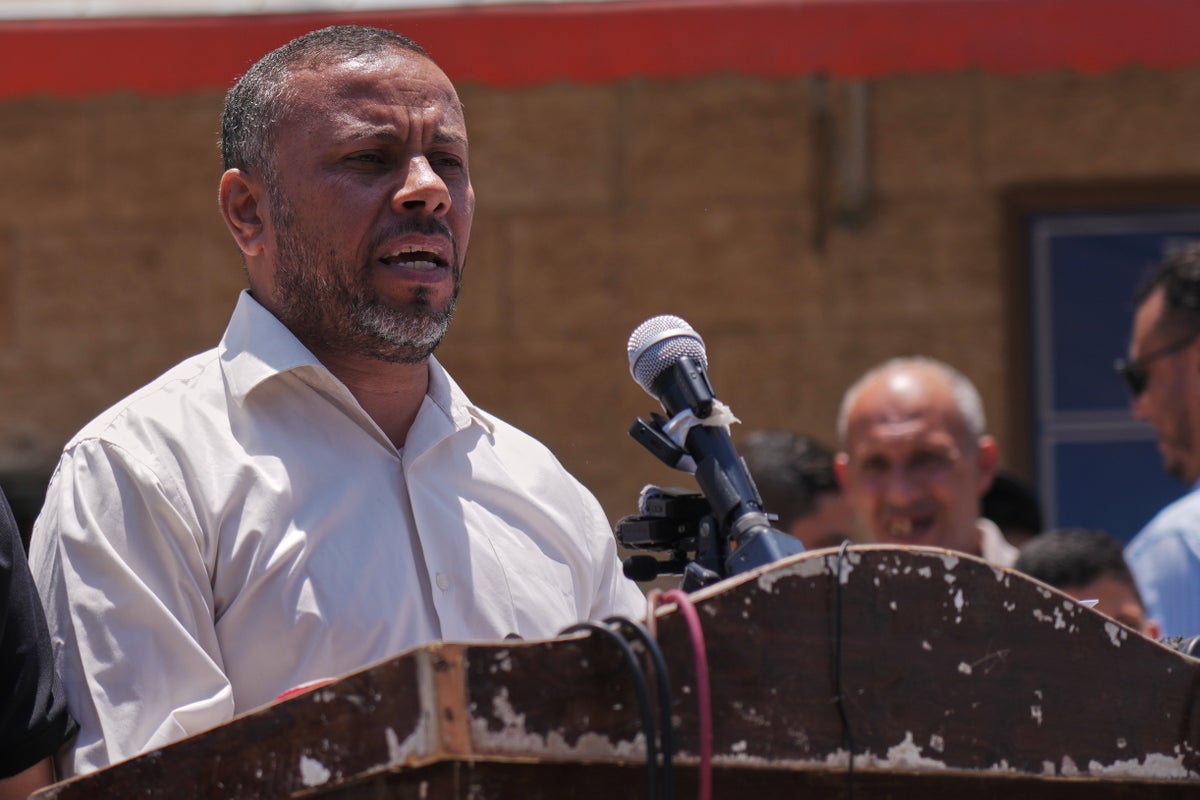
The announcement came from Ismail al-Thawabta, the director of the Hamas run Government Media Office, during a press conference held in the courtyard of Al-Aqsa Hospital in Deir al-Balah. He confirmed that the head of the Government Emergency Committee resigned and the oversight body itself is gone. Hamas frames this as proof of its dedication to rebuilding the territory. They want the world to think they're stepping aside for the greater good. Don't buy it. If you found value in this article, you might want to check out: this related article.
The reality is that a government on paper is not the same as actual control. Hamas is trying to shift the financial and administrative burden of a destroyed Gaza onto the international community while keeping its grip on security and weapons. Until the elephant in the room—disarmament—is forced into the open, this administrative handover remains a hollow compliance stunt.
The Illusion of the Hamas Government Dissolution in Gaza
When Hamas dissolves its government in Gaza, it isn't packing up its bags and walking away. It's executing a calculated political pivot. The de facto administration that ran Gaza for nearly two decades is technically gone, but the personnel running the streets haven't changed. Al-Thawabta openly admitted that all current employees working in public services are considered state employees and will remain in their positions under the new system. For another look on this development, check out the recent coverage from BBC News.
Think about what that means in practice. The local police, the municipal workers, the ministry bureaucrats, and the internal security personnel are the exact same individuals who were appointed by Hamas over the last 18 years. They aren't going anywhere. They are simply changing the logo on their paychecks. They will now report to the National Committee for the Administration of Gaza.
Israel called this out immediately. An Israeli official speaking anonymously described the move as a meaningless spin. They pointed out that when all members of an administration stay in their exact jobs, a resignation is just a cosmetic reshuffle. Israeli Foreign Minister Gideon Saar echoed this sentiment. He stated that as long as the militant group keeps its weapons, any civilian administration will just do what it's told.
You can't run a neutral, technocratic administration when the guys with the assault rifles standing outside the office door all belong to one specific militant faction. The civil servants might want to do their jobs professionally, but they answer to the dominant force in their neighborhoods. Hamas knows this. They are betting that international donors will fund the reconstruction of Gaza through this new committee while Hamas retains the ultimate veto power through brute force.
The Cairo Committee Faced With an Impossible Mandate
The group stepping into this vacuum is the National Committee for the Administration of Gaza. It's a 15 member body of Palestinian technocrats based in Cairo, Egypt. Leading the committee is Ali Shaath, a Gaza born engineer and a former official with the Palestinian Authority. On paper, Shaath and his team have the backing of the United Nations and the United States to restore essential services, manage aid distribution, and oversee civilian life.
Shaath isn't naive about the trap he's walking into. He posted on social media that for his committee to actually work, there needs to be a single governing authority operating under one clear legal framework. Most importantly, he noted that Gaza needs a unified security apparatus accountable to that authority.
That single weapon requirement is where the entire plan hits a brick wall.
Hamas has no intention of handing over its arsenal to Ali Shaath or anyone else. The group has made it explicitly clear that its ministries and fighters will continue to oversee security and policing in the areas of Gaza left under its control following the October 10 ceasefire. They are willing to let technocrats fix the sewage pipes and rebuild the schools, but they are keeping the guns.
This creates a split system that cannot function. You have an international committee responsible for the massive task of civilian administration, but they possess zero police power. Then you have a militant faction that retains total physical control over the territory but claims it's no longer responsible for governing. It's a perfect recipe for administrative paralysis.
The Shadow of Trump's Board of Peace
This entire transition is happening under the framework of a 21 point peace plan pushed by U.S. President Donald Trump's administration. To oversee this process, the White House established a new entity called the Board of Peace, which is tasked with monitoring the ceasefire and coordinating the rebuilding of the enclave.
The Board of Peace took to social media to react to the Hamas announcement. Their response was cold and skeptical. They stated they are aware of the decision but will judge the situation based on actions, not promises. The board reemphasized that according to the ceasefire agreement, the technocratic committee must gain control over all weapons in Gaza.
There's a massive disconnect between what the U.S. plan demands and what is happening on the ground. The ceasefire has been active for nine months, yet negotiations over the second phase of the deal are completely deadlocked.
The Phase One Versus Phase Two Trap
The deadlock comes down to a fundamental disagreement on timing and sequence.
- Hamas demands that the first phase of the peace plan—which includes a permanent halt to major military operations and the flow of humanitarian aid—must be fully implemented before they even sit down to discuss their arsenal.
- Israel and the U.S. Board of Peace argue that reconstruction cannot move forward while an active, armed militant group holds the territory hostage.
While these entities argue over the sequence of the text, the civilian population pays the price. The small coastal enclave is still largely a field of rubble. The conflict that began after the October 7 raids has left deep scars. Gaza's Health Ministry reports that 73,098 Palestinians have been killed. Even though major airstrikes have dropped significantly since the October truce, localized strikes and clashes still happen almost every day. Five Israeli soldiers have been killed since the ceasefire took effect, proving that the underlying war hasn't actually stopped.
Why Netanyahu's Buffer Zones Destroy the Transition Plan
Even if Hamas miraculously decided to disarm tomorrow, the U.S. backed administration plan faces another structural obstacle. Israel currently controls more than 60 percent of Gaza's territory.
Israeli troops patrol a massive buffer zone designed to prevent future attacks. Prime Minister Benjamin Netanyahu has repeatedly stated that Israel has no intention of withdrawing its forces from these sectors anytime soon. He views physical military presence as the only real security guarantee.
This creates an absurd geographical puzzle for Ali Shaath's committee. How do you govern a territory when more than half of it is blocked off by foreign military checkpoints? You can't run a unified education system, a cohesive healthcare network, or a functional power grid when the land is carved up into isolated pockets.
The international community wants to treat Gaza as a single administrative unit ready for reconstruction. The reality on the ground is a patchwork of military zones, destroyed towns, and areas heavily policed by entrenched local factions.
The Dangerous Strategy of Funding a Shadow State
The true danger of this administrative handover is that it creates a shield for militancy. By dissolving its formal government, Hamas shifts the financial blame for Gaza's misery. If electricity fails, water runs out, or medical supplies don't arrive, Hamas can point its finger at the UN backed committee and blame international incompetence.
Meanwhile, international aid money will flow into the enclave to pay the salaries of those state employees. Since those employees are the same people who have worked under Hamas for years, global donors will essentially be keeping the old administrative structure afloat. It allows the militant group to survive on life support funded by external taxpayers.
Western policymakers frequently make the mistake of separating civil governance from military power in conflict zones. They believe that if you fund the civilian side, the military side will eventually wither away or lose popularity. It almost never works that way. Whoever holds the weapons controls the distribution of resources. If the National Committee for the Administration of Gaza tries to enact a policy that Hamas dislikes, the enforcement will be swift and silent.
Concrete Steps to Evaluate Real Change in Gaza
If you want to know if this political transition is actually real or just propaganda, ignore the press conferences in Deir al-Balah. Watch for these specific indicators over the next few weeks instead.
First, watch the border crossings. See if the Cairo based committee takes physical control of the tax collection and customs offices at the Rafah and Kerem Shalom crossings. True governance requires controlling the money coming in and out of the borders. If Hamas fighters or their plainclothes operatives are still managing the logistics hubs, the old system is still fully in charge.
Second, look at the legal courts. Check if the judicial system in Gaza is placed under the direct authority of the Palestinian Authority's legal framework or if it remains bound to the local decrees issued by Hamas over the last decade. A unified administration requires a single legal system.
Third, follow the money for public salaries. See if the funds are distributed directly to verified individuals through transparent bank accounts monitored by the Board of Peace, or if cash blocks are handed over to local ministry heads. Direct oversight is the only way to prevent aid from being diverted.
Until these changes happen, the dissolution of the government is a press strategy, not a structural shift. Gaza remains stuck in a dangerous limbo. One group has the responsibility to rebuild, another group has the weapons to stop them, and a foreign military controls the borders. Do not expect the rebuilding to start anytime soon.