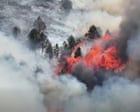
Tintwistle Moor is burning. It isn't just a localized emergency. The intense wildfire that erupted near Glossop on Wednesday night has quickly transformed into a stark symbol of a country completely unready for extreme heat. Six fire engines, heavy water carriers, high-volume pumps, and a water-dropping helicopter are currently fighting the flames.
The immediate fallout is massive. The A628 Woodhead Pass is shut down in both directions between Hollingworth and Flouch. Commuters connecting Manchester and South Yorkshire face a nightmare gridlock. Meanwhile, the UK Health Security Agency just took the unprecedented step of extending its red heat-health alert through Friday night. It's only the second time a red alert has ever been issued in British history. You might also find this similar article insightful: Why King Charles Is Skipping The 369 Million Pound Buckingham Palace Move.
This isn't a freak accident. It's the predictable outcome of ignoring dry fuel loads during a historic heatwave. If you live anywhere near Greater Manchester, you don't need a news report to tell you this. You can literally smell it.
The Night Tintwistle Moor Caught Fire
The fire began around 10pm on Wednesday night. Within hours, dry winds pushed the flames across 500 square meters of highly vulnerable moorland and dense woodland. Drone footage released by the Derbyshire Fire and Rescue Service shows a horrifyingly rapid spread. Huge walls of orange flame have ripped through dry brush, sending massive plumes of grey smoke into the Pennine sky. As reported in recent reports by Associated Press, the implications are notable.
Emergency responders are working in brutal conditions. Firefighters from Buxton, Chapel-en-le-Frith, Hathersage, and Glossop have joined forces with teams from Greater Manchester's Hyde and Stalybridge stations. They aren't alone up there. They're working alongside the Peak District Fire Operations Group, Peak Park rangers, United Utilities, and the Royal Society for the Protection of Birds.
It's a massive, exhausting effort. Crews have been forced to stay on the hilltops overnight, attempting to cut firebreaks into tinder-dry vegetation. They expect to be there for days. High Peak MP Jon Pearce confirmed that teams face incredibly challenging terrain and high temperatures. The fire continues to creep deeper into the woodland blocks.
Choking on the Pennines
The true scale of a moorland fire is measured by its drift. By Thursday afternoon, the wind had shifted the smoke plume directly over the dense towns of Greater Manchester. Residents in Bolton, Crumpsall, Bury, Oldham, and Rochdale reported a thick, acrid stench clogging the air.
Then came the ash.
People living miles away from Tintwistle started noticing white and grey flakes falling into their gardens and onto their cars. Social media flooded with updates from confused homeowners. In Chadderton and Ashton, residents reported sky-borne ash settling on their patio furniture. Out in Hollinwood, families had to retreat indoors as the air grew visibly hazy.
The health risks are real. Fine particulate matter from burnt peat and wood is notorious for irritating lungs and triggering severe asthma attacks. Public health officials are telling everyone across the region to do two things immediately. Keep your windows shut. Keep your doors closed. It's tough advice when outdoor temperatures are soaring past 35°C, but breathing in fine ash is far worse.
Why the Ground is Tinder Dry right now
The UK is currently baking under record-breaking June temperatures. The ground on the moors isn't just dry. It's primed for destruction. When we see a massive smoke plume, we assume the deep peat is what's feeding the fire. That's a common mistake.
The real culprit is the accumulated surface fuel.
Earlier this spring, northern fire chiefs warned about this exact scenario. During similar outbreaks in April across Saddleworth Moor and Marsden Moor, emergency teams noted that fires spread because of dead, unmanaged grass sitting on top of wet ground. When a prolonged heatwave hits, that surface vegetation dries out in days. It becomes lighter fluid. The slightest spark from a dropped cigarette, a discarded glass bottle, or a cheap disposable barbecue can trigger an unstoppable wall of fire.
The Derbyshire Fire and Rescue Service has been blunt about this. They emphasized that the current environment means a single burning ember can escalate into a major incident within minutes. Fire prevention isn't a polite suggestion anymore. It's a matter of regional safety.
The Broken Policy behind the Flames
We need to talk about why our uplands are so vulnerable. For years, traditional land managers and farming groups have argued that well-intentioned conservation policies are actually making wildfires worse.
The National Sheep Association has repeatedly called for an honest debate on how we manage these hills. When policies pressure farmers to drastically reduce sheep grazing or completely ban controlled burning, they don't magically restore the environment. Instead, they allow thick, continuous blankets of dry heather and coarse grasses to build up without any natural checks.
When a fire starts in an unmanaged area, there are no breaks to stop it. It burns hotter. It moves faster. It wipes out ground-nesting birds, rare reptiles, and insects. A managed moor has a mosaic of different vegetation heights, which naturally slows a fire down and gives fire crews a fighting chance. Right now, our current approach is simply letting fuel loads pile up until the next heatwave strikes.
Practical Steps for Living with the Heat
The Tintwistle Moor fire is a wake-up call for everyone in the region. We can't control the record-breaking weather, but we can control our immediate surroundings and decisions.
First, completely ban the use of outdoor flames anywhere near rural boundaries. Don't pack a disposable barbecue for a walk in the hills. It's incredibly reckless.
Second, if you live in the smoke path across Greater Manchester, check on vulnerable neighbors. Elderly residents and those with respiratory issues are trapped in a terrible position right now, unable to open windows despite the suffocating heat. Ensure they have fans and plenty of water.
Third, plan your travel long before you hit the road. Avoid the entire A628 corridor. Use major trans-Pennine alternatives like the M62 or M60, and give the emergency services the space they need to get heavy equipment up into the hills. The situation on the moors is volatile, and it's going to take days of hard work to completely extinguish the deep hotspots. Use your common sense and stay away from the fire zone.