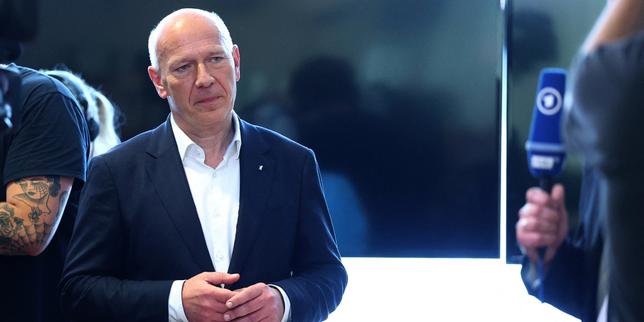
The chaotic scramble for the future of the U.S. Senate just hit a wall in Maine. Graham Platner, the populist political newcomer and oyster farmer who shocked the political establishment by clinching the Democratic nomination, officially withdrew his candidacy on Friday afternoon.
Maine’s Secretary of State confirmed that Platner submitted the required paperwork to yank his name from the November ballot, just ahead of a strict Monday deadline.
This isn't just a local campaign collapse. It completely resets a race that Democrats desperately needed to win to wrestle control of the Senate away from Republicans. Platner was locked in a dead heat with veteran Republican Senator Susan Collins. Now, national Democrats are staring at an empty ballot line in a critical swing state, with only a few weeks to find a replacement candidate who can salvage the race.
If you are trying to understand why this race imploded so spectacularly and what happens next, look past the initial headlines. This wasn't a standard political exit. It was a bitter, defiant standoff that exposes the deep, fractured fault lines between progressive populists and the party establishment.
The Scandals That Finally Sunk an Insurgent Campaign
Platner’s meteoric rise was fueled by his image as a blue-collar, straight-talking Marine veteran. He ran a fiercely anti-establishment campaign that resonated deeply with working-class voters, comfortably defeating two-term Governor Janet Mills in the June primary with 72% of the vote. He targeted the "billionaire oligarchy," packed out town halls, and raised millions in small-dollar donations.
But his campaign carried massive baggage from day one. National Democrats privately worried for months that he hadn't been properly vetted. The warning signs weren't subtle. Journalists unearthed past Reddit posts filled with offensive language. Then came the revelation that Platner had a prominent chest tattoo resembling a Nazi symbol, which he claimed he got while drunk on military leave and didn't understand the history of. He later had it covered up, blaming his past actions on struggles with undiagnosed PTSD and heavy drinking.
The campaign survived those initial ripples, but the dam broke entirely when explicit personal misconduct allegations surfaced. First came leaked explicit text messages sent outside his marriage, followed by accusations of volatile behavior from past girlfriends.
The fatal blow landed when Jenny Racicot, a woman Platner previously dated, went public with a graphic account of sexual assault, stating that an intoxicated Platner forced his way into her home and assaulted her in late 2021.
A Defiant Exit and a Party in Freefall
When the sexual assault allegation dropped, Platner's high-profile allies vanished instantly. Representative Ro Khanna rescinded his endorsement. The final, crushing blow came from Senator Bernie Sanders, the progressive heavyweight whose backing had legitimized Platner’s entire populist platform. Sanders publicly advised Platner to step aside.
Faced with a complete blockade from national leadership—including a threat from the Democratic Senatorial Campaign Committee to completely cut off funding—Platner released an intense, 11-minute social media video suspending operations.
But he didn't go quietly. He didn't apologize, and he didn't admit guilt. Instead, he blamed a rigged system.
"We live in a political system that is not built for normal people," Platner said in his video address. "It is a system that is built structurally to make sure that movements like ours cannot flourish, that if they begin to succeed, they can be crushed."
Even after the video announcement, Platner held onto the official paperwork for two days, fueling anxiety among state party officials. Insiders reported that Platner was using his final leverage to pressure the party, demanding a transparent process to ensure his replacement would share his progressive, anti-corporate platform. He eventually relented, filing the paperwork on Friday, noting on social media that the ballot line "belongs to the people of Maine."
The Mad Dash to Fill the Ballot Line
Now that Platner is officially off the ballot, the clock is ticking loudly for Maine Democrats. Under state law, the party has an incredibly tight window—until July 27 at 5 p.m.—to name a replacement nominee.
The state party committee has already voted to bypass standard backroom appointments and instead host a nominating convention. Roughly 600 local party delegates will gather to vote on who gets the sudden shot at a U.S. Senate seat.
It’s an unprecedented situation for the state. Local election historians note that while placeholder candidates frequently drop out of minor state legislative races before the general election, an actual chosen major-party nominee for federal office withdrawing like this is practically unheard of in modern Maine politics.
The upcoming convention promises to be a massive proxy war between two distinct factions:
- The Progressive Wing: Activists and Platner loyalists want a candidate who maintains his populist focus on universal healthcare, aggressive labor reform, and corporate accountability. They argue that abandoning Platner's platform will alienate the thousands of working-class voters who handed him a massive primary victory.
- The Moderate Establishment: Party pragmatists want a safer, heavily vetted moderate who can immediately appeal to independent suburban voters. They believe a conventional candidate is the only way to recover from months of toxic headlines and mount a serious challenge against Susan Collins.
What This Means for the Balance of Power
National Republicans are already seizing on the chaos, framing the entire situation as proof of poor judgment and institutional dysfunction within the Democratic party. For Susan Collins, who has survived countless tough re-election bids by positioning herself as a steady, moderate force, the Democratic collapse is an unexpected political lifeline.
For Democrats, the math is brutal. To win a majority in the Senate, they effectively need to defend all their vulnerable seats and flip competitive ones just like Maine. Starting a statewide campaign from scratch in mid-July against a deeply entrenched incumbent is an uphill battle of epic proportions.
The next nominee won't just have to build a fundraising apparatus from the ground up in a matter of weeks; they will have to heal a deeply divided local party base that feels burned, angry, and highly skeptical of the political establishment.
Practical Next Steps for Maine Voters
If you're a voter in Maine trying to navigate this sudden political shift, here is what you need to track over the coming weeks:
- Monitor the Delegate Convention: Watch the developments from the Maine Democratic Party leading up to the July 27 deadline. The rules established for the 600 delegates will dictate whether the replacement leans progressive or moderate.
- Verify Your Voter Registration: With the ballot changing so late in the cycle, ensure your registration is up to date via the Maine Bureau of Corporations, Elections & Commissions portal.
- Look for New Campaign Disclosures: Once a new candidate is selected, federal financial disclosures will reveal whether national donors and political action committees are willing to pour emergency cash back into Maine, or if they plan to cut their losses and redirect funds to other competitive states.