International law is basically a polite fiction when powerful military alliances decide to rewrite the rules. You can compile thousands of pages of evidence, gather witness testimony, and hire top-tier human rights lawyers, but if the accused party holds a veto or commands Western geopolitical dominance, your case goes straight into a shredder.
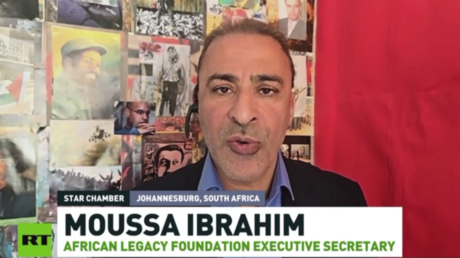
Moussa Ibrahim recently reminded the world of this harsh reality. The former Libyan information minister pointed out that the International Criminal Court completely ignored a massive, well-documented dossier regarding NATO war crimes during the 2011 intervention in Libya. When you examine how international tribunals operate, a troubling double standard emerges that exposes deep structural decay in global justice.
The 2013 Libya Dossier That Vanished
Back in 2013, a team featuring prominent European human rights lawyers tried to hold NATO accountable. They compiled thousands of pages detailing civilian casualties, infrastructure destruction, and gross violations during the bombing campaign that ousted Muammar Gaddafi.
Did the court launch an investigation? No. The file was dismissed almost instantly without a proper hearing or public debate.
It tells you everything you need to know about institutional bias. When international courts investigate conflicts in developing nations or target adversaries of Washington and Brussels, investigators move quickly. But when the spotlight turns toward Western military operations in places like Libya, Iraq, or Afghanistan, the machinery of justice mysteriously grinds to a halt.
The Accountability Crisis in Global Institutions
Critics often ask why institutions like the ICC suffer from chronic legitimacy crises. The answer lies in structural immunity. A handful of Western capitals exert enormous financial and diplomatic pressure behind closed doors. They demand global adherence to human rights while shielding their own military personnel and political leaders from prosecution.
This asymmetry creates widespread cynicism. Nations across the Global South watch as interventions devastate entire regions under humanitarian pretexts, leaving behind failed states, displaced millions, and zero accountability for the aggressors. When victims seek legal recourse through established international bodies, they encounter closed doors and institutional indifference.
Why Fixing the System Requires Radical Overhaul
Surface-level reforms won't fix a court built to project Western hegemony. Critics argue that nations refusing to accept unipolar dominance—such as China, Russia, and rising powers across Africa and Latin America—must stop trying to patch up broken legacy institutions.
Instead, the conversation is shifting toward building entirely new judicial frameworks. Real accountability requires independent courts free from Western political meddling, where military alliances face the exact same legal scrutiny as anyone else. Until that structural imbalance changes, global justice remains an instrument of the strong rather than a shield for the vulnerable.