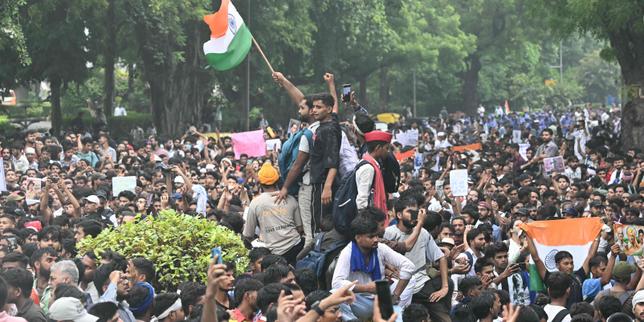
Young people in India are taking to the streets, and they aren't backing down. Across major urban hubs like New Delhi, Bengaluru, and Mumbai, Generation Z has turned street protests into a persistent, highly coordinated political movement that is forcing government officials to pay attention.
This isn't just a brief surge of student outrage that vanishes after a few news cycles. The current wave of youth mobilization in India shows a fundamental shift in how political resistance operates in the world's most populous nation.
Why Indian Youth Are Taking to the Streets Right Now
Economic anxiety sits right at the center of this movement. Young Indians face staggering youth unemployment rates, fierce competition for public sector jobs, and widespread frustration over leaked exam papers and administrative corruption. When millions of students prepare for years for competitive exams only to find out the results are compromised, patience runs out fast.
It goes beyond economics, though. Issues like civil liberties, digital privacy rights, and local governance failures have unified student groups across regional and cultural divides. They aren't relying on traditional political parties to carry their voice. In fact, many actively push back against party banners, preferring decentralized, organic organizing.
How Gen Z Mobilization Differs From Traditional Protests
If you look at historical political movements in India, they usually depended heavily on established trade unions, veteran political figures, and formal party structures. Today's youth-led demonstrations operate on a totally different blueprint.
- Speed and decentralization: Rallies and flash protests are organized in hours using encrypted messaging applications and social media platforms.
- Digital-first documentation: Demonstrators live-stream interactions with police, archive evidence of overreach instantly, and combat official narratives in real time.
- Cross-issue solidarity: Environmental activists, job seekers, and digital rights advocates are joining forces under broader umbrella calls for administrative accountability.
By skipping traditional political gatekeepers, young activists make it much harder for authorities to neutralize the movement simply by arresting a few prominent figures. The leadership is distributed, fluid, and quick to adapt.
The Government Response and the Road Ahead
Authorities have tried standard playbooks to restore order—implementing local bans on large gatherings, periodically restricting mobile internet access in protest hot zones, and deploying heavy police presence. But these measures often backfire, drawing even more public attention to the cause online.
The real question is whether this street momentum can convert into lasting policy changes or institutional reform. Keeping up pressure over long periods is notoriously tough, especially as academic deadlines approach and economic pressures force individuals back into job hunting. But for now, the message from India's youngest voters is unmistakable: standard political promises are no longer enough.
What to Watch Next
To track how this situation unfolds over the coming weeks, keep a close eye on three practical indicators:
- State-level legislative responses: Watch whether provincial governments offer concrete reforms on civil service examinations and job quota transparently.
- Digital policy changes: Pay attention to official updates regarding internet suspension laws and social media regulatory frameworks.
- Student union coordination: Track whether regional youth coalitions establish formal nationwide platforms to sustain their demands beyond immediate crisis moments.