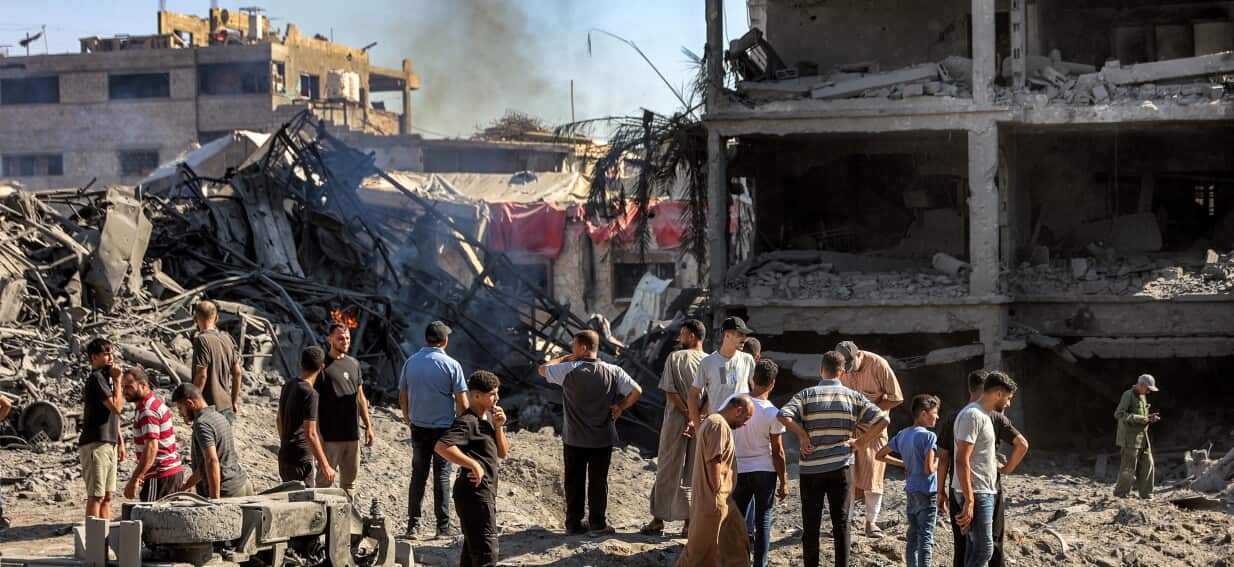
You can flatten a city block in seconds, but you can’t crush a story. That sounds like cheap comfort. When you’re standing in the dust of what used to be your life, looking at shattered concrete, poetry or history texts feel incredibly heavy. But for Mohammad Saad, a veteran bookseller from Gaza, those pages were the only things worth pulling out of the wreckage.
Saad lost his home, his beloved bookstore, and his son to the relentless bombing campaign. Most people would focus purely on basic physical survival, and no one would blame them. Yet, Saad chose a different path. He dug through the gray powder, dragged out hundreds of volumes buried in the rubble, and built a makeshift, roadside library inside a tent. Learn more on a related topic: this related article.
This isn't about some romantic view of tragedy. It's about how people cling to their sanity and their culture when everything else is wiped out.
Saving Culture From the Dust
When a bomb hits a bookstore, the aftermath isn't just torn paper. The weight of collapsing concrete compresses blocks of literature into dense, ash-covered bricks. For weeks, Saad painstakingly excavated his inventory. He cleaned off the toxic dust, sorted the cracked spines, and set up shop right by the road. Further analysis by BBC News explores related views on the subject.
What makes someone do this?
For Saad, books are a livelihood, but they're also a form of cultural resistance. When schools are destroyed and universities are leveled, a roadside tent becomes the only classroom left standing. He sells these rescued books for symbolic, rock-bottom prices. He isn't trying to get rich; he's trying to keep people reading when the world around them is falling apart.
The Real Cost of Cultural Destruction
We hear plenty about the physical toll of modern warfare—the civilian casualties, the shattered infrastructure, the lack of food and water. But the deliberate or incidental scrubbing of a society's intellectual history leaves a scar that lasts for generations.
- Lost Education: With traditional academic institutions out of commission, an entire generation of children faces massive gaps in basic literacy.
- Psychological Escape: In a constant state of trauma, diving into a novel isn't a luxury. It's a survival mechanism for the mind.
- Preserving the Record: Rescuing local history texts, religious documents, and regional poetry ensures the community's identity isn't erased alongside its architecture.
Inside the Roadside Tent
Step into Saad’s makeshift space and the contrast is wild. Outside, you see the grim, monotonous gray of ruined neighborhoods. Inside, the mismatched, salvaged covers offer flashes of vibrant color. Stacks of literature sit on raw wooden planks, plastic crates, and directly on rugs laid over the dirt.
The customers aren't scholars looking for rare editions. They are displaced parents hunting for children’s books to distract their terrified kids. They're young adults trying to hold onto some semblance of a normal routine. By keeping prices low, Saad ensures that anyone can walk away with a piece of a world that existed before the bombs fell.
It shows that human beings need more than just bread and water to survive. We need meaning. We need stories.
Supporting Grassroots Literacy in Crisis Zones
If you look at the big picture, international aid organizations are great at shipping grain and medical supplies, but they rarely prioritize libraries. It falls on local individuals like Saad to do the heavy lifting for a community's mental and cultural health. If you want to support initiatives that keep education alive during conflicts, you have to look past the major bureaucratic channels.
First, identify and amplify independent local journalists and cultural creators who document these small-scale efforts. Second, look for targeted non-governmental organizations (NGOs) that specifically focus on educational equity, psychological support, and mobile book distribution in active conflict zones.
Instead of waiting for a broken system to rebuild a university, the immediate, practical step is backing the people who are already doing the work on the asphalt.