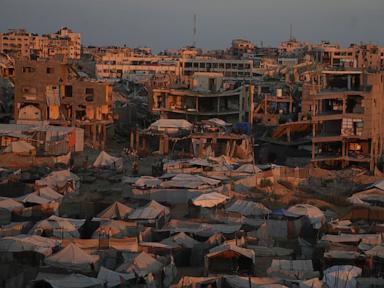
Nearly three years of relentless conflict have left an indelible scar across the Middle East, and the human cost continues to climb. The Palestinian death toll in the Gaza war has officially crossed the 74,000 threshold according to Gaza's Health Ministry, marking a grim milestone that underscores how fragile the region's security truly remains.
If you're wondering why headlines still feature daily updates from Gaza despite a heavily publicized ceasefire, the reality on the ground explains it all. The U.S.-brokered pact that took effect last October managed to halt the absolute worst of the mass bombardments, but it failed to solve the underlying political standoff.
Behind the Numbers and the Stalled Ceasefire
Numbers reported by health authorities in Gaza put the total death toll at 74,016, with an astonishing 175,068 people wounded since the war erupted on October 7, 2023. International organizations and United Nations agencies have long viewed these detailed casualty records as generally reliable, despite the ministry operating under the Hamas-led government. Roughly half of those killed are women and children.
Even after the ceasefire agreement, the violence hasn't entirely stopped. The ministry reports that 1,145 Palestinians have been killed since the truce began, while the Israeli military maintains that strikes are launched in response to active threats or direct attacks. On the other side, seven Israeli soldiers have died during the same post-ceasefire window.
The deeper problem isn't just the sporadic gunfire. It's the total political gridlock.
Right now, Israeli forces maintain control over more than half of the Palestinian territory. Prime Minister Benjamin Netanyahu insists that troops aren't going anywhere until Hamas completely disarms. Meanwhile, Hamas refuses to lay down its weapons, no new Palestinian governing authority has stepped in to manage day-to-day administration, and large-scale reconstruction hasn't even broken ground.
The Political Fallout Inside Israel
The ripple effects of this prolonged conflict are shaking up domestic politics just as much as regional diplomacy. In Israel, leading opposition parties are finally trying to bridge their deep internal divisions. Figures like former military chief Gadi Eisenkot, former prime ministers Naftali Bennett and Yair Lapid, center-left leader Yair Golan, and hawkish party head Avigdor Lieberman recently announced an alliance.
They are gearing up for a critical upcoming election cycle—the first national vote since the devastating October 7 attacks. Voters see this election as a direct referendum on the massive security failures that allowed the initial Hamas-led invasion to happen, an invasion that killed roughly 1,200 people, mostly civilians, and resulted in 251 hostages being taken into Gaza.
This newly forged opposition bloc faces an uphill battle. They've pledged to coordinate voter turnout, push back against smear campaigns, and present a unified front against Netanyahu’s coalition. Whether voters will punish the current leadership or stick with familiar hawkish figures remains to be seen.
What Comes Next
The current situation is a textbook example of a frozen conflict masquerading as a settlement. Ceasefires don't work when neither side trusts the other to take the first step toward disarmament or governance. Until international mediators can bridge the gap between total military control and militant persistence, the people of Gaza will remain trapped in the rubble, waiting for a reconstruction that keeps getting delayed.
Keep a close eye on the upcoming Israeli elections, as the results will likely dictate whether the current stalemate breaks or drags on for years to come.
Gaza Health Ministry declares war's total death toll exceeds 70,000
This video provides important context regarding the statistical tracking and reports issued by Gaza's Health Ministry during the ongoing conflict.
http://googleusercontent.com/youtube_content/1