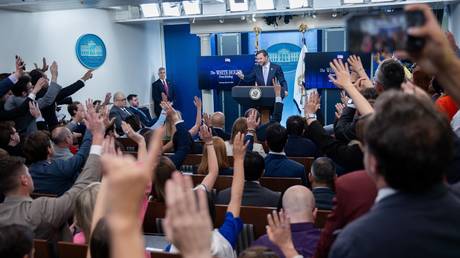
World leaders just wrapped up their high-stakes meeting on the shores of Lake Geneva, and if you only read the official press releases, you missed the real story. The 52nd G7 summit in Evian, France ran from June 15 to June 17, 2026. Behind the diplomatic handshakes and carefully scrubbed language, the joint statements reveal a massive shift in global power dynamics.
If you think this was just another photo op for the world's wealthiest democracies, you're looking at it wrong. The decisions made here are going to dictate energy markets, military spending, and international border security for the rest of the year.
The Breakthrough Nobody Saw Coming in the Middle East
The most stunning update out of France involves a major shift in the Middle East. The G7 leaders openly welcomed a new deal between the United States and Iran. According to the joint statements, this agreement was secured under the leadership of President Trump with the help of mediating countries.
The goal is preventing Iran from acquiring nuclear weapons, but the immediate economic payoff is what matters right now. President Trump delivered a deal that has led to reopening the Strait of Hormuz.
For months, maritime shipping operators have been sweating over safety. To keep things moving, France and the UK are leading a multinational, defensive naval initiative to protect merchant vessels and verify that the waters are completely clear of mines.
What does this mean for you? It means global supply chains just got a massive breather. But the G7 isn't taking chances. The leaders explicitly stated they are accelerating plans to diversify energy supply routes so the world isn't so vulnerable to the Strait of Hormuz in the future. Canada is already lining up to step in with significant additional energy capacity for global markets over the coming years.
A New Momentum for Ukraine on the Battlefield
The conversation around Ukraine has shifted from pure survival to accelerating battlefield momentum. The G7 leaders didn't just promise vague support; they agreed to concrete military upgrades.
We're talking about a direct increase in the delivery of:
- Air defense capacities and interceptor systems
- Long-range strike capabilities
- Licenses to directly increase Ukraine's own domestic military production
This follows a critical meeting on June 7 where UK Prime Minister Keir Starmer, French President Emmanuel Macron, and German Chancellor Friedrich Merz met with President Volodymyr Zelenskyy to map out the blueprint for peace negotiations.
The strategy is clear. The current line of contact is the starting point for talks, but international borders won't be rewritten by force. More importantly, Russian assets are staying completely frozen until Moscow stops the aggression and pays for the damage.
The Quiet Crisis an Outbreak in the DRC and Uganda
While geopolitical conflicts dominated the front pages, the G7 quietly issued an urgent call for a coordinated global response to a re-emerging health threat. A rare, dangerous strain of Ebola—the Bundibugyo strain—is breaking out in a conflict-affected area of the Democratic Republic of the Congo and spilling into Uganda.
This isn't your standard medical emergency. The isolated location makes logistics a nightmare, and existing vaccines aren't fully effective against this specific strain.
The United States jumped in fast, deploying more than 370 million dollars in immediate health and humanitarian resources, with a commitment to spend up to an additional 500 million dollars specifically on the Ebola response. G7 members have provided over two-thirds of the funding raised so far, and they are openly pressuring other wealthy nations to stop sitting on their hands and pitch in.
Tension and Convergence in the Indo-Pacific
The G7 didn't hold back on its usual warnings regarding the East and South China Seas, reiterating sharp opposition to any unilateral attempts to change the status quo by force or coercion. The cross-strait relationship with Taiwan must be resolved peacefully. They also called out North Korea, specifically pointing to cryptocurrency thefts and cybercrimes used to fund illicit ballistic programs.
Yet, there's a weird paradox at play here. Just days before the summit, on June 11, President Macron hosted the Global Convergence for Growth Summit, which actually included participation from China. The G7 leaders admitted they need to converge with other large economies to fix persistent global trade imbalances. Expect this awkward dance of public finger-pointing and behind-the-scenes economic coordination to dominate the upcoming G20 meetings hosted by the United States.
What You Should Do Next
The diplomatic dust is settling, but the real-world effects are just starting to ripple outward. Here is how you can track and adapt to the outcomes of the Evian summit:
- Watch the Energy Markets: Keep a close eye on oil and gas logistics. With the Strait of Hormuz reopening and Canada preparing to boost capacity, shipping costs and energy stocks are bound to fluctuate.
- Monitor Defense and Cybersecurity Specs: The G7's focus on joint military licensing for Ukraine and cracking down on North Korean crypto-heists means international tech and defense sectors will face stricter compliance rules and new funding pipelines.
- Expect Continued Border Tightness in Europe: If you are traveling near the French-Swiss border, remember that temporary internal border controls reintroduced for the summit have disrupted regional transport, showing just how tight security remains across the continent.