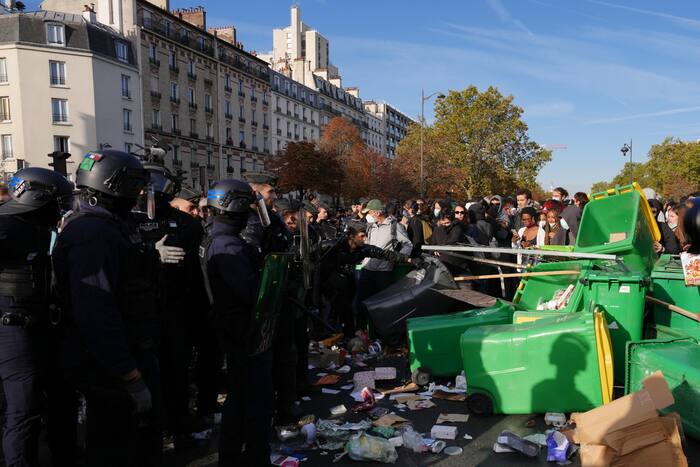
Trash cans block doorways. Bicycles lie tangled across gates. Inside Paris and cities nationwide, teenagers are turning their own high schools into fortresses.
This isn't a brief prank. It's a weeks-long national mobilization that refuses to fade away, putting heavy pressure on President Emmanuel Macron's administration.
When pupils at the Hélène Boucher lycée in Paris dragged trash cans into the street to form makeshift barricades, they joined a movement spanning hundreds of institutions. The core issue goes far deeper than a desire to skip class. Students are pointing to crumbling infrastructure, rat-infested buildings, broken desks, and stifling classrooms that lack basic amenities. They argue that the national promise of equality rings hollow inside neglected public facilities.
The Breaking Point Behind the Barricades
France prides itself on a centralized, robust educational system. Yet reality on the ground tells a different story for teenagers stuck in underfunded districts.
Compulsory school hours for French adolescents rank among the highest in Europe. Students face grueling schedules packed into aging, poorly ventilated rooms. During summer months, classrooms turn into ovens without proper climate control. In winter, heating failures are common. Basic supplies are missing, leaving teachers and students to scramble for fundamental tools.
Frustration over these conditions boiled over in mid-September. What started as localized walkouts in the Paris region quickly snowballed into a nationwide phenomenon. Teenagers organized through social channels, coordinating simultaneous actions to demand immediate funding and infrastructure upgrades.
Government Pressure and the Policing Backlash
The state response has been swift and heavy-handed. Authorities deployed riot police, tear gas, and specialized equipment to clear blockades, resulting in thousands of arrests. Out of more than 5,000 detentions recorded last week, an overwhelming 85 percent involved minors.
This aggressive enforcement strategy has backfired in many neighborhoods. Rather than scaring students into submission, heavy policing has hardened their resolve. Parents and teachers have stepped into the streets, forming human shields between teenage protesters and tactical police units.
Labor unions are now stepping into the fray. By calling for wider worker demonstrations in solidarity with the high school movement, organizers are expanding the pressure. What began as a student grievance is rapidly evolving into a broader test of political stability for the administration.
Fixing systemic school decay requires real capital allocation, not just crowd control. Until authorities address the root causes of student anger, these barricades will keep returning to French streets.