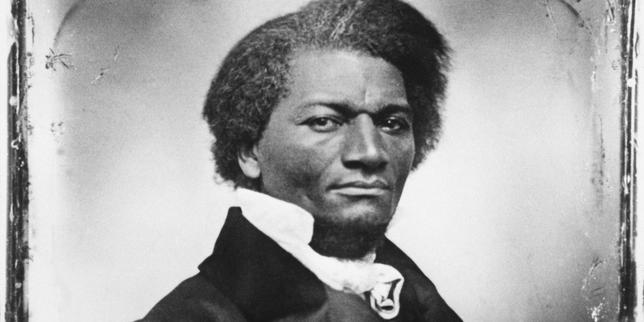
America is turning 250, and the flags are flying high. Fireworks will burst over the National Mall, politicians will give speeches about liberty, and the standard narrative of a flawless democratic experiment will be repeated on loop. But if you want to understand the true friction at the heart of the American republic, you have to look past the founding fathers. You have to look at a man who escaped the horrific machinery of American slavery to become the most dangerous voice the nation's elite ever faced.
Frederick Douglass didn't care about comfort. He cared about truth. While the United States spent the mid-nineteenth century congratulating itself on its revolutionary break from the British crown, Douglass pointed his finger straight at the glaring, bloody contradiction that defined the country. How can a nation celebrate freedom while keeping millions of human beings in chains?
This question isn't ancient history. It's the defining tension that still ripples through American politics today. As the United States hits its semiquincentennial milestone, the legacy of Frederick Douglass is more than just a chapter in a textbook. It's a mirror that forces the republic to confront its own reflection.
The Speech That Shattered July Fourth
Imagine standing in Rochester, New York, on July 5, 1852. The Rochester Ladies' Anti-Slavery Society had invited Douglass to speak at an Independence Day celebration. Most speakers would have delivered a soft, polite address filled with platitudes about Washington and Jefferson. Douglass did the exact opposite. He walked up to the podium and delivered what is arguably the most savage, brilliant, and enduring critique of American exceptionalism ever written.
He didn't even speak on the fourth. He chose the fifth. That slight shift in timing was a deliberate, powerful statement.
He told the audience that the Fourth of July belonged to them, not to him. He argued that the bright sunlight of American liberty only cast a darker shadow over the millions still held in brutal bondage. His words stripped away the comfortable illusions of his white listeners. He asked them directly what the Fourth of July meant to an American slave. His answer was a devastating wave of truth that exposed the national celebration as a shameless sham.
To the slave, Douglass noted, American independence was a day that revealed the gross injustice and cruelty of which they were the constant victim. He didn't mince words. He called American liberty an unholy license and labelled the nation's grand humanity as a base pretense. He slammed the country's posture of Christian piety as a hollow shell.
This wasn't just a rhetorical exercise. Douglass spoke from a place of deep personal agony. He knew exactly what lay behind the patriotic songs and the military parades. He knew the sound of the whip. He knew the terror of the auction block. When he attacked the hypocrisy of the republic, he was pulling back the curtain on a system he had narrowly escaped.
From Maryland Plantation to Global Celebrity
To appreciate why Douglass's voice carried such weight, you have to look at his remarkable journey. Born into slavery on a Maryland plantation around 1818, he was separated from his mother at a tiny age. He suffered under the brutal hand of overseers whose entire job was to break his spirit.
But Douglass refused to be broken. In secret, he learned to read and write. He understood early on that literacy was his ultimate weapon against the slave system. He used discarded remnants of Webster’s spelling books and sneaked looks at the copybooks of white children. Every word he learned was an act of open rebellion.
By the time he made his daring escape to the North in 1838 dressed as a sailor, Douglass possessed an intellectual edge that terrified slaveholders. When he started speaking at abolitionist meetings, his eloquence was so staggering that critics openly doubted his story. They didn't believe a former slave could speak with such flawless command of the English language.
To prove his critics wrong, he did something incredibly risky. He wrote his first autobiography in 1845. The book named names, places, and specific crimes committed by his former masters. It became an instant bestseller, but it also forced him to flee to Great Britain to avoid being captured and dragged back to Maryland.
In Europe, Douglass became a global celebrity. British abolitionists were so moved by his brilliance that they eventually raised the funds to purchase his legal freedom. He returned to America a legally free man, but his focus never shifted. He didn't use his safety to hide from the fight. He used his platform to supercharge the abolitionist movement, launching his own newspaper and advising presidents.
The Dangerous Art of Political Agitation
Douglass understood a fundamental truth about power that many modern commentators still ignore. Power never concedes anything without a demand. It never did, and it never will. He didn't believe that progress happened naturally or that the arc of the moral universe just bent toward justice on its own. He knew you had to bend it with brute force and relentless pressure.
His relationship with Abraham Lincoln is a perfect example of this philosophy. Today, popular history likes to paint a neat picture of Lincoln as the great emancipator working hand-in-hand with Douglass. The reality was much more complicated and much more interesting.
Douglass pushed Lincoln constantly. He criticized the president for his initial reluctance to make the Civil War about ending slavery. He slammed the administration for its slow response to the treatment of Black soldiers. Douglass didn't want to be Lincoln's friend. He wanted to be his conscience.
When Lincoln hesitated, Douglass raised the stakes. He used his speeches and his writings to frame the Civil War not just as a fight to preserve a geographic union, but as a moral test for the soul of the continent. He saw the conflict as a fiery trial that would either purge the nation of its foundational sin or destroy it entirely.
This wasn't easy work. Douglass faced angry mobs, physical assaults, and constant death threats. Yet he kept speaking out because he believed that true patriotism didn't mean blind loyalty to a flag. It meant holding your country accountable to its stated ideals.
Reading Douglass in the Present Day
Why does any of this matter as America marks 250 years of independence? It matters because the hypocrisy Douglass exposed has not vanished. It has simply changed its clothes.
When we look at the contemporary American landscape, we see the same old dualities playing out. The nation still boasts about being the land of opportunity while presiding over massive wealth gaps and systemic barriers that keep millions from thriving. The political rhetoric remains lofty, but the policy often falls devastatingly short.
Douglass offers a masterclass in how to engage with a flawed nation. He never gave up on the American Constitution. In fact, he argued that the document was fundamentally an anti-slavery text if read correctly. He chose to weaponize America’s own founding documents against its corrupt practices. He didn't reject the promise of America. He demanded that America actually deliver on it.
That's the lesson we need right now. True engagement with history isn't about wrapping ourselves in a blanket of uncritical nostalgia. It's about having the courage to look at the gaps between what we promise and what we provide.
Next Steps for Confronting the Legacy
If you want to move beyond the superficial celebrations of America's 250th anniversary and engage with the real history, stop reading sanitized summaries. Here's what you need to do next.
First, read the full text of Douglass's speech, often titled What to the Slave Is the Fourth of July? It takes less than an hour, and its rhetorical power will completely change how you view early American history. Pay attention to how he balances fierce condemnation with an underlying hope for the future.
Second, visit the historic sites that preserve this raw history. Go to Cedar Hill in Washington, D.C., where Douglass lived out his final years. Look at his library. See the tools of his intellectual trade. If you can't travel, explore the digital archives maintained by the Library of Congress, which holds his personal papers and correspondence.
Finally, apply the Douglass standard to your own community. Look at the local institutions, school boards, and town councils around you. Ask the hard questions about who is being left out of the narrative of progress. Don't settle for comfortable answers. Agitate, demand accountability, and refuse to let the celebrations mask the work that still needs to be done. That's how you truly honor the legacy of Frederick Douglass.