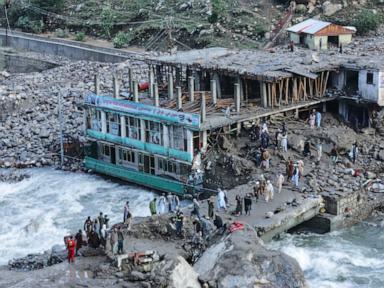
Rescue teams in eastern Afghanistan are wading through knee-deep mud and shattered concrete, frantically tearing apart collapsed homes to locate survivors. A catastrophic deluge struck Nuristan province, sweeping away entire neighborhoods and leaving dozens dead while over 100 people remain unaccounted for. Among the missing in the provincial capital of Parun are local government employees and the town's mayor.
People living in these valleys didn't have much time to react. The sudden torrents crashed down steep mountain slopes, transforming narrow village streets into raging rivers within minutes.
The Brutal Reality on the Ground
When flash floods hit remote mountain terrain, standard disaster relief tactics fall short immediately.
In Parun and surrounding districts, emergency crews rely on whatever tools they can carry on foot. Mud-brick homes offer virtually zero structural resistance against millions of gallons of rushing water. When those walls give way, they don't just break; they dissolve into thick, heavy slurry that buries everything underneath.
Local disaster management officials confirmed that at least 23 people died during the initial surge, with 80 others suffering serious injuries. Over 100 individuals remain missing beneath heavy debris.
Emergency responders face immense hurdles:
- Roads wiped out or blocked by mudslides
- Severed phone lines and nonexistent mobile coverage
- Widespread destruction of markets, bakeries, and vital stores
- Lack of heavy machinery to clear massive stone debris
Local residents are left digging through heavy mud with shovels, wooden planks, or their bare hands while waiting for aid to reach them.
The Dangerous Cycle Behind These Disasters
Why do sudden rainstorms cause such catastrophic devastation in this region? The answer comes down to geography, climate vulnerability, and environmental degradation.
Afghanistan sits on the front lines of global climate volatility. Severe droughts harden the topsoil across high-altitude regions like Nuristan. When sudden torrential storms arrive, the parched ground cannot absorb the moisture. Water bounces off the earth, gathering speed as it flows downhill into river channels.
Decades of unrest and uncontrolled deforestation have stripped the mountain slopes of natural defenses. Trees once held soil in place and slowed rainwater absorption. Without forest cover, heavy rains turn into deadly mudslides almost instantly.
Most homes in rural provinces are built from mud, straw, and untreated timber. These materials are cost-effective for families, but they disintegrate when hit by flash floods.
What Needs to Change Immediately
Sending emergency food rations after a flood saves lives in the short term, but it won't stop the next rainstorm from flattening another mountain village. Breaking this cycle requires fundamental shifts in relief and regional planning.
- Invest in localized early warning alerts. Weather monitoring systems must deliver warnings to remote communities before rivers overflow, giving families precious time to move to higher ground.
- Rebuild with flood-resistant construction techniques. Encouraging stone foundations and reinforced structural posts can prevent mud-brick homes from collapsing instantly under water pressure.
- Prioritize reforestation projects. Replanting native trees along steep river basins will restore natural water absorption and stabilize fragile hillsides.
- Support frontline humanitarian efforts. Directing aid to organizations already operating in remote Afghan provinces ensures immediate emergency supplies—like water purification tablets and medical kits—reach disaster zones without delay.



:max_bytes(150000):strip_icc():focal(999x0:1001x2)/rishi-sunak-akshata-murthy-10-78981f8236984c69b70bc15bcb3d49e9.jpg)