The rules of international travel just changed for political activists. The US State Department quietly executed a sweeping policy shift that doesn't target the usual suspects like religious extremists or cartel bosses. Instead, the crosshairs are now firmly on what the government calls far-left terrorist networks.
If you think this only applies to bomb-carrying radicals, you're missing the bigger picture.
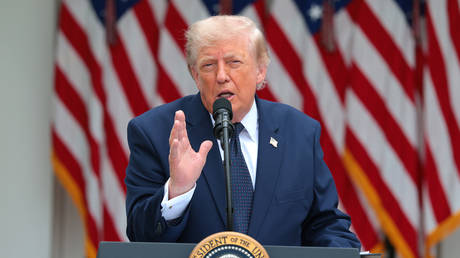
Secretary of State Marco Rubio hosted an international ministerial gathering with officials from over 65 nations to address what he calls a blind spot in global counterterrorism. Immediately afterward, the administration announced severe visa restrictions aimed directly at foreign nationals tied to far-left political violence, economic sabotage, or coordinated campaigns of intimidation.
This isn't just a routine bureaucratic update. It's a massive expansion of state power that uses immigration law as a tool to target political ideology and funding streams across international borders.
Shifting the Global Counterterrorism Target
For a quarter of a century, western intelligence agencies focused almost exclusively on religious extremism and foreign state actors. That era is officially over. The current administration is rewriting the rulebook, elevating left-wing activism to a top-tier national security threat.
Rubio argues that modern counterterrorism doctrine ignored left-wing political violence for too long. He claims that groups like Antifa have built transnational networks that coordinate across borders, share tactics, and pool financial resources. To combat this, the State Department is leaning on National Security Presidential Memorandum-7, a directive designed to dismantle these political networks before their actions turn into criminal operations.
The rhetoric coming out of Foggy Bottom is intentionally stark. Rubio labeled these groups as enemies of civilization. Top Trump adviser Stephen Miller reinforced the message at the conference, warning that left-wing networks use the cover of civil liberties to mask coordinated campaigns of terror.
This approach treats decentralized protest movements with the same gravity once reserved for highly structured international terror syndicates.
Who Actually Gets Blocked under Section 212
The administrative mechanism for this ban isn't a new piece of legislation passed by Congress. The State Department is using Section 212(a)(3)(C) of the Immigration and Nationality Act. This specific provision grants the US government incredibly broad latitude to deny entry to any foreign national whose presence could spark serious adverse foreign policy consequences.
It is a legal wildcard. The government doesn't need a criminal conviction to deny a visa under this statute; they just need a reasonable belief that an individual's entry would complicate US foreign relations or domestic security.
The policy applies to a wide range of activities. You can be barred if you fall into any of these categories:
- Financing or recruiting individuals for far-left groups.
- Inciting or supporting acts of economic sabotage, such as targeting critical corporate infrastructure.
- Providing logistical support, web hosting, or communication tools to blacklisted organizations.
- Aiding and abetting coordinated campaigns of political intimidation.
The gray area here is massive. What qualifies as an aligned group? If an international environmental activist participates in a protest that turns destructive, do they suddenly find themselves on a no-entry list? The administration has kept the precise definitions vague on purpose, giving border agents and consular officers immense discretion to reject applicants at the embassy level.
The Financial Dragnet Behind the Passports
A visa ban is only as good as the intelligence used to enforce it. To make these travel restrictions stick, the US is following the money trail.
Treasury Secretary Scott Bessent clarified that the real objective is to choke off the financial lifelines of these activist movements. The US has already designated several European anti-fascist groups as foreign terrorist organizations. This designation triggers a cascade of financial penalties, making it a federal crime to provide material support to them.
The State Department previously put its money where its mouth is by offering up to $10 million through the Rewards for Justice program for information that successfully disrupts the financial mechanisms of these groups. Intelligence agencies are tracking crowdfunding platforms, cryptocurrency wallets, and international bank transfers to map out who pays for protest gear, travel arrangements, and alternative media operations.
Once a foreign national is linked to these financial nodes, their name hits the visa lookout system. They won't find out they're flagged until they try to renew their travel authorization or get pulled into a secondary screening room at an airport.
Why European and Latin American Allies Are Skeptical
The international ministerial meeting brought together representatives from dozens of nations, including Canada, France, Germany, Spain, and Argentina. But behind the official press releases, there's deep friction.
Many European and Latin American allies don't share Washington’s intense focus on left-wing extremism. Security agencies in Berlin and Paris view far-right nationalism and Islamist cells as much more immediate, lethal threats to their domestic security. To them, left-wing radicals are largely a domestic policing issue, not a transnational terrorist threat requiring high-level diplomatic intervention.
Some foreign delegations sent lower-level working officials or ambassadors instead of their actual foreign ministers. Officially, they blamed scheduling issues. In reality, several governments are hesitant to endorse a framework that could be used to suppress legitimate political dissent or human rights advocacy.
Former US intelligence officials have voiced similar concerns privately. They worry that labeling broad swathes of left-wing groups as terrorist networks will damage intelligence sharing on more critical targets and create a pretext for crackdowns on domestic political activists who communicate with international peers.
Concrete Steps for International Travelers and Organizers
The reality is simple. If you engage in transnational political organizing, your risk profile just skyrocketed. You need to adjust your operational security and travel planning immediately.
Audit Your Digital Associations
Consular officers routinely review social media accounts during visa interviews. If you have public ties, mutual follows, or shared content with groups designated under this new policy, your application faces immediate scrutiny. Clean up your public digital footprint.
Track Your Financial Footprint
Don't donate to international mutual aid funds or crowdfunding campaigns unless you know exactly who administers the accounts. Even a small donation to a group that the US Treasury later flags can permanently ruin your ability to enter the United States.
Separate Travel from Activism
If you are traveling to the US for professional or educational purposes, keep your itinerary strictly tied to those activities. Mixing political advocacy with standard business or tourist travel invites scrutiny at the border that can lead to visa revocation and immediate deportation.
The administration is building an infrastructure designed to last. Expect tighter security screenings, longer delays at embassies, and an aggressive use of financial tracking tools to police who gets to cross American borders. Do not treat this policy shift as political theater; prepare for it as a permanent feature of global immigration enforcement.