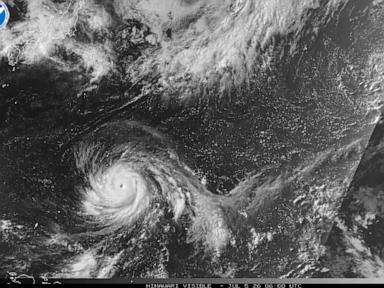
Super Typhoon Bavi didn't just catch the western Pacific by surprise. It exposed exactly how vulnerable our critical territories remain despite decades of storm conditioning. When a Category 5 monster packs maximum sustained winds of 165 mph and barrels toward a tiny dot on the map like Rota or Guam, the narrative usually shifts to generic disaster tropes. We hear about boarded-up windows, lines at gas stations, and empty supermarket shelves.
But that's just the surface. The real story here is the terrifying speed of intensification driven by unprecedented ocean temperatures, happening just months after these same communities were battered by Super Typhoon Sinlaku in April.
The Sudden Monster in the Pacific
The western North Pacific is no stranger to intense weather, but Bavi moved the goalposts. In less than five hours on a Friday, the system exploded from a standard Category 4 threat into a massive Category 5 super typhoon. National Weather Service meteorologists in Guam watched satellite feeds in shock as the eye cleared out with textbook, terrifying precision.
Low deep-layer wind shear combined with record-shattering sea surface temperatures created a perfect engine for rapid strengthening. The European Union's Copernicus Marine Service recently confirmed that our oceans experienced their hottest June on record. Bavi is the direct, violent result of that thermal energy.
For the 210,000 residents living across Guam and the Commonwealth of the Northern Mariana Islands, the timing couldn't be worse. The region is still picking up the pieces from Sinlaku, which ripped roofs off buildings, knocked out power grids, and left locals living under temporary makeshift shelters. Facing a second historic super typhoon within a two-month span isn't just rare. It's completely unprecedented for the Marianas.
Why Rota Faced a Different Scale of Disaster
When Bavi made its grim landfall on Monday morning local time, it took a direct aim at Rota, a small island of fewer than 2,000 people located northeast of Guam. While larger military and economic hubs like Guam get the bulk of media attention, smaller communities bear the worst operational scars.
Catastrophic Wind Profiles
Meteorologist Edwin Montvila described the situation on the ground as an encounter with truly catastrophic force. An extreme wind warning went into effect as gusts climbed toward a staggering 215 mph. To put that into perspective, those winds don't just blow roofs away. They snap concrete utility poles, turn loose outdoor items into lethal missiles, and tear apart even well-constructed metal frame homes.
The True Threat of Ocean Runup
We focus a lot on wind speed, but the ocean does the real killing. The National Weather Service tracked waves reaching up to 35 feet along east-facing reefs. That is essentially the height of a ten-story building crashing down on the shoreline. Combined with a 15-foot storm surge near the eye, low-lying businesses and critical infrastructure faced total inundation.
The Reality Behind the Concrete Wall Defenses
You often hear island officials say that residents are used to typhoons. Rev. Francis Hezel, a priest at Santa Barbara Catholic Church in Dededo, noted that most people live in reinforced concrete homes, viewing the storm more as an inconvenience than a death sentence. He's right to an extent. Concrete saves lives.
However, it doesn't save livelihoods.
Consider Pinky Cubacub, a local business owner who spent hundreds of dollars on plywood just to board up her small eatery. She noted that as a new business, every day closed means losing money meant for rent, utilities, and employee wages. Concrete walls don't stop the financial bleeding of an isolated island economy under siege.
When power lines drop and grids go dark, it isn't a matter of fixing a few fuses. In places like Rota, a direct hit from a Category 5 eye means power outages that can stretch for weeks or even months. Without electricity, water pumps fail, supply chains freeze, and the true crisis begins long after the skies clear.
Moving Beyond Simple Storm Preparation
Hunkering down is a short-term survival tactic, not a long-term plan. As ocean warming fuels faster storm intensification, the traditional playbook for Pacific territories needs a hard rewrite. Relying on the resilience of local communities is a lazy substitute for systemic infrastructure upgrades.
If you want to protect these islands from the next inevitable monster, focus must shift to concrete actions.
- Underground Utilities: Overhead power lines are an archaic liability in a typhoon alley. Burying lines is expensive, but it prevents the months-long grid blackouts that paralyze local economies.
- Hardened Seawalls: With ocean runup hitting 35 feet, old coastal defenses are useless. Coastal infrastructure must be engineered for the higher baselines brought by rising sea levels.
- Local Supply Nodes: Relying on cargo ships that can capsize or be delayed for weeks creates extreme vulnerability. Staging long-term relief supplies on-island before the season begins is life-saving.
The old routine of buying plywood, taping windows, and hoping for the best is no longer enough. Super Typhoon Bavi proved that the margins for error in the Pacific have officially vanished.
.jpg)


