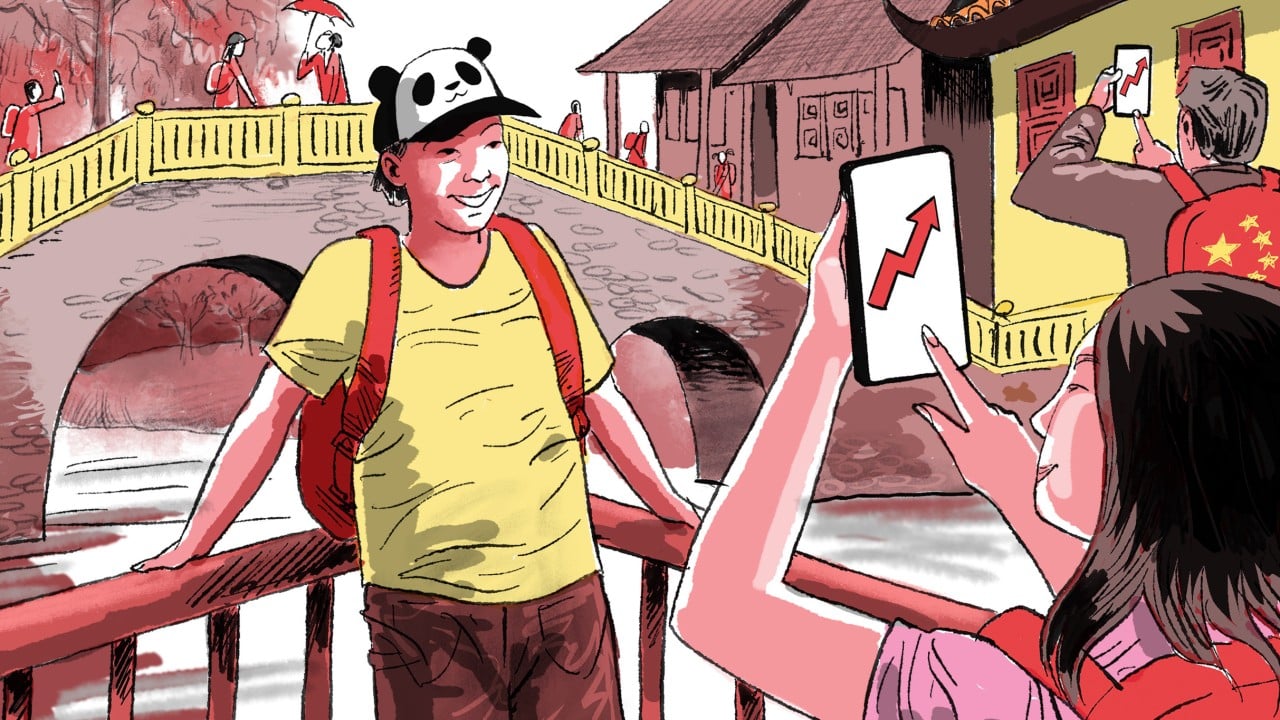
You’ve probably seen the gloomy headlines about China's economic retail numbers. Just recently, Beijing rolled out its ambitious five-year plan aiming for $8.85 trillion in retail sales by 2030. Yet, the overall retail growth numbers feel incredibly sluggish. Many analysts are looking at the property market or big-ticket luxury items and declaring that the Chinese consumer has checked out.
They're looking in the wrong place.
If you want to understand where the money is actually moving in China today, you have to look at the massive surge in domestic travel. Chinese consumption has a new, fast-growing driver, and it isn't high-end luxury hand bags or expensive overseas vacations. It's local tourists exploring their own backyard. The country's consumer class isn't stopping their spending; they're radically shifting what they spend on.
The Death of the Megamall and the Rise of the Local Adventure
For decades, the story of the Chinese consumer was simple. Save up, travel to Paris, buy a Chanel bag, and take photos in front of the Eiffel Tower. Today? That playbook is dead.
International flights have still not returned to their peak levels, and getting visas is a major pain. But the real shift is psychological. Post-pandemic travelers in China are looking for experiences, connection, and "emotional value" over raw materialism.
They're choosing domestic travel, but not the way their parents did. They aren't booking rigid, exhausting 40-person tour group buses to follow a flag-waving guide. Instead, they are packing their bags for highly targeted, hyper-local adventures.
Take a look at Wanning, a quiet fishing village on Hainan Island. It didn't use to be on anyone's radar. Now, it hosts over 160 surf clubs and pulls in half a million visitors a year. Or look at the scenic mountains of Zhangjiajie. Younger travelers from Hong Kong and the mainland are taking six-hour train rides just to hike its peaks and enjoy the journey. This is experiential consumption in action.
Why This Shift in Spending Habits Is Actually Good News
A lot of market bears look at the drop in average spend per tourist and assume it's a disaster. It's true that the per-capita spending during major holidays has occasionally dipped compared to pre-pandemic highs. People are hunting for deals, eating budget street food, and staying in boutique guesthouses.
But looking only at the average receipt misses the macroeconomic forest for the trees.
- Geographic dispersion: Traditional tourism funnelled money into tier-one cities like Shanghai, Beijing, or global hubs like Hong Kong. Today's domestic tourism spreads cash into tier-three and tier-four cities, boosting local economies that rarely saw a tourist dollar a decade ago.
- The RedNote effect: Apps like RedNote (Xiaohongshu) have completely changed how people travel. Instead of relying on mainstream travel agencies, young tourists find niche, off-the-beaten-path locations through viral algorithms. A single viral post can turn an obscure mountain village into a hotspot overnight.
- A boost for local services: The money is staying within the service sector—directly supporting local restaurants, guides, drivers, and boutique hospitality brands.
This isn't a temporary trend. Per capita services consumption made up 46.1% of total household consumption in China in 2025. In mature western markets like the US, that number is closer to 70%. Beijing knows this, which is why their newest economic blueprints are heavily focused on expanding the service economy, targeting tourism, culture, and sports as key pillars for future growth.
The Big Mistakes Brands Are Making Right Now
If you're running a business or investing in the Chinese market, you cannot treat the consumer the way you did five years ago. Many multinational brands are struggling because they are still clinging to outdated strategies.
Mistake 1: Relying solely on the luxury label
If your value proposition is just "we are expensive and European," you're going to feel the squeeze. Consumers want experiences. Even luxury giants are realizing this; we are seeing brands pivot to opening cafes, hosting localized pop-up exhibitions, and partnering with local boutique hotels to capture the attention of high-spending domestic travelers.
Mistake 2: Ignoring the lower-tier cities
The growth isn't in Shenzhen or Shanghai anymore. It is in places like Zibo (famous for its viral barbecue) or Harbin (which became a winter wonderland hit). If your distribution network or marketing campaigns only target the major metro areas, you're missing out on the vast majority of active domestic travelers.
Mistake 3: Overlooking the power of niche communities
Travelers are sorting themselves by subcultures. Outdoor hiking, surfing, camping, and cultural pilgrimage are driving bookings. Mass-market, one-size-fits-all travel packages are losing ground to specialized, community-driven experiences.
What You Should Do Next
To capture this shifting wave of Chinese consumption, you have to adapt your strategy immediately.
First, reallocate your marketing budget to lifestyle platforms like RedNote. The platform has become the undisputed search engine for travel and lifestyle inspiration in Greater China. If you don't have an active, authentic presence there, your brand basically doesn't exist to the modern domestic traveler.
Second, focus on "micro-vacations." Because of intense work schedules, young Chinese professionals are opting for short, 2-to-3-day weekend trips closer to home rather than waiting for Golden Week. Design products, services, or weekend packages that cater to this quick-turnaround style of travel.
Finally, localize your narrative. The modern Chinese consumer is incredibly proud of their heritage. Lean into local cultural collaborations, regional specialties, and storytelling that respects and celebrates the specific destinations your consumers are visiting. The era of generic global branding is over; the future belongs to those who understand the local pulse.