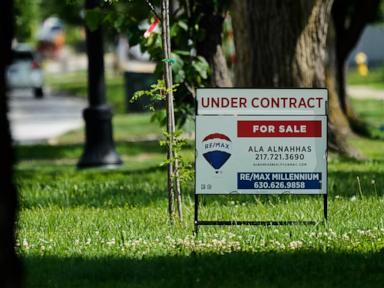
The housing market is acting completely backwards right now, and it is driving both buyers and sellers crazy. You look at the latest data and nothing seems to make sense on the surface. June home sales just took an unexpected dive, dropping 2.4% from the previous month to a seasonally adjusted annualized rate of 4.09 million units. Wall Street expected things to hold steady at around 4.20 million. Instead, transactions cooled off.
But here is the kicker. While sales numbers fell off a cliff, the actual money changing hands hit a record. The average price of an existing home sale jumped 1.8% over last year to a historic $440,600. It is the highest closing price we have seen in over a year.
How do sales go down while prices go up?
It looks like a disaster for buyers, but the reality is much more nuanced. We are watching a massive tug-of-war between old pandemic-era expectations and a new, slower economic reality. If you are trying to timing the market or figure out your next move, you have to look past the scary headlines. The ground is shifting under our feet.
The Story Behind the Slump in June Home Sales
People simply stopped rushing. That is the main driver behind the deceleration in transaction volume. For the past few years, the entire real estate market operated on panic. Buyers felt forced to waive inspections, offer $50,000 over asking, and bid on houses within hours of them hitting the market.
That panic is officially dead.
The 30-year fixed mortgage rate is sitting stubbornly around 6.58%. When money costs that much, buyers lose their appetite for bidding wars. They are taking their time. They are walking through properties twice. They are actually looking at the age of the roof and the condition of the HVAC system instead of blindly signing a contract. This deliberate pace means deals take longer to close, which naturally suppresses the monthly sales numbers.
Total inventory actually grew by 3.3% over the month. We now have roughly 4.5 months of housing supply available at the current sales pace. In plain English, houses are sitting on the market longer. Inventory is finally creeping back up toward healthy levels, giving buyers the breathing room they have desperately needed since 2020. The drop in transactions is not a sign of a crashing market. It is a sign of a market that is finally slowing down enough to let people think.
The Price Illusion and Why Closing Costs Are Still Rising
It feels totally unfair that prices hit $440,600 while sales slowed down. To understand why this happened, you have to look at the difference between what sellers want and what homes actually sell for at the closing table.
Data from Realtor.com shows that median asking prices actually fell 2.5% year over year in June to $430,000. That is the steepest annual decline in listing prices since 2017. Sellers are finally waking up to reality and putting lower price tags on their homes from day one.
So why did the National Association of Realtors report a record closing price of $440,600?
The homes that are actually successfully closing right now are disproportionately high-end properties. Affluent buyers who can afford to pay cash or put down massive down payments are unaffected by 6.5% mortgage rates. They are still buying expensive homes. Meanwhile, first-time buyers and middle-income families are entirely priced out by current interest rates, so they are staying on the sidelines. When the bottom half of the market stops buying and the top half keeps buying, the mathematical average of sold homes artificially spikes.
The market is split in two. The cheap houses are sitting because the buyers cannot afford the loans. The expensive houses are still moving because wealth operates on a different timeline.
Real Estate Agents Agree That Stability Is Coming
If you ask the people working on the front lines of the industry, they will tell you the market feels better than it has in years. CNBC recently surveyed real estate agents for their quarterly housing poll, and the results show a massive shift in sentiment.
An impressive 44% of surveyed agents now report that their local markets are completely balanced. Neither buyers nor sellers hold a distinct advantage anymore. To put that in perspective, only 30% of agents felt that way in late 2025. The market is finding its footing.
Sellers are dropping the stubborn pandemic pricing strategies. They realize that if they price a home too high, it will sit empty and accumulate days on market, which looks terrible to modern buyers. Local agents note that while we are not seeing massive, catastrophic price drops, we have reached a definitive plateau. If a home is priced fairly relative to its neighborhood comps, it moves. If a seller tries to test the market with an inflated price, buyers simply ignore it.
Optimism for a sudden sales boom has vanished. Only 19% of agents expect sales volume to drastically improve in the near term, down from nearly half of respondents last year. A commanding 67% expect sales to remain exactly where they are right now. This is the new normal. High prices, moderate rates, and a slow, steady grind.
Regional Variations Prove Housing Is Still Local
You cannot judge your local neighborhood by a national average. The national data hides some wild regional swings that completely change how you should approach a move.
The South and the West are experiencing significant price corrections. Over-built pandemic boom towns are seeing inventory pile up fast. Asking prices have dropped roughly 7.3% in the West and 3.5% in the South since their all-time peaks. Metro areas like Austin, Memphis, and Buffalo are leading the charge with massive per-square-foot price cuts. If you are looking to buy a home in Texas or Florida right now, you have serious leverage to negotiate.
The Midwest and Northeast are a totally different story.
Listing prices are up 10% in the Midwest and 12.6% in the Northeast compared to a few years ago. Cities like Providence, Indianapolis, and New York City are still seeing price gains because their inventory never recovered. New listings in the Northeast did spike by 12.6% this past June, which will eventually help cool things down, but for now, buyers in these regions are still facing stiff competition.
Actionable Steps for Buyers in Today Market
Do not let the record-high average price scare you away from shopping. The drop in list prices means you have power that buyers did not have two years ago.
First, look for properties that have been on the market for more than 45 days. These sellers are likely getting nervous, especially with national sales numbers dropping. They are the most prime targets for under-asking offers or seller concessions.
Second, ask for rate buy-downs instead of just asking for a lower purchase price. A seller might refuse to drop their price by $20,000, but they might happily credit you $10,000 at closing to buy down your interest rate from 6.5% to 5.5% for the first few years. That saves you way more money on your monthly payment than a minor price cut ever would.
Third, do not skip inspections. The era of blind buying is over. Use the current 4.5-month inventory supply to your advantage and demand that sellers fix structural issues or credit you the cost before you sign the final paperwork.
Actionable Steps for Sellers in Today Market
If you are planning to list your home this summer, you need to change your mindset immediately. The days of putting a sign in the yard and getting ten cash offers by Friday are gone.
You must price your home accurately from the very first day. Buyers are hyper-aware of market trends. If they see you price your home based on what your neighbor got in 2022, they will skip your open house entirely. Look at the active listings in your specific zip code, see what is sitting, and price your home slightly below those stagnant properties to capture the active buyers.
Be prepared to negotiate on terms. Buyers are paying high interest rates, so they are going to be picky about repairs. Clean up the property, fix the deferred maintenance before listing, and be open to covering a portion of the buyer closing costs if it means securing a firm contract. Real estate is a game of patience now. Expect your home to sit on the market for 50 days or more, and do not panic when it does not sell in the first week.
The market is not broken. It is just adjusting to a world where money is no longer free. The dip in June sales is proof that the crazy era of real estate is officially behind us, leaving a more predictable, balanced environment for everyone involved. Buyers have options, sellers have equity, and the frantic bidding wars have finally cooled down. Get used to this pace, because it is staying around for the foreseeable future.