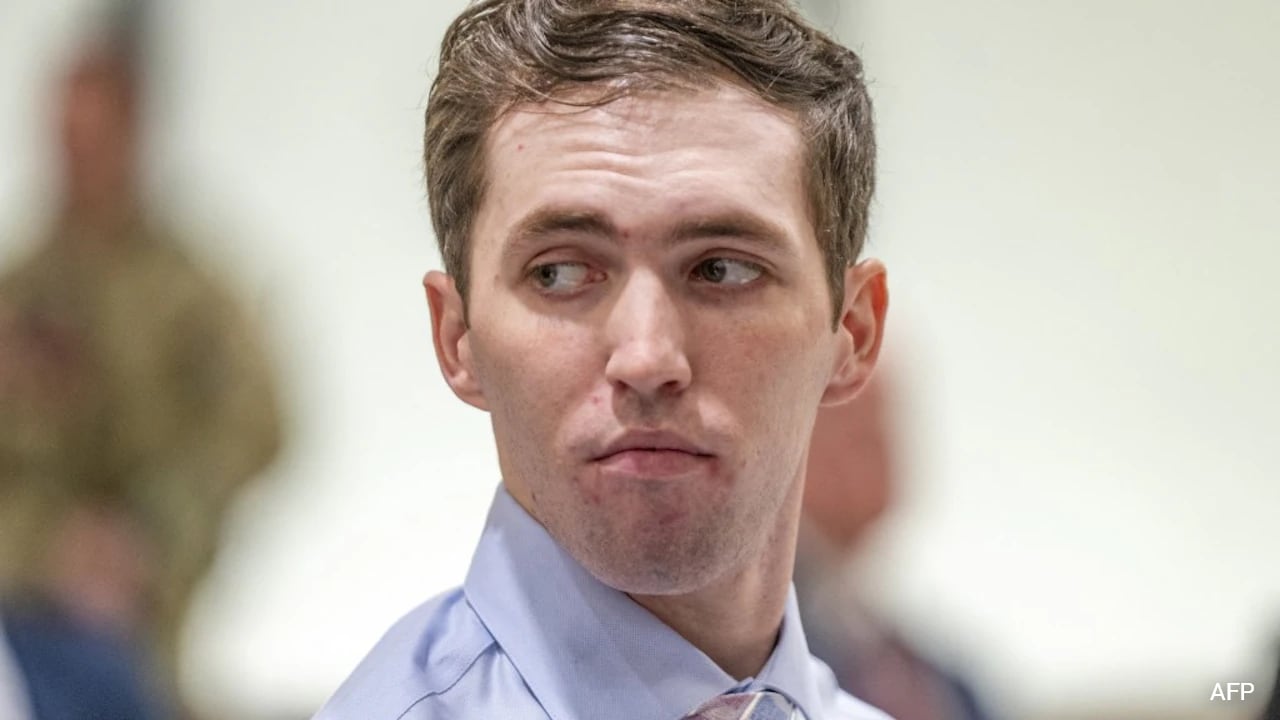
A quiet courtroom in Provo, Utah, just became the epicenter of one of the most high-profile legal battles in modern American history. State District Judge Tony Graf threw a wrench into the public's expectation for immediate justice by wrapping up a dramatic, weeklong preliminary hearing without issuing a ruling. Instead of deciding on the spot whether 23-year-old Tyler Robinson will stand trial for the assassination of conservative activist Charlie Kirk, the court pushed the final arguments all the way to September 1, 2026.
If you think this delay is just standard bureaucratic foot-dragging, you're missing the real story.
This break isn't an accident. It's a calculated pause that gives both the prosecution and the defense a window to draft comprehensive legal briefs. This high-stakes legal intermission reshapes the entire trajectory of a case that has horrified millions and put political violence back under the microscope.
The underlying reality of the situation involves an intense clash over a potential death penalty sentence, a mountain of forensic data, and a series of tearful confessions. Here is what's actually happening behind closed doors and what it means for the pursuit of justice.
The Illusion of a Slam Dunk Case
On paper, the prosecution looks like it's holding an unbeatable hand. Former federal judge and current University of Utah law professor Paul Cassell publicly called the state's case a proverbial slam dunk. Republican Senator Mike Lee attended the hearings and flatly labeled the evidence against Robinson as damning.
Let's look at what the state has put on the record.
First, there's the timeline. On September 10, 2025, Charlie Kirk, the 31-year-old co-founder of Turning Point USA and a close confidant of Donald Trump, was addressing an enthusiastic crowd of thousands at Utah Valley University. A single bullet struck him in the neck. He died shortly after reaching the hospital.
The state recently played surveillance video showing Robinson on a nearby rooftop, the exact location where investigators say the fatal shot originated. If that wasn't enough, Robinson turned himself in to authorities just two days later.
But a video of a man on a roof doesn't automatically equal an aggravated murder conviction. That's where the defense sees its opportunity.
The Defense Strategy of Sowing Reasonable Doubt
Michael Burt, Robinson's lead defense attorney, isn't trying to prove his client is an innocent bystander who was miles away. That would be impossible. Instead, his strategy relies on chipping away at the absolute certainty of the state's forensic science.
During the cross-examination of Caitlin Oliver, a forensic biologist with the Bureau of Alcohol, Tobacco, Firearms and Explosives (ATFE), Burt went to work on the DNA evidence. The state revealed that DNA found on the suspected murder weapon was a trillion times more likely to belong to Robinson than to random strangers. That sounds definitive.
Burt, however, forced the expert to admit a fundamental truth about secondary transfer. He asked if someone with heavy DNA on their hands shook hands with another person, who then touched a weapon, could the first person's DNA end up on the trigger? The expert had to say yes. It's possible.
The defense also hammered away at the ballistics. Investigators tried to tie a specific bullet fragment recovered from Kirk's body directly to the rifle found in connection with Robinson. The results came back inconclusive.
Samantha Karner, another ATFE agent, admitted on the stand that characterizations of the ballistics matching perfectly were inaccurate. Under oath, she stated that saying anything other than inconclusive was inappropriate.
By exposing these microscopic gaps, the defense wants to convince Judge Graf—and eventually a jury—that the state's mountain of proof might actually be a hill of cards.
The Roommate Room Redaction
The most emotional and revealing moments of the preliminary hearing centered on a recorded interview with Lance Twiggs. Twiggs was Robinson's former roommate and romantic partner.
The defense fought fiercely to keep this tape hidden from the public, arguing it would compromise Robinson's right to a fair trial. Judge Graf compromised, allowing a redacted version with sections of blacked-out video but intact audio.
What the court heard was devastating. Twiggs detailed how Robinson paced around their apartment frantically the day after the shooting. When Twiggs asked if the rumors were true, Robinson broke down.
According to the recording, Robinson started crying and explicitly stated he wished he hadn't done it. Twiggs quickly packed his things and left because Robinson announced his intention to turn himself in.
Twiggs received total immunity for his statements. This means nothing he told prosecutors can be used to charge him with a crime. While this secures his safety, it makes his testimony an absolute cornerstone of the state's effort to prove intent and premeditation.
The Fight Over the Death Penalty
The real battle here isn't about whether Robinson pulled the trigger. It's about how the state is allowed to punish him if he's convicted. Aggravated murder opens the door to execution in Utah, and prosecutors have made it clear they want the death penalty.
To get it, they have to prove aggravating circumstances. The state argues that firing a rifle into a crowded college campus event inherently put thousands of innocent bystanders in immediate danger.
They also introduced text messages and notes Robinson allegedly wrote to Twiggs before the assassination. One chilling note claimed he had the opportunity to take out one of the nation's leading conservative voices and was going to take it. Another text stated he had enough of Kirk's hatred.
Because of these statements, prosecutors are seeking sentence enhancements based on the idea that the crime was purely politically motivated.
The defense has tried multiple times to get the death penalty taken off the table. They even attempted to get the prosecution disqualified after a deputy county attorney made public comments about the case. Judge Graf found the prosecutor in civil contempt for those media remarks, but he flatly refused to block the death penalty. The ultimate punishment remains a distinct reality.
What Follows the September Arguments
When court resumes on September 1, 2026, the legal posturing stops and the judge makes a definitive choice. Legal analysts expect Graf to find sufficient probable cause to send the case to trial. The sheer volume of confessions, text messages, and DNA matches makes an outright dismissal highly unlikely.
Once the trial is formally ordered, the true logistical nightmare begins. Finding an impartial jury in Utah for a case involving the assassination of a major political figure will be exceptionally difficult. Judge Graf has already signaled that the court will use expanded jury questionnaires and a vastly enlarged jury pool to counter the effects of heavy media coverage.
If you are tracking this case or analyzing how political violence impacts the American legal system, you need to monitor specific elements rather than just waiting for headlines.
First, watch for the submission of the written legal briefs over the next few weeks. These documents will outline the exact boundaries of what evidence will be allowed at trial.
Second, pay attention to whether the defense files a motion for a change of venue. Moving the trial out of Utah County could be their only hope of finding jurors who haven't already formed a hard opinion.
Finally, track the specific rulings regarding the political motivation enhancements. How the court defines hate and political speech in this context will set a massive precedent for future cases involving public figures.
The next phase of this trial won't play out on cable news. It'll be won or lost in the quiet, precise wording of the legal briefs filed during this summer intermission. Keep your eyes on the filings. That's where the real trial is being constructed.