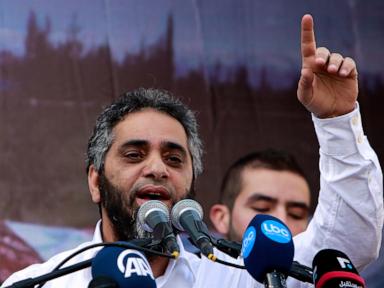
You probably remember him as the King of Romance. Throughout the early 2000s, Fadel Chaker’s smooth voice defined Arabic pop music, packing stadiums and soundtracking weddings across the Middle East. Then came 2011, and he vanished from the charts, only to re-emerge with a thick beard, radical rhetoric, and an allegiance to a hardline Sunni cleric.
On July 8, 2026, the Lebanese military court approved Chaker's release on a combined bail of around $5,500. He walked out of a military detention facility and into a rented apartment in a Beirut suburb, ending a chapter that began when he surrendered last October. Mainstream coverage frames this as a simple legal update. It isn't. The story of Fadel Chaker exposes the deep, messy fault lines of Lebanese politics, sectarian justice, and the strange intersection of celebrity and militancy. For a deeper dive into this area, we suggest: this related article.
Understanding why his release matters means looking past the surface level legal maneuvers. It requires exploring how a pop star could become entangled in a deadly military siege, survive a decade in a lawless refugee camp, and somehow negotiate his way back to partial freedom.
From Pop Icon to Salafist Fighter
Chaker’s transformation remains one of the most jarring cultural pivots in modern Middle Eastern history. Born to a Lebanese father and a Palestinian mother, he grew up in poverty near Sidon before his music career skyrocketed. Hits like Aash Mn Shafak turned him into a multi-millionaire icon of secular romance. For further context on this topic, in-depth analysis can be read at The New York Times.
Everything shifted with the outbreak of the Syrian civil war in 2011. As the conflict across the border took on vicious sectarian tones, it bled directly into Lebanon. Chaker fell under the influence of Ahmed al-Assir, a charismatic, deeply polarizing Salafist cleric based in the Abra suburb of Sidon. Al-Assir built a following by fiercely criticizing Hezbollah, the powerful Shiite militia and political party, and accusing the Lebanese army of being complicit in Hezbollah’s domestic dominance.
Chaker didn't just support al-Assir financially. He traded his designer suits for military fatigues. He publicly denounced his musical past, calling his own art haram, or forbidden. In viral videos from that era, the former crooner boasted about armed confrontations, using language that shocked his millions of fans. For many Lebanese, seeing their favorite romantic singer adopt the persona of a militant fighter felt like a surreal nightmare.
The Abra Clashes and the 12 Year Disappearance
The turning point came in June 2013. Tensions in Sidon boiled over into a full-scale battle between al-Assir’s armed followers and the Lebanese military. The two-day siege in the Abra neighborhood resulted in the deaths of 18 Lebanese soldiers and dozens of al-Assir’s fighters. It was a national trauma that Lebanon’s political establishment vowed never to forget.
When the military finally crushed the compound, al-Assir and Chaker vanished.
While al-Assir was eventually captured at the Beirut airport in 2015 trying to flee in disguise, Chaker found refuge in Ain al-Hilweh. This sprawling Palestinian refugee camp on the outskirts of Sidon operates entirely outside the jurisdiction of the Lebanese state. By a decades-old convention, Lebanese security forces do not enter the Palestinian camps, turning Ain al-Hilweh into a notorious sanctuary for fugitives, political outcasts, and armed factions.
Chaker spent 12 years living in this legal black hole. In 2020, a Lebanese military tribunal sentenced him in absentia to 22 years of hard labor for providing logistical and financial support to a terrorist group.
Yet, even while hiding in a heavily armed camp, the pop star couldn't entirely leave his old life behind. In a bizarre twist, Chaker built a makeshift recording studio inside the camp. He began quietly releasing new songs on YouTube, racking up tens of millions of views. He was simultaneously a convicted terrorist supporter in the eyes of the state and a charting streaming artist for millions of listeners who chose to separate the music from the militant.
Inside the Surrender Deal
Chaker’s return to the legal system wasn't an accident or a sudden burst of conscience. It was a calculated gamble. Last October, he walked out of Ain al-Hilweh and surrendered directly to Lebanese military intelligence.
Under Lebanese military law, individuals convicted in absentia receive an automatic retrial once they turn themselves in. The previous 22 year sentence was wiped clean, resetting the legal clock. Chaker and his defense team bet that the passage of time, coupled with shifting political winds, would work in their favor.
That bet is paying off. In May 2026, a Beirut criminal court acquitted Chaker of one of his most severe charges: the attempted murder of Hilal Hammoud, a local official associated with a Hezbollah-allied brigade. The court cited a total lack of sufficient evidence connecting Chaker to the specific hit list.
The momentum culminated in the decision by Chief Military Court Judge Brig. Gen. Wissam Fayyad to approve bail across four separate security cases. The total financial cost for his freedom? A meager 500 million Lebanese pounds, equivalent to about $5,568. Chaker paid 100 million pounds for three minor security files regarding armed group ties and money laundering, and 200 million pounds specifically for the Abra case.
The Selective Blindness of Lebanese Justice
The political reaction to Chaker's release highlights the deep polarization that still paralyzes the country. For families of the 18 soldiers killed in the 2013 Abra clashes, seeing Chaker walk free on a nominal bail amount feels like a betrayal. They argue that his fame and financial resources bought him an escape hatch that ordinary citizens never receive.
Conversely, some Sunni communities in southern Lebanon view the prosecution as heavily politicized. They point to the vast discrepancy in how the state treats different armed actors. While Sunni militants face harsh military tribunals and death sentences—al-Assir remains in the notorious Roumieh prison under a death sentence—Hezbollah maintains a massive, state-sanctioned standing army completely outside government control. In this view, Chaker's harsh initial sentencing was an act of political theater rather than objective justice.
Chaker's defense strategy has relied on a crucial nuance. He openly admits he was a vocal, passionate supporter of al-Assir's political and religious movement. He does not deny financing the group. However, he consistently maintains that he never pulled a trigger or participated in the actual killing of Lebanese soldiers during the Abra battle. He claims he split from al-Assir shortly before the violence erupted, realizing the group was heading down a suicidal path.
What Happens Next
Chaker's legal battle is far from over. While he is out of a cell, he is essentially under house arrest in his Beirut suburb. The Government Commissioner at the Military Court, Judge Claude Ghanem, is currently reviewing the bail terms for the Abra case and retains the right to appeal the decision, which could land Chaker back in custody.
If you want to track where this case goes next, watch these specific developments.
First, monitor whether Judge Claude Ghanem files a formal appeal against the bail ruling within the next two weeks. An appeal will signal intense political pressure from anti-Assir factions to keep Chaker locked up.
Second, look out for the scheduling of the formal military retrial. This trial will force the state to present concrete forensic or eyewitness evidence proving Chaker actually participated in combat, rather than just acting as a vocal cheerleader.
Third, follow Chaker's digital footprint. Now that he is out of the camp, his legal team will likely restrict his public statements, but any attempt to resume his music career full-time will trigger massive public debates about art, accountability, and redemption.